
Aphids
Aphidoidea (various species)
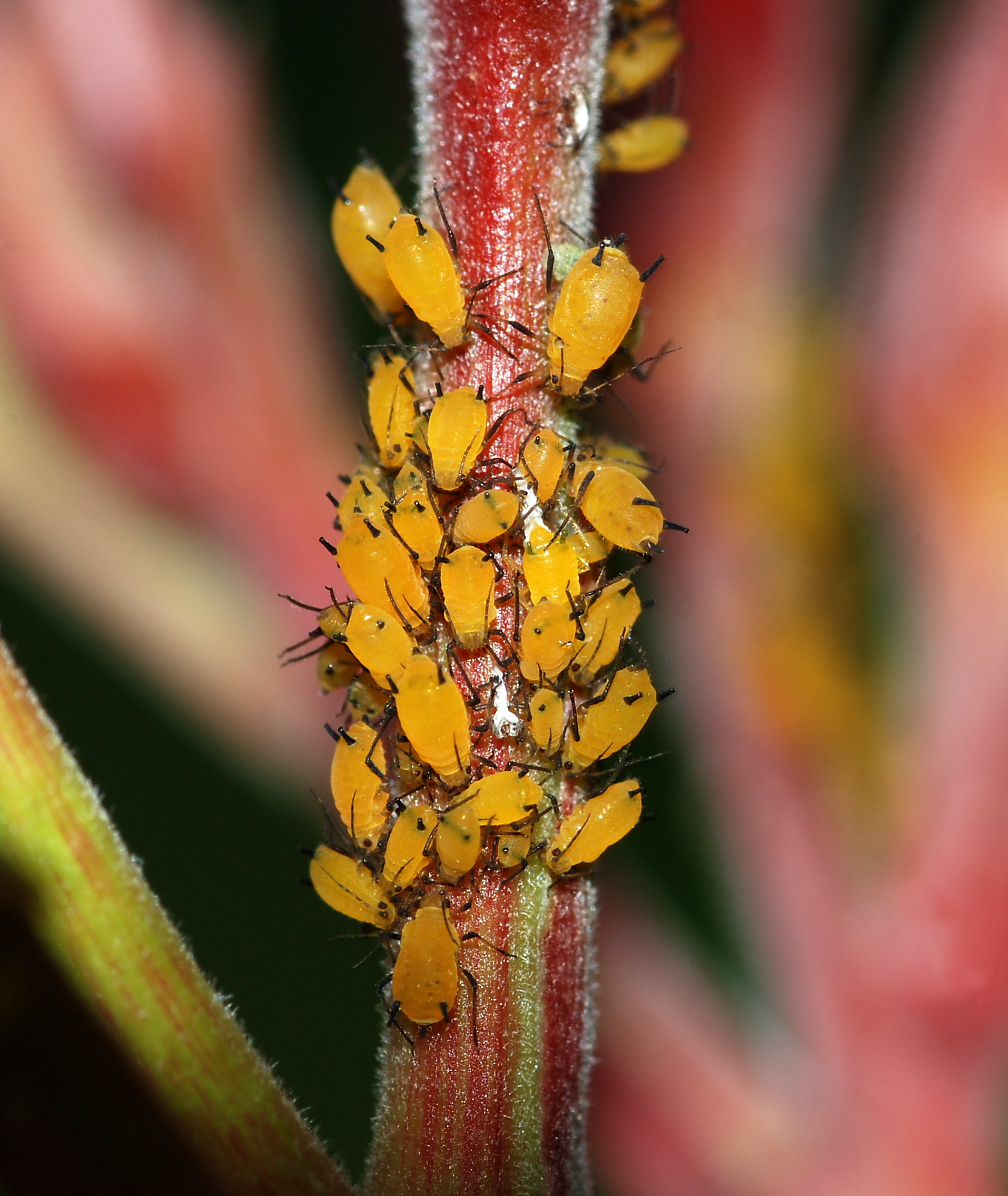
Range: Throughout the United States and Canada on a vast range of host plantsSee it on the alert map
Symptoms & signs
- Clusters of small soft-bodied insects on new shoots and leaf undersides
- curled, puckered, yellowing, or distorted new growth
- sticky honeydew coating leaves and surfaces below, followed by black sooty mold
- ants 'farming' the aphids
- swarms of wasps and flies drawn to the honeydew
Treatment & management
- Often controlled by natural predators (lady beetles, lacewings, parasitic wasps) — preserve them
- Hose off light infestations with water
- Insecticidal soap or horticultural oil for moderate cases
- systemic imidacloprid for persistent honeydew problems on high-value trees
- Avoid excess nitrogen, which fuels soft, aphid-prone growth
Host species
Silver MapleAcer saccharinumEastern White PinePinus strobusTulip Poplar (Yellow Poplar)Liriodendron tulipiferaRiver BirchBetula nigraHoneylocustGleditsia triacanthosCrapemyrtleLagerstroemia indicaCommon HackberryCeltis occidentalisBlack CherryPrunus serotinaBoxelderAcer negundoJapanese MapleAcer palmatumFreeman MapleAcer × freemaniiPaperbark MapleAcer griseumYellow BirchBetula alleghaniensisSitka SprucePicea sitchensisJapanese ZelkovaZelkova serrataHedge MapleAcer campestreAmur MapleAcer ginnalaTrident MapleAcer buergerianumSweet Birch (Black Birch)Betula lentaEnglish Walnut (Persian Walnut)Juglans regiaEuropean BeechFagus sylvaticaBigtooth AspenPopulus grandidentataBlack WillowSalix nigraYoshino CherryPrunus × yedoensisGoldenrain TreeKoelreuteria paniculataLittleleaf LindenTilia cordataRed AlderAlnus rubraVine MapleAcer circinatumMountain AlderAlnus incana subsp. tenuifoliaGreen AlderAlnus viridis subsp. crispaStriped MapleAcer pensylvanicum
Common questions
Why is everything under my tree sticky and black?
Aphids (or related sap-suckers) excrete sugary honeydew that drips onto cars, decks, and lower leaves, where black sooty mold then grows. Managing the aphids stops both the stickiness and the mold.
Do I need to spray for aphids?
Usually not — lady beetles and other predators often crash aphid populations on their own. Reserve insecticidal soap, oil, or systemics for persistent, heavy infestations on valued trees.
Related pests
Tree Nerd Academy
Ready to sit the ISA Certified Arborist exam?
Video curriculum, flashcards, and exam-sim built by working arborists.