
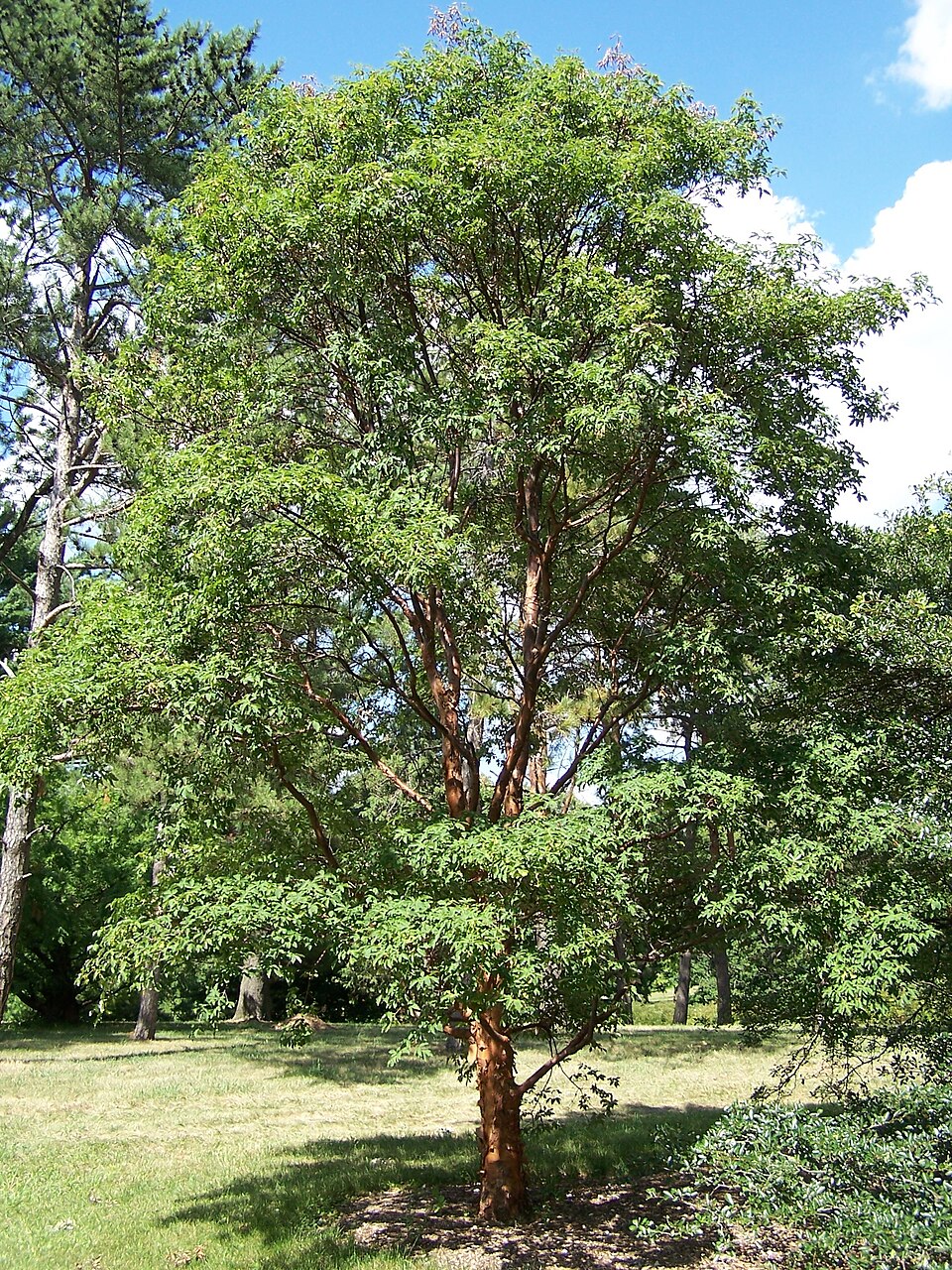
Paperbark Maple
Acer griseum
A premier small specimen tree, prized for cinnamon-colored bark that peels in papery curls and persists through winter, plus late, reliable red fall color. Slow-growing and trouble-free; its seeds have very low viability, making it relatively scarce and valuable in the trade.
Field reference
Family
Sapindaceae
Growth rate
Slow
Mature size
20–30 ft tall, 15–25 ft spread
Hardiness zone
4–8
Soil preference
Moist, fertile, well-drained soil; tolerates clay, dislikes drought and salt
Sun
Full sun to part shade
Pruning window
Summer or full dormancy; minimal pruning needed
Wood properties
Fine, dense wood on a small frame; rarely rigged. Pruning is light, detailed shaping to showcase the exfoliating bark and structure.
Native range
Native to central China; widely planted ornamental
Green weight
48 lb/ft³
Pests & diseases to watch
Verticillium Wiltfungus · High severity · peak Symptoms appear in summer, often after heat or drought stress (June–September)Aphidspest · Low severity · peak Populations build in spring and early summer, with flushes through the seasonScale Insectspest · Moderate severity · peak Vulnerable mobile 'crawlers' emerge late spring–summer (species dependent)
Common questions
Is the peeling bark on my paperbark maple a problem?
No — the curling, cinnamon-brown bark is the tree's signature ornamental feature, not damage or disease. It exfoliates naturally year-round and is most striking in winter.
Why is paperbark maple expensive and hard to find?
Its seeds have notoriously low viability and it grows slowly, so propagation is difficult and nursery production is limited. That scarcity, plus its year-round beauty, keeps prices high.
Related species in Sapindaceae
Tree Nerd Academy
Ready to sit the ISA Certified Arborist exam?
Video curriculum, flashcards, and exam-sim built by working arborists.