
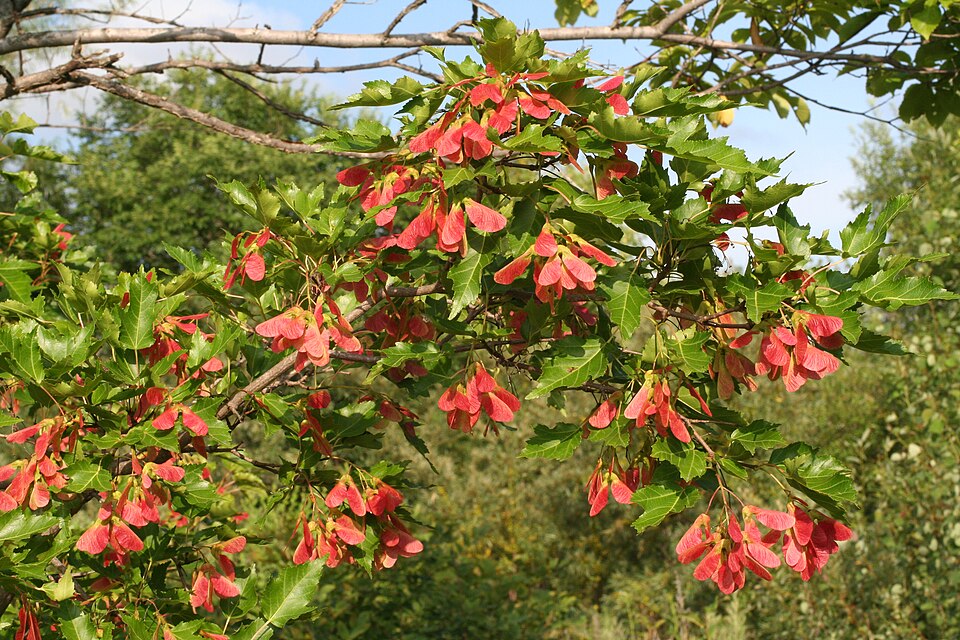
Amur Maple
Acer ginnala
A very cold-hardy small maple with fragrant spring flowers and brilliant red fall color, often grown as a large shrub, screen, or small multi-stem tree. Adaptable and tough, but it self-seeds freely and is considered invasive in parts of the northern U.S., displacing native vegetation.
Field reference
Family
Sapindaceae
Growth rate
Moderate
Mature size
15–20 ft tall, 15–20 ft spread
Hardiness zone
2–8
Soil preference
Adaptable, well-drained soils; very cold-hardy and drought-tolerant
Sun
Full sun to part shade
Pruning window
Dormant season; often grown multi-stem
Wood properties
Small-diameter, dense maple wood; minimal rigging. Frequently multi-stemmed, so structure is shaped early for a small specimen or screen.
Native range
Native to northeastern Asia; planted and locally invasive in the northern United States
Green weight
47 lb/ft³
Pests & diseases to watch
Common questions
Is Amur maple invasive?
In parts of the Upper Midwest and Northeast, yes — it seeds prolifically and escapes into prairies and woodland edges, so several states list it as invasive. Consider native small maples where spread is a concern.
How big does Amur maple get?
It stays small, typically 15–20 feet, and is often multi-stemmed — useful as a hedge, screen, or patio tree, with standout red fall color even in cold climates.
Related species in Sapindaceae
Tree Nerd Academy
Ready to sit the ISA Certified Arborist exam?
Video curriculum, flashcards, and exam-sim built by working arborists.