
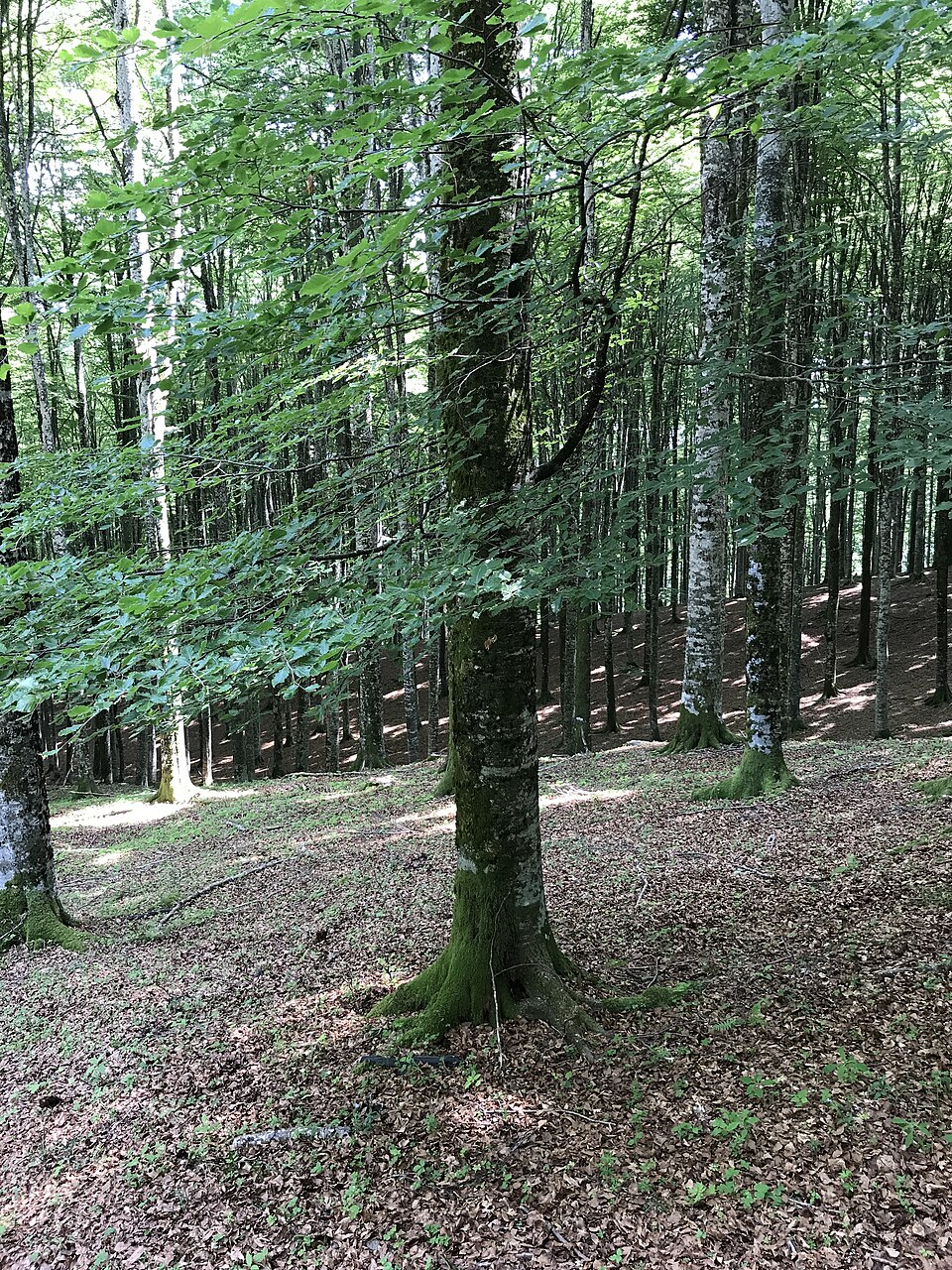
European Beech
Fagus sylvatica
A majestic, long-lived European shade tree with smooth elephant-gray bark and a dense, low-branching crown, available in copper, weeping, and fernleaf cultivars. Prized as a specimen and clipped hedge; its dense shade and shallow roots make underplanting hard, and beech leaf disease and beech bark disease are emerging threats.
Field reference
Family
Fagaceae
Growth rate
Slow
Mature size
50–70 ft tall, 40–60 ft spread
Hardiness zone
4–7
Soil preference
Moist, fertile, well-drained loams; intolerant of wet feet and compaction
Sun
Full sun to part shade
Pruning window
Summer (after leaf-out) to limit bleeding; tolerates shearing for hedges
Wood properties
Hard, heavy, strong, fine-grained beech wood used for furniture, flooring, and tool handles. Strong limbs; smooth gray bark that scars permanently — discourage carving.
Native range
Native to Europe; very widely planted as an ornamental in North America
Green weight
56 lb/ft³
Pests & diseases to watch
Common questions
Why won't grass grow under my European beech?
Its dense canopy casts heavy shade and its shallow, fibrous roots dominate the topsoil, so lawns and most underplantings struggle. Mulching the root zone is usually more successful than fighting to grow grass.
Should I worry about carving or wounds on beech bark?
Yes — beech bark is thin and smooth and scars permanently, and wounds invite beech bark disease (a scale-insect/fungus complex). Avoid carving and unnecessary wounding, and watch for the newer beech leaf disease.
Related species in Fagaceae
Tree Nerd Academy
Ready to sit the ISA Certified Arborist exam?
Video curriculum, flashcards, and exam-sim built by working arborists.