
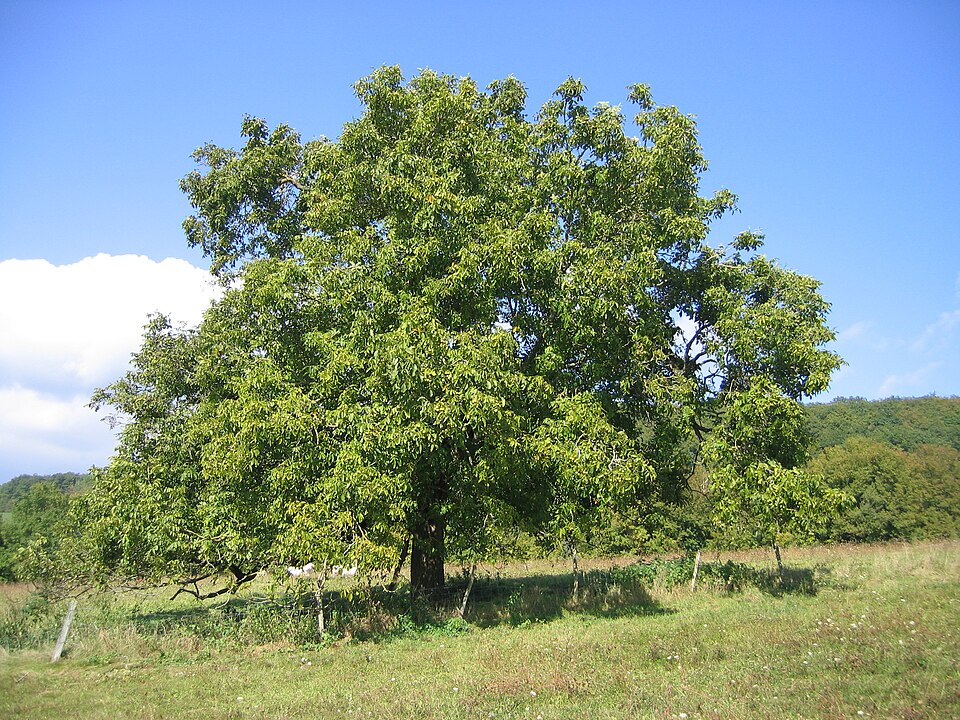
English Walnut (Persian Walnut)
Juglans regia
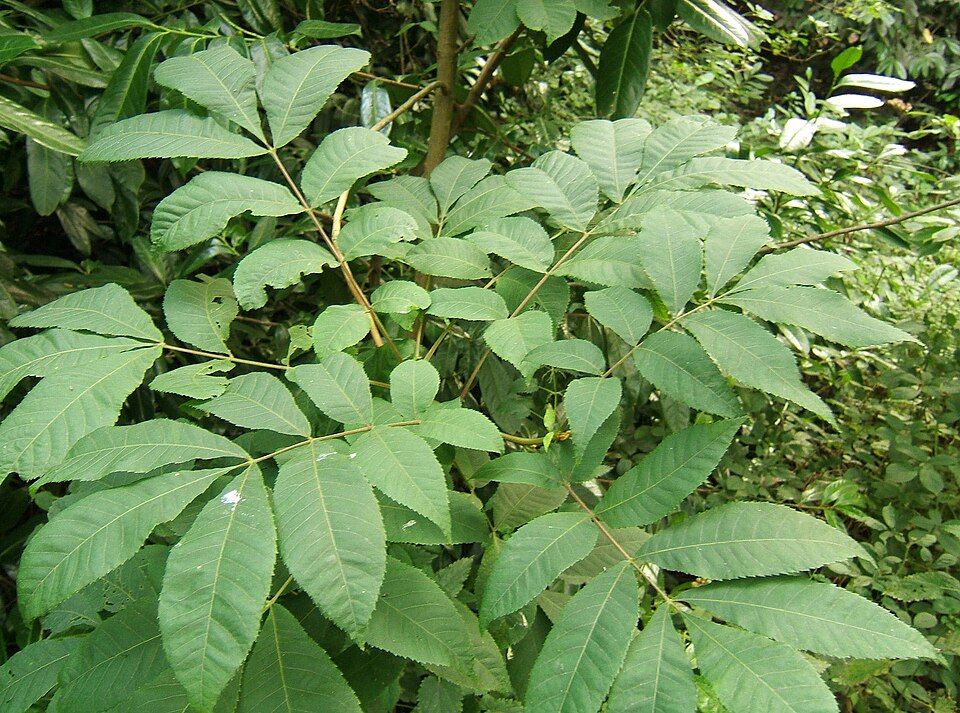
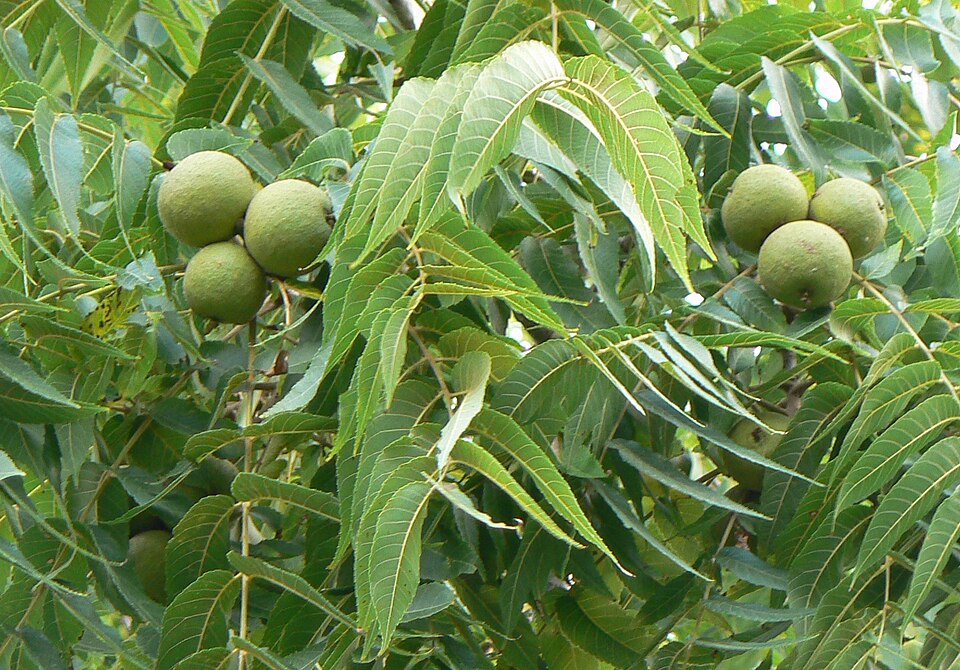
The commercial walnut of the grocery store and the world's premier furniture walnut, with smoother gray bark and larger, thin-shelled, easily cracked nuts than black walnut. Widely grown in orchards (often grafted onto black walnut roots) and as a shade tree; like its relatives it produces juglone and is susceptible to thousand cankers disease.
Field reference
Family
Juglandaceae
Growth rate
Moderate
Mature size
40–60 ft tall, 40–60 ft spread
Hardiness zone
5–9
Soil preference
Deep, fertile, well-drained loams; intolerant of wet feet and poor drainage
Sun
Full sun
Pruning window
Late summer to early fall to limit bleeding and disease entry
Wood properties
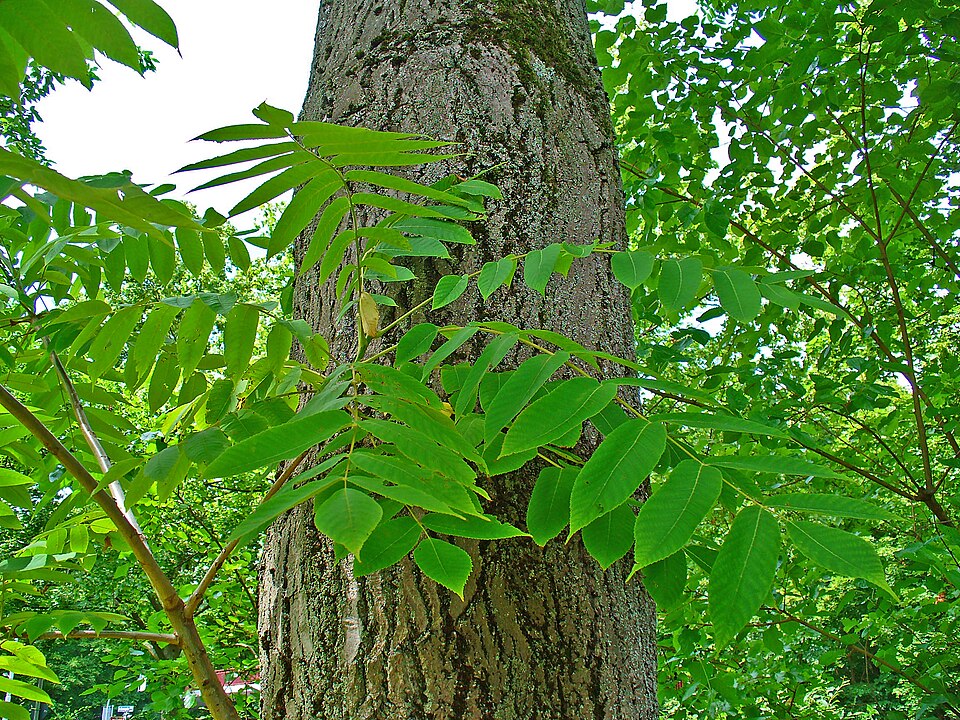
Fine, strong, lustrous walnut wood prized worldwide for furniture and veneer. Strong limbs, but brittle nut-laden branches and grafted forms need monitoring; smooth pale-gray bark unlike black walnut.
Native range
Native from the Balkans to the Himalayas and China; widely cultivated in North America
Green weight
50 lb/ft³
Pests & diseases to watch
Common questions
What's the difference between English and black walnut?
English (Persian) walnut has smoother gray bark and large, thin-shelled, mild nuts that crack easily — the commercial walnut. Black walnut has dark furrowed bark and hard-shelled, intensely flavored nuts, and stronger, darker wood.
Can English walnut get thousand cankers disease?
Yes — Juglans regia is susceptible to thousand cankers disease, vectored by the walnut twig beetle, though often less severely than black walnut. Avoid moving walnut wood and watch for crown dieback in affected regions.
Related species in Juglandaceae
Tree Nerd Academy
Ready to sit the ISA Certified Arborist exam?
Video curriculum, flashcards, and exam-sim built by working arborists.