
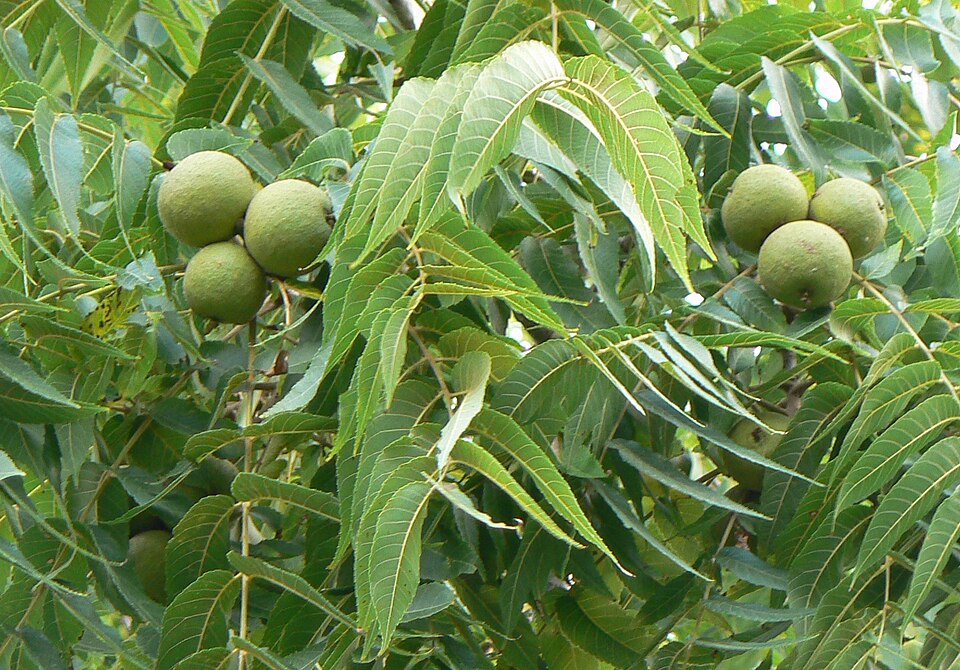
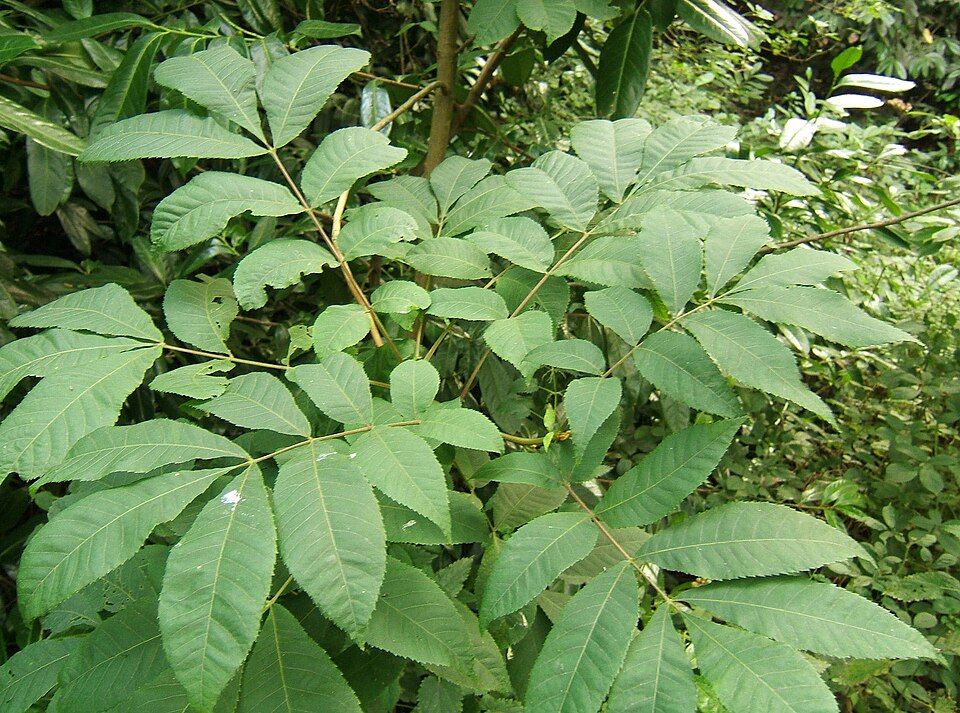
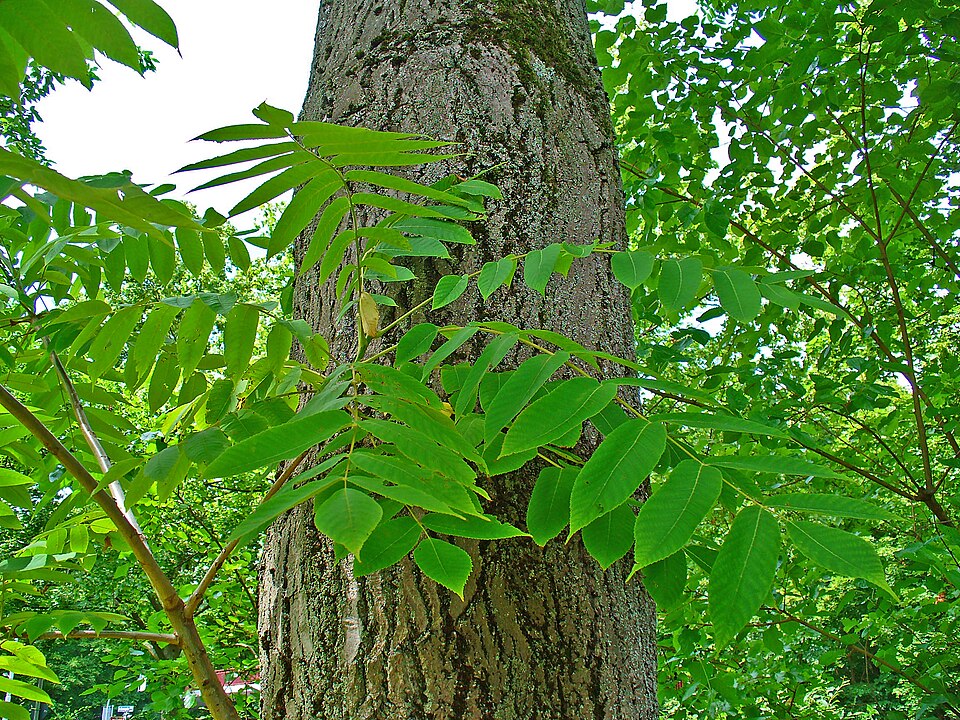
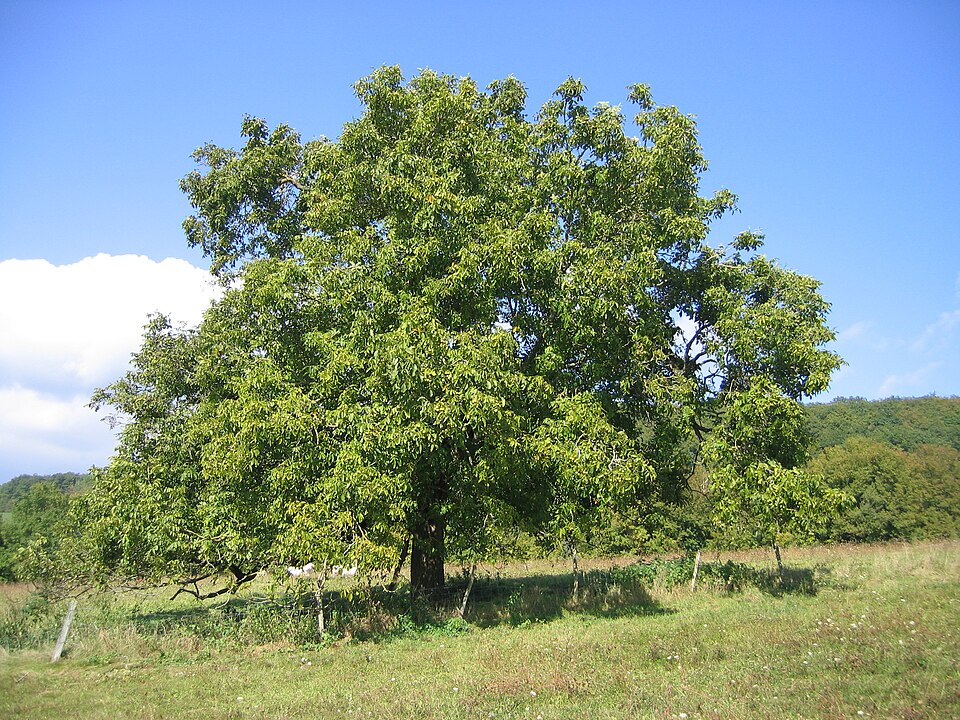
Black Walnut
Juglans nigra
A valuable timber and nut tree whose roots, hulls, and leaves release juglone, a chemical that suppresses many sensitive plants nearby. Veneer-quality trunks command high prices, so coordinate with a buyer before felling large specimens. Now threatened by thousand cankers disease in parts of its range.
Field reference
Family
Juglandaceae
Growth rate
Moderate
Mature size
50–75 ft tall, 50–65 ft spread
Hardiness zone
4–9
Soil preference
Deep, rich, moist, well-drained, near-neutral loam
Sun
Full sun
Pruning window
Mid-summer or early fall — avoid spring bleed and late-winter sap flow
Wood properties
Strong, heavy, stable dark hardwood (~0.55 SG); the premier American cabinet and gunstock timber. High log value — protect saleable butt logs during removals.
Native range
Eastern and central United States, from New York to Georgia and west to the Plains
Green weight
58 lb/ft³
Pests & diseases to watch
Common questions
Why won't my tomatoes and shrubs grow under the walnut?
Black walnut produces juglone, which is toxic to many plants including tomatoes, azaleas, and white pines. Plant juglone-tolerant species, or garden well outside the root zone.
Is my black walnut log worth money?
Straight, large-diameter, defect-free walnut can be valuable veneer or sawlog material. Have a forester or log buyer assess it before you cut, and keep the butt log long and clean.
Related species in Juglandaceae
Tree Nerd Academy
Ready to sit the ISA Certified Arborist exam?
Video curriculum, flashcards, and exam-sim built by working arborists.