
Thousand Cankers Disease
Geosmithia morbida (vectored by Pityophthorus juglandis)
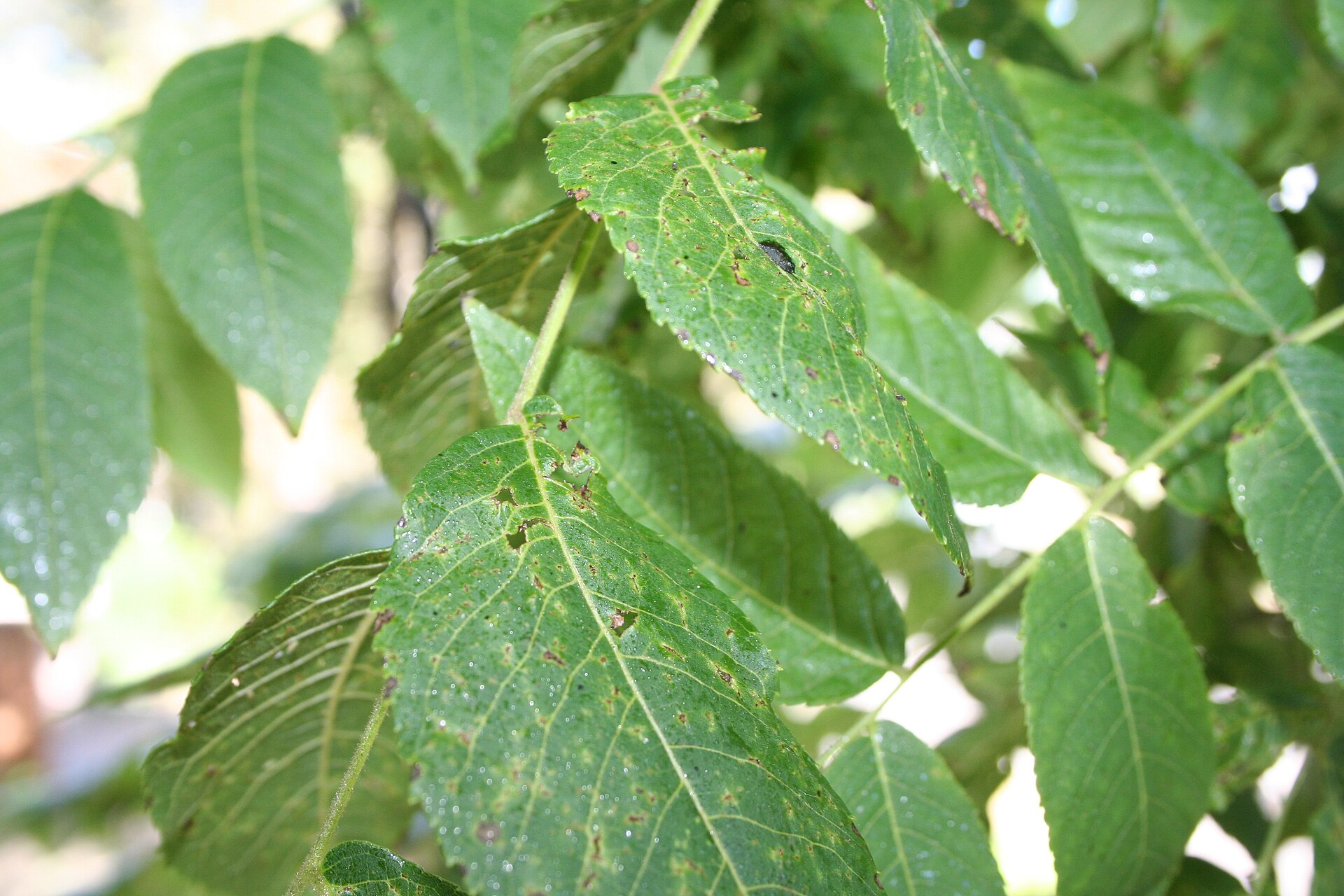
Range: Western United States and pockets of the East and Midwest where black walnut growsSee it on the alert map
Symptoms & signs
- Yellowing, thinning, and progressive dieback of the upper crown
- large branches dying back over a few years
- countless small, dark, coalescing cankers in the bark and phloem around tiny walnut twig beetle entry holes (revealed by shaving the outer bark)
- pinhole-sized beetle holes
- eventual death of the tree, especially black walnut
Treatment & management
- No cure — focus on early detection and not moving walnut wood/firewood, which spreads the beetle
- Keep trees vigorous with water and mulch to slow progression
- Promptly remove and properly dispose of (chip/debark) dead and dying walnuts that harbor the beetle
- Observe quarantines
- report suspected cases to agriculture officials
Host species
Common questions
What causes thousand cankers disease in black walnut?
It is a combination: the tiny walnut twig beetle tunnels under the bark and introduces the fungus Geosmithia morbida, which forms thousands of small cankers that coalesce and girdle branches, killing the tree.
How do I keep thousand cankers from spreading?
Do not move walnut firewood or logs out of affected areas, since that transports the beetle. Detect declining walnuts early, keep trees vigorous, and remove and properly process infested wood.
Related diseases
Tree Nerd Academy
Ready to sit the ISA Certified Arborist exam?
Video curriculum, flashcards, and exam-sim built by working arborists.