
Armillaria Root Rot
Armillaria spp.
Range: Throughout the United States and Canada; a widespread soilborne root pathogenSee it on the alert map
Symptoms & signs
- Slow, general decline — undersized off-color foliage, thinning crown, and dieback over several years, or sudden collapse
- creamy-white fan-shaped fungal mats (mycelium) under the bark at the root collar that smell of mushrooms
- black shoestring-like rhizomorphs on roots and soil
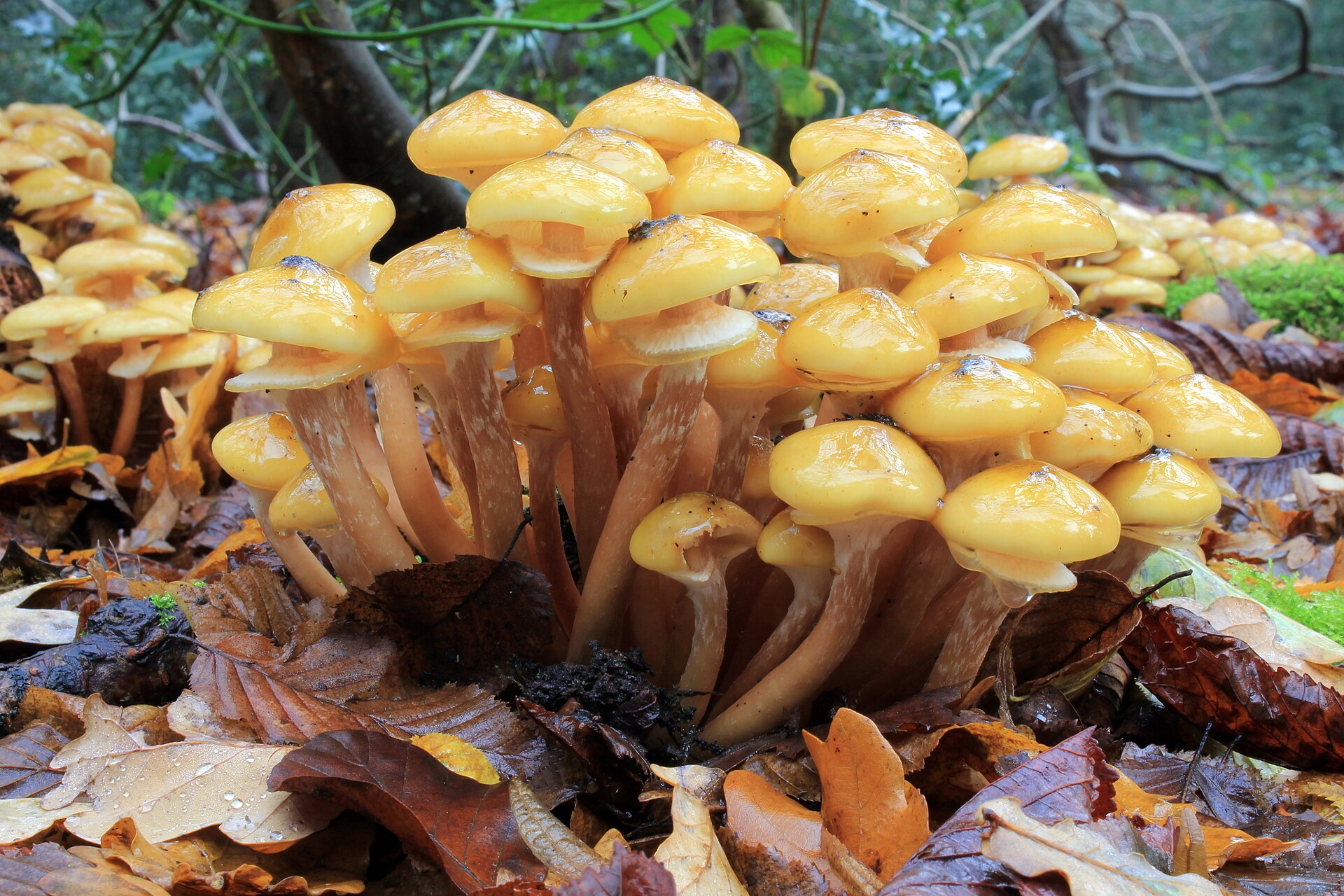
- clusters of honey-colored mushrooms at the base in fall
Treatment & management
- No cure — manage the site and tree vigor
- Reduce stress (water in drought, mulch, avoid soil compaction and root injury), and excavate to expose the root collar so it can dry
- Remove severely affected trees and as much infected root and stump material as feasible
- Replant the site with less-susceptible species
- avoid over-irrigating the crown area
Host species
Northern Red OakQuercus rubraWhite OakQuercus albaEastern White PinePinus strobusDouglas-firPseudotsuga menziesiiQuaking AspenPopulus tremuloidesPaper BirchBetula papyriferaFlowering DogwoodCornus floridaWillow OakQuercus phellosScarlet OakQuercus coccineaChestnut OakQuercus montanaShumard OakQuercus shumardiiPost OakQuercus stellataValley OakQuercus lobataOregon White OakQuercus garryanaBlack OakQuercus velutinaCalifornia Black OakQuercus kelloggiiCanyon Live OakQuercus chrysolepis
Common questions
What are the honey-colored mushrooms at the base of my dying tree?
Clusters of honey mushrooms in fall, with black shoestring rhizomorphs and white fungal fans under the bark, point to Armillaria root rot. The fungus decays roots and the root collar, undermining the tree.
Can a tree recover from Armillaria root rot?
There is no cure, but vigorous trees can sometimes wall it off for years. Reduce stress with proper watering and mulch, expose the root collar to air, and remove trees that become structurally unsafe.
Related diseases
Tree Nerd Academy
Ready to sit the ISA Certified Arborist exam?
Video curriculum, flashcards, and exam-sim built by working arborists.