
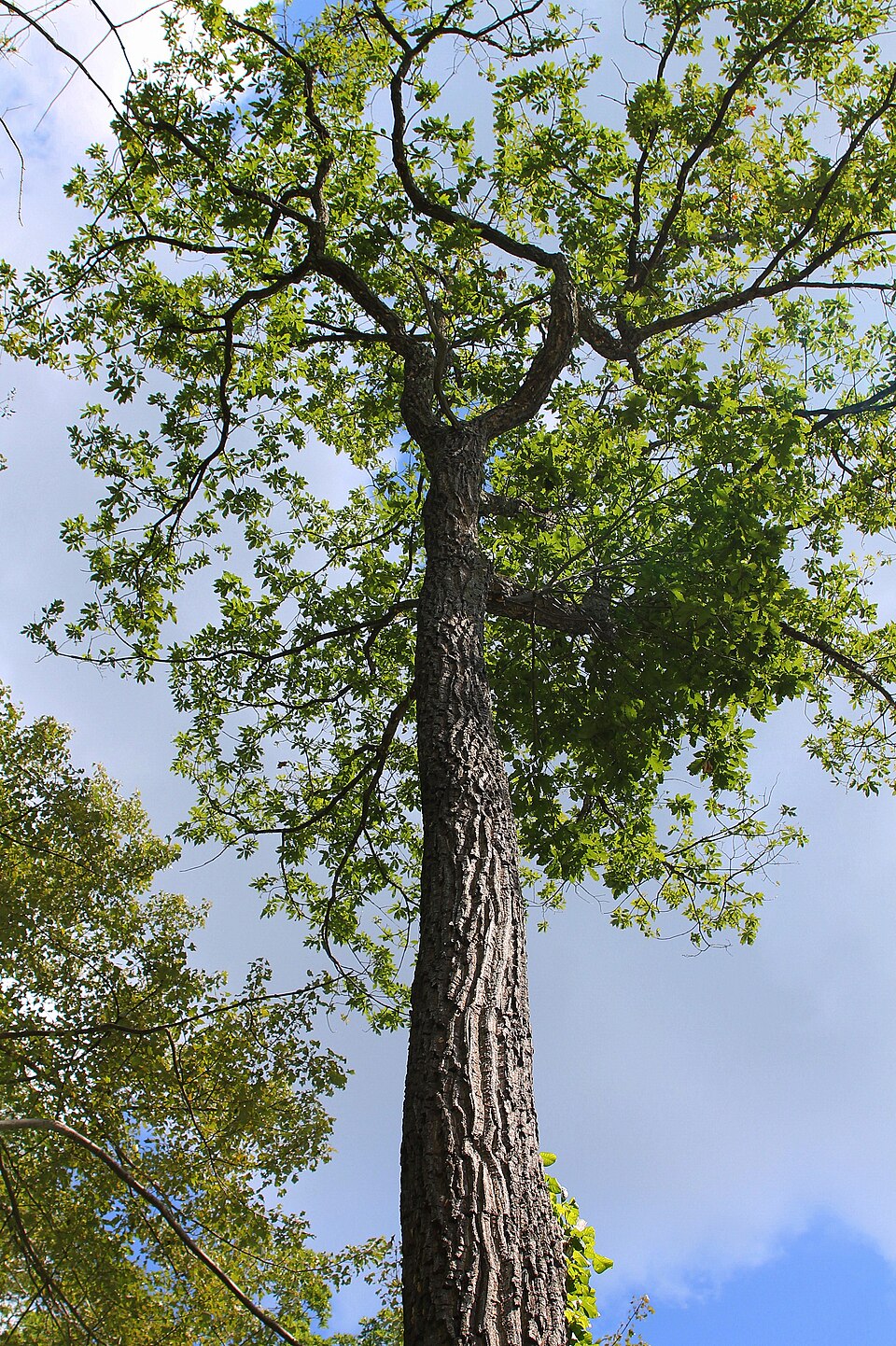
Chestnut Oak
Quercus montana
A rugged ridge-and-slope oak named for its chestnut-like leaves, with deeply ridged bark and exceptional drought tolerance. Slow-growing and long-lived; resents soil disturbance and excess water around the root collar.
Field reference
Family
Fagaceae
Growth rate
Slow
Mature size
60–70 ft tall, 50–70 ft spread
Hardiness zone
4–8
Soil preference
Dry, rocky, acidic ridgetop soils; extremely drought-tolerant
Sun
Full sun
Pruning window
Mid-winter (dormant); avoid April–July in oak-wilt areas
Wood properties
Dense, durable white-group oak (~0.66 SG) with very tannic, rot-resistant heartwood. Strong limbs; heavy wood and ridgetop lean call for careful rigging on slopes.
Native range
Appalachian and eastern United States, Maine to Mississippi
Green weight
62 lb/ft³
Pests & diseases to watch
Oak Wiltfungus · Severe severity · peak Spring and early summer (high infection risk from fresh wounds April–July)Spongy Moth (formerly Gypsy Moth)pest · High severity · peak Caterpillars feed and defoliate May–June; egg masses laid mid-summer overwinterArmillaria Root Rotfungus · High severity · peak Decline visible in summer drought stress; honey mushrooms appear in fall
Common questions
Is chestnut oak related to the American chestnut?
No — it is a true white oak that simply has coarsely toothed, chestnut-like leaves. The American chestnut (Castanea dentata) is an unrelated genus largely lost to chestnut blight.
Why is my ridgetop chestnut oak declining after grading?
Chestnut oak is adapted to lean, dry soils and is sensitive to compaction, fill, and added irrigation over its roots. Construction impacts often show as crown thinning one to three seasons later.
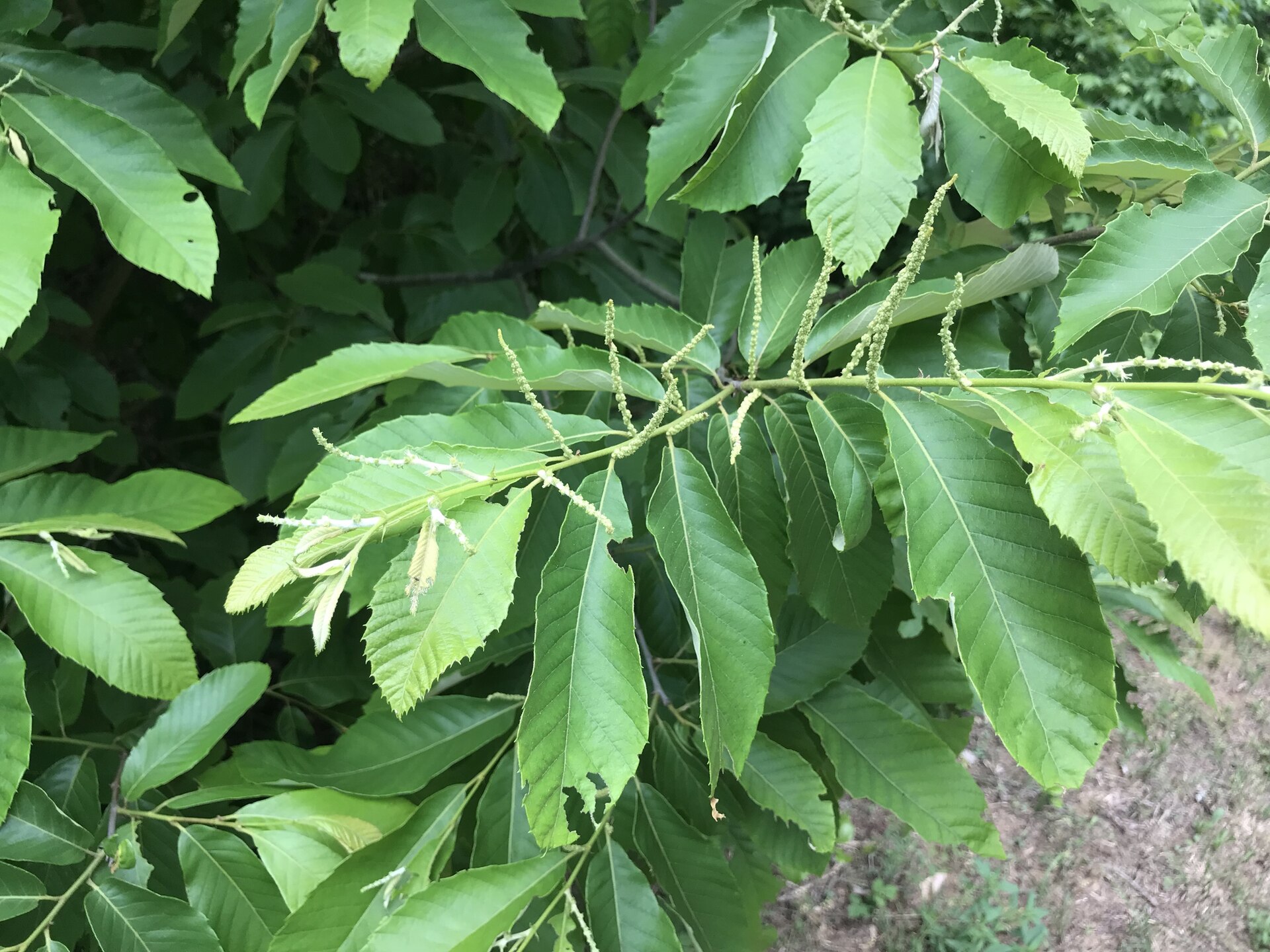
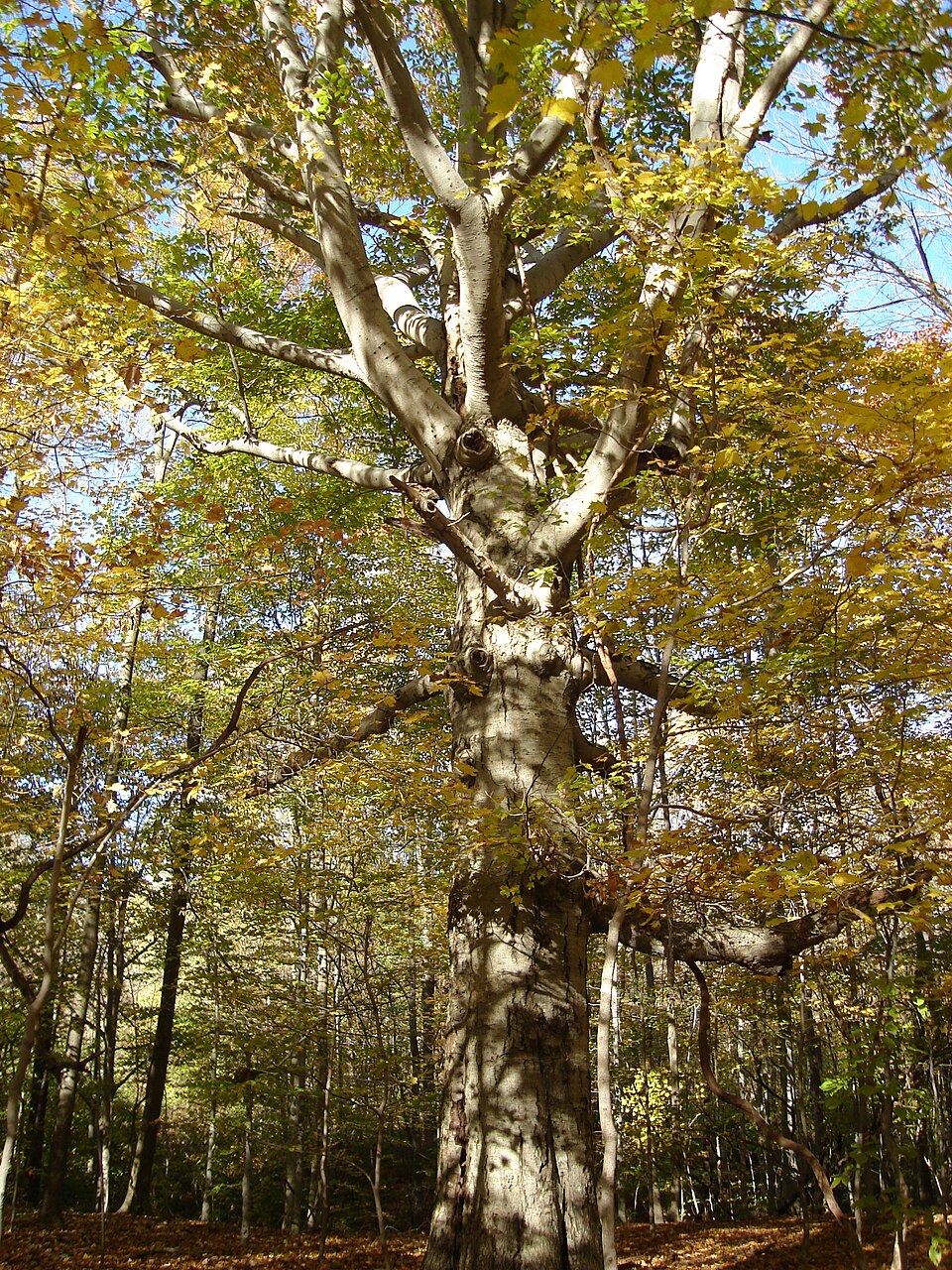
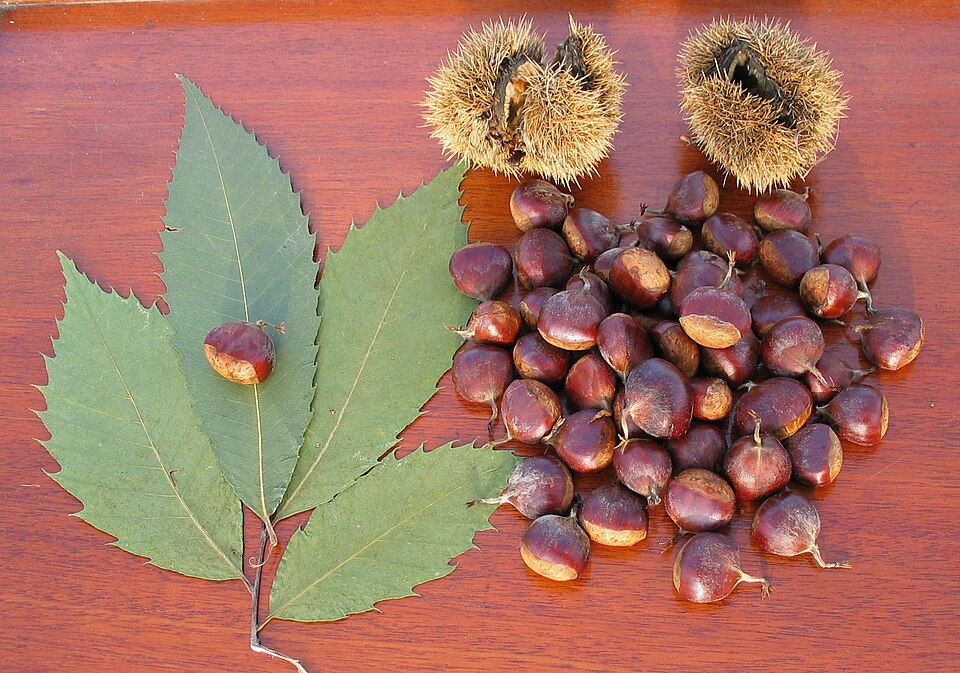
Related species in Fagaceae
Tree Nerd Academy
Ready to sit the ISA Certified Arborist exam?
Video curriculum, flashcards, and exam-sim built by working arborists.