
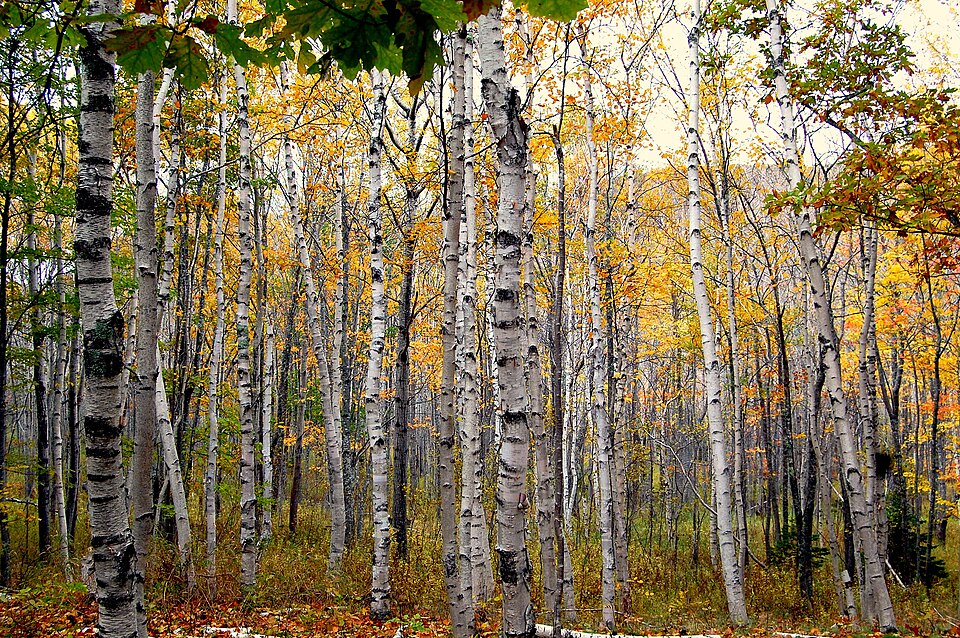
Paper Birch
Betula papyrifera
The classic white-barked northern birch whose papery, peeling bark was used for canoes. It is a cool-climate, short-lived pioneer that declines under heat, drought, and especially bronze birch borer in stressed urban plantings. Never prune in late winter or spring, when it bleeds sap profusely; prune in summer or fall instead.
Field reference
Family
Betulaceae
Growth rate
Moderate
Mature size
40–70 ft tall, 25–35 ft spread
Hardiness zone
2–6
Soil preference
Cool, moist, well-drained acidic soils; intolerant of heat and drought
Sun
Full sun to part shade
Pruning window
Summer or fall — never late winter/spring (heavy sap bleed)
Wood properties
Moderately hard, even-grained wood (~0.55 SG) used for plywood, dowels, and turning. Sound limbs; thin white bark sunscalds and scars easily.
Native range
Northern North America, across Canada and the northern United States
Green weight
50 lb/ft³
Pests & diseases to watch
Spongy Moth (formerly Gypsy Moth)pest · High severity · peak Caterpillars feed and defoliate May–June; egg masses laid mid-summer overwinterAsian Longhorned Beetlepest · Severe severity · peak Adults active and emerging July through OctoberBronze Birch Borerpest · High severity · peak Adults emerge and lay eggs late May through July; larvae tunnel under barkArmillaria Root Rotfungus · High severity · peak Decline visible in summer drought stress; honey mushrooms appear in fall
Common questions
Why is the top of my white birch dying back?
Progressive top-down dieback in a stressed birch is the signature of bronze birch borer. Keep birches mulched, watered, and cool-rooted to resist it; treat high-value trees systemically.
When should I prune a birch?
Prune in late summer or fall. Late-winter and spring cuts 'bleed' sap heavily, which is unsightly though rarely harmful; avoid that window for cleaner work.
Related species in Betulaceae
Tree Nerd Academy
Ready to sit the ISA Certified Arborist exam?
Video curriculum, flashcards, and exam-sim built by working arborists.