
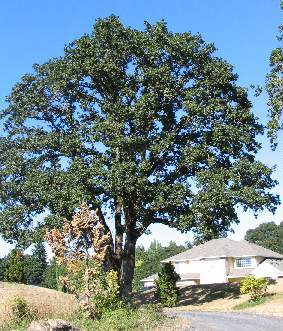
Oregon White Oak
Quercus garryana
Also called Garry oak, the signature oak of Pacific Northwest oak savannas and prairies, slow-growing and exceptionally long-lived. Its open habitats are conservation priorities, and shading by faster conifers (Douglas-fir) after fire suppression is the chief threat to old open-grown trees.
Field reference
Family
Fagaceae
Growth rate
Slow
Mature size
40–90 ft tall, 40–80 ft spread
Hardiness zone
6–9
Soil preference
Dry to seasonally wet soils; very tolerant of poor, rocky, and droughty sites once established
Sun
Full sun
Pruning window
Mid-summer (dry season) to reduce disease and avoid wet-season pathogens
Wood properties
Dense, hard, strong white-group oak (~0.64 SG), the Pacific Northwest's main native white oak timber. Excellent limb strength; heavy wood and broad form call for measured rigging.
Native range
Pacific Northwest, from southern British Columbia through Oregon to central California
Green weight
62 lb/ft³
Pests & diseases to watch
Spongy Moth (formerly Gypsy Moth)pest · High severity · peak Caterpillars feed and defoliate May–June; egg masses laid mid-summer overwinterPowdery Mildewfungus · Low severity · peak Late spring through fall, worst in humid, shaded, crowded conditionsArmillaria Root Rotfungus · High severity · peak Decline visible in summer drought stress; honey mushrooms appear in fall
Common questions
Why are conifers a threat to Oregon white oak?
Garry oak evolved in open, fire-maintained savannas. With fire suppressed, faster-growing Douglas-fir overtops and shades the oaks, which are shade-intolerant and decline. Releasing oaks by removing encroaching conifers is a common restoration treatment.
Is Oregon white oak slow growing?
Yes — it is notably slow but very long-lived, with open-grown trees persisting for centuries. That slow growth produces dense, strong wood and a sturdy branch structure.
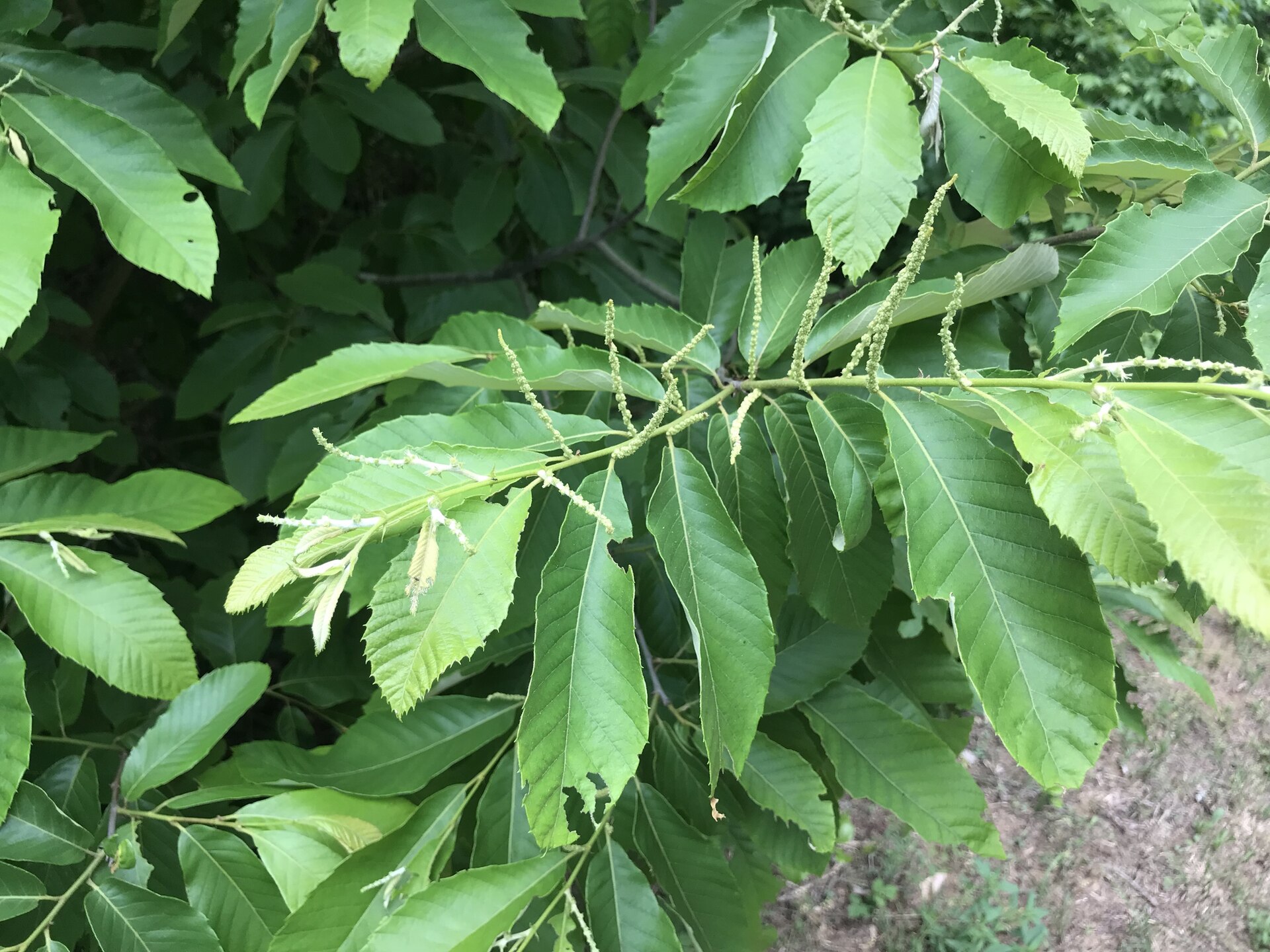
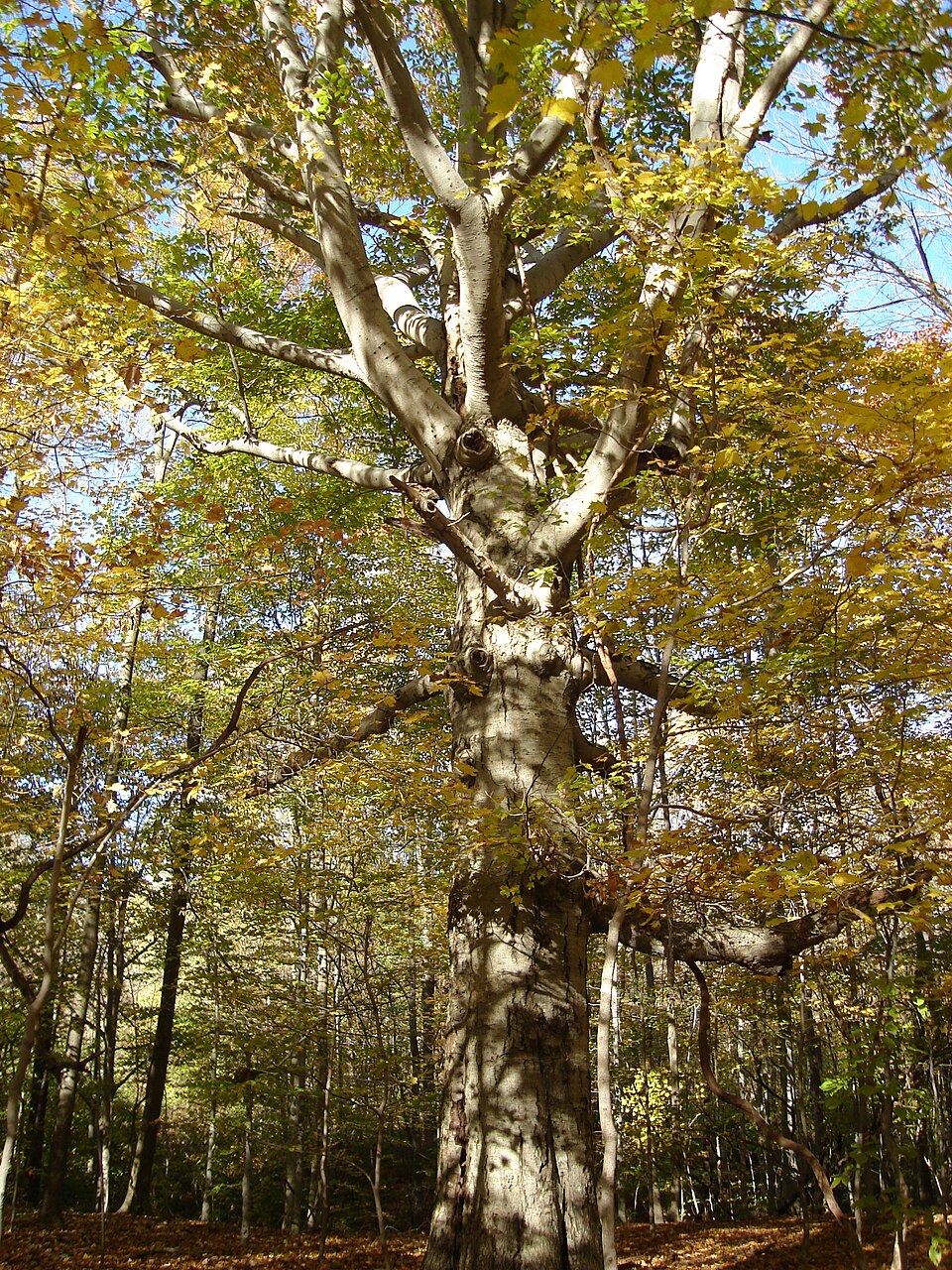
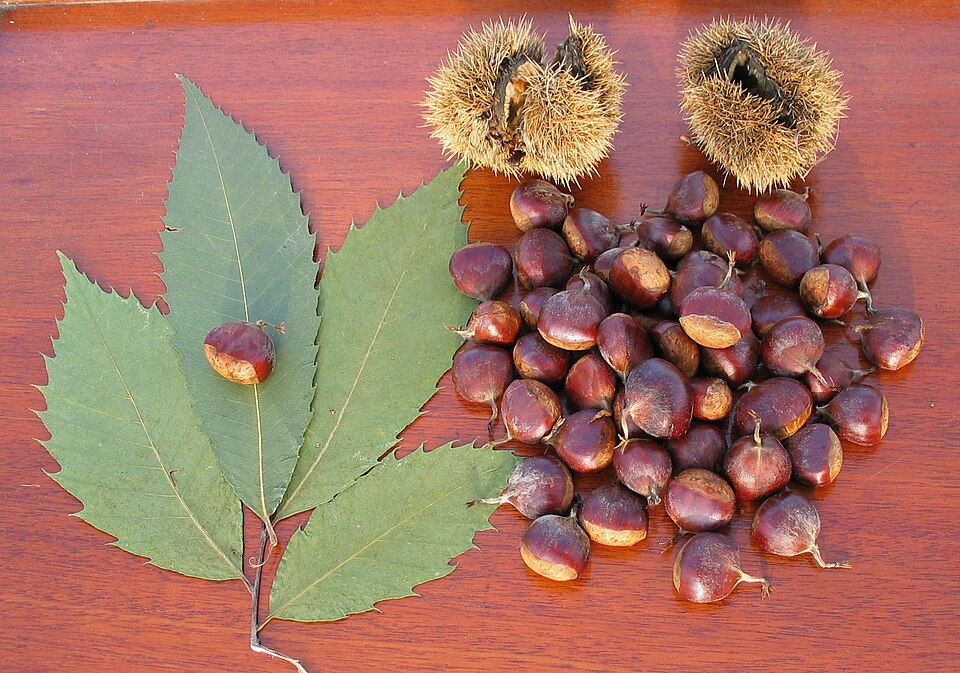
Related species in Fagaceae
Tree Nerd Academy
Ready to sit the ISA Certified Arborist exam?
Video curriculum, flashcards, and exam-sim built by working arborists.