
Powdery Mildew
Erysiphe / Podosphaera / Phyllactinia spp.
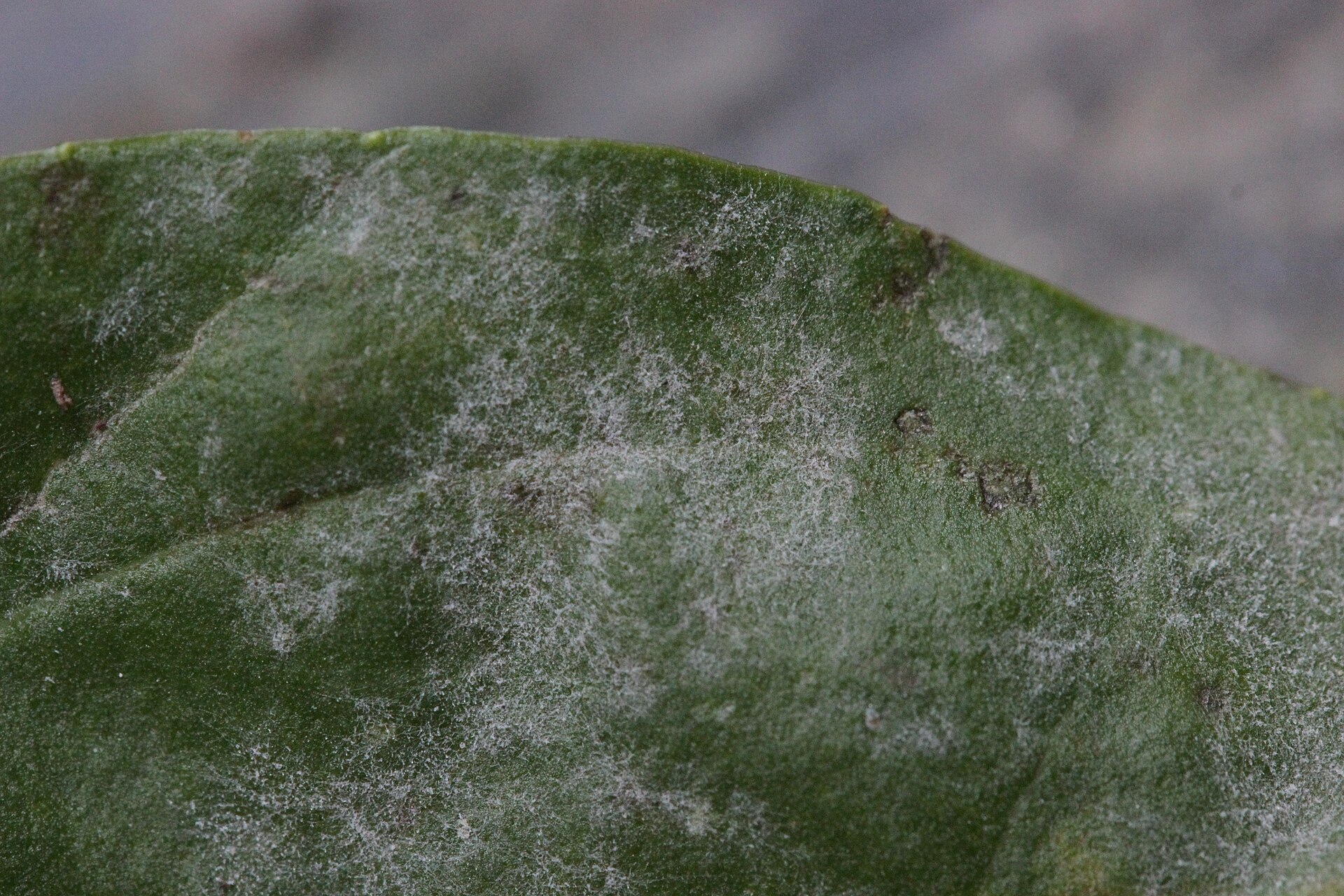
Range: Throughout the United States; favored by humid days and cool nights with poor airflowSee it on the alert map
Symptoms & signs
- White to gray powdery, talc-like coating on the upper (and sometimes lower) leaf surfaces, shoots, and buds
- leaves may curl, pucker, yellow, or distort
- stunted new growth
- on crapemyrtle, distorted flower buds and reduced bloom
- tiny black overwintering specks late in the season
Treatment & management
- Plant mildew-resistant cultivars (especially crapemyrtle)
- Improve sunlight and air circulation through siting and pruning
- avoid excess nitrogen
- Horticultural oils, potassium bicarbonate, sulfur, or registered fungicides for high-value or heavily infected ornamentals
- Mostly cosmetic on established shade trees
Host species
Northern Red OakQuercus rubraFlowering DogwoodCornus floridaCrapemyrtleLagerstroemia indicaLondon PlanetreePlatanus × acerifoliaNorthern CatalpaCatalpa speciosaCoast Live OakQuercus agrifoliaChinkapin OakQuercus muehlenbergiiValley OakQuercus lobataOregon White OakQuercus garryanaCalifornia Black OakQuercus kelloggiiEnglish OakQuercus roburKousa DogwoodCornus kousaCalifornia SycamorePlatanus racemosaCanyon Live OakQuercus chrysolepis
Common questions
What is the white powder on my crapemyrtle or dogwood leaves?
It is powdery mildew, a surface fungus that thrives in humidity, shade, and crowding. It is mostly cosmetic, but on crapemyrtle it can deform buds and cut down on bloom.
How do I prevent powdery mildew?
Site plants in full sun with good airflow, prune to open the canopy, avoid heavy nitrogen, and choose resistant cultivars. Fungicides or horticultural oil help on valued, repeatedly affected plants.
Related diseases
Tree Nerd Academy
Ready to sit the ISA Certified Arborist exam?
Video curriculum, flashcards, and exam-sim built by working arborists.