
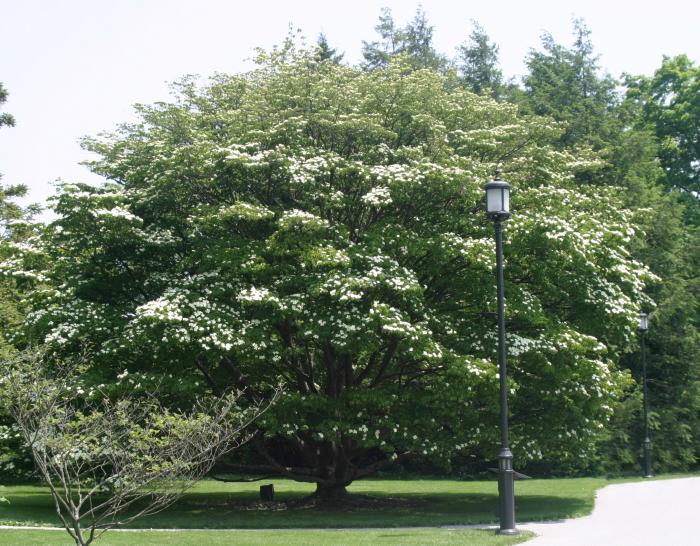
Kousa Dogwood
Cornus kousa
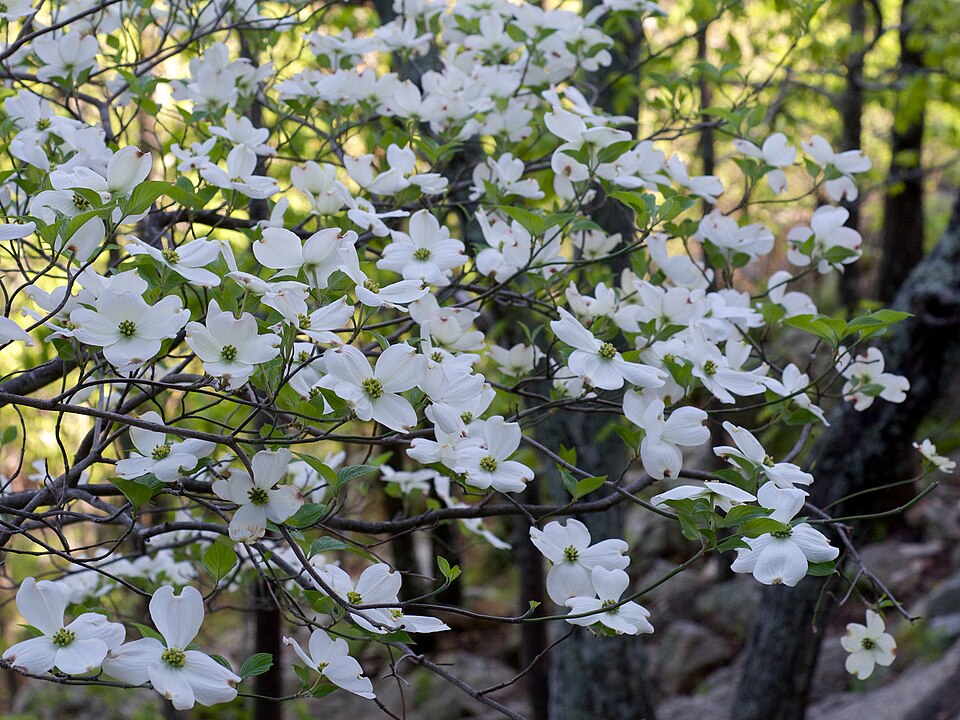
An Asian dogwood blooming weeks after native flowering dogwood, with pointed creamy bracts held above the leaves, raspberry-like edible fruit, and beautiful exfoliating bark. Crucially, it resists the dogwood anthracnose and borers that plague Cornus florida, making it a tougher, more disease-resistant small specimen tree.
Field reference
Family
Cornaceae
Growth rate
Slow
Mature size
20–30 ft tall, 20–30 ft spread
Hardiness zone
5–8
Soil preference
Moist, rich, acidic, well-drained soils; better drought tolerance than flowering dogwood
Sun
Full sun to part shade
Pruning window
After flowering (early summer); minimal pruning needed
Wood properties
Hard, dense, fine-grained dogwood wood on a small frame; light rigging. Exfoliating mottled bark on older trunks is a key ornamental and ID feature.
Native range
Native to East Asia (Japan, Korea, China); widely planted ornamental
Green weight
52 lb/ft³
Pests & diseases to watch
Common questions
Is kousa dogwood more disease-resistant than flowering dogwood?
Yes — Cornus kousa is notably resistant to dogwood anthracnose and dogwood borer, the two biggest killers of native flowering dogwood, which is why it is often recommended as a tougher substitute or planted as hybrids with C. florida.
Are kousa dogwood berries edible?
Yes — the bumpy, raspberry-red aggregate fruits are edible, with a sweet, custard-like pulp, though the skin is grainy and they are messy where they drop on pavement.
Related species in Cornaceae
Tree Nerd Academy
Ready to sit the ISA Certified Arborist exam?
Video curriculum, flashcards, and exam-sim built by working arborists.