
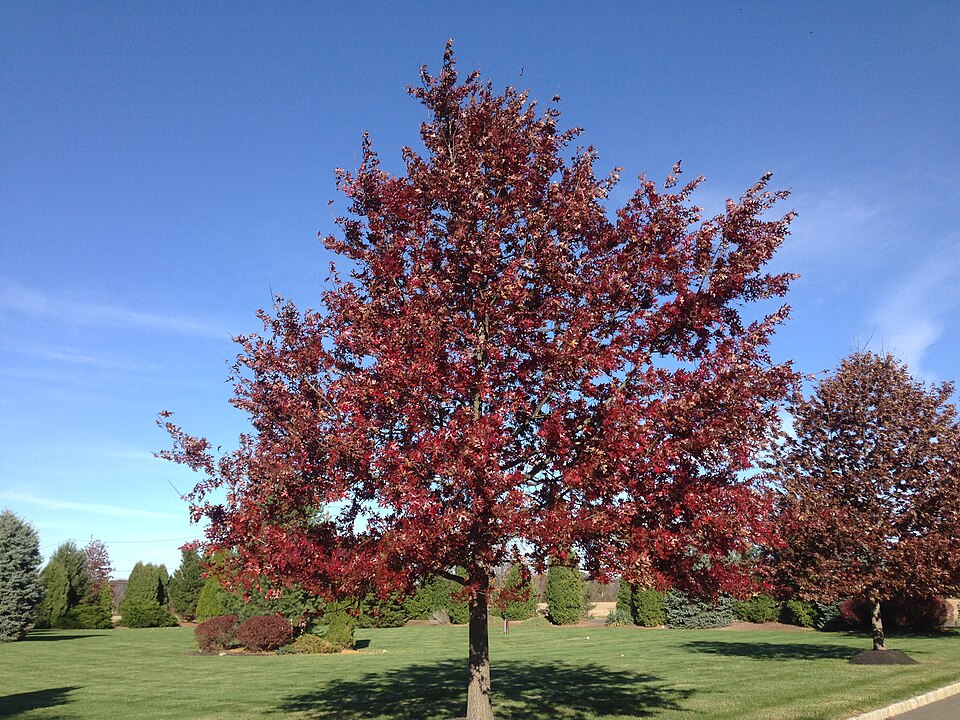
Scarlet Oak
Quercus coccinea
Prized for brilliant scarlet fall color and tolerance of dry, poor soils. Holds dead interior branches that need routine cleaning, and tight codominant forks are a common failure point on older specimens.
Field reference
Family
Fagaceae
Growth rate
Moderate
Mature size
50–70 ft tall, 40–50 ft spread
Hardiness zone
4–9
Soil preference
Dry, sandy, acidic, well-drained soils; intolerant of wet or alkaline sites
Sun
Full sun
Pruning window
Mid-winter (dormant); never April–July in oak-wilt regions
Wood properties
Hard, heavy red-group oak (~0.60 SG) marketed with red oak. Strong limb wood but prone to included bark at tight forks — inspect unions before loading.
Native range
Eastern United States, Maine to Georgia and west to Missouri
Green weight
62 lb/ft³
Pests & diseases to watch
Oak Wiltfungus · Severe severity · peak Spring and early summer (high infection risk from fresh wounds April–July)Spongy Moth (formerly Gypsy Moth)pest · High severity · peak Caterpillars feed and defoliate May–June; egg masses laid mid-summer overwinterBacterial Leaf Scorchdisease · High severity · peak Symptoms most visible mid-summer to fall (July–October)Cankerworm (Inchworm)pest · Moderate severity · peak Larvae feed and defoliate in spring (April–May) as leaves expandArmillaria Root Rotfungus · High severity · peak Decline visible in summer drought stress; honey mushrooms appear in fall
Common questions
How is scarlet oak different from pin oak?
Both are red oaks with deeply cut, glossy leaves, but scarlet oak tolerates dry upland soils and keeps a stronger central leader, while pin oak prefers wet ground and holds drooping lower limbs.
Why are there dead branches throughout the crown?
Scarlet oak naturally self-prunes shaded interior limbs, so some deadwood is normal. Heavy, progressive dieback instead points to oak wilt or Armillaria and warrants a closer diagnosis.
Related species in Fagaceae
Tree Nerd Academy
Ready to sit the ISA Certified Arborist exam?
Video curriculum, flashcards, and exam-sim built by working arborists.