
Spotted Lanternfly
Lycorma delicatula
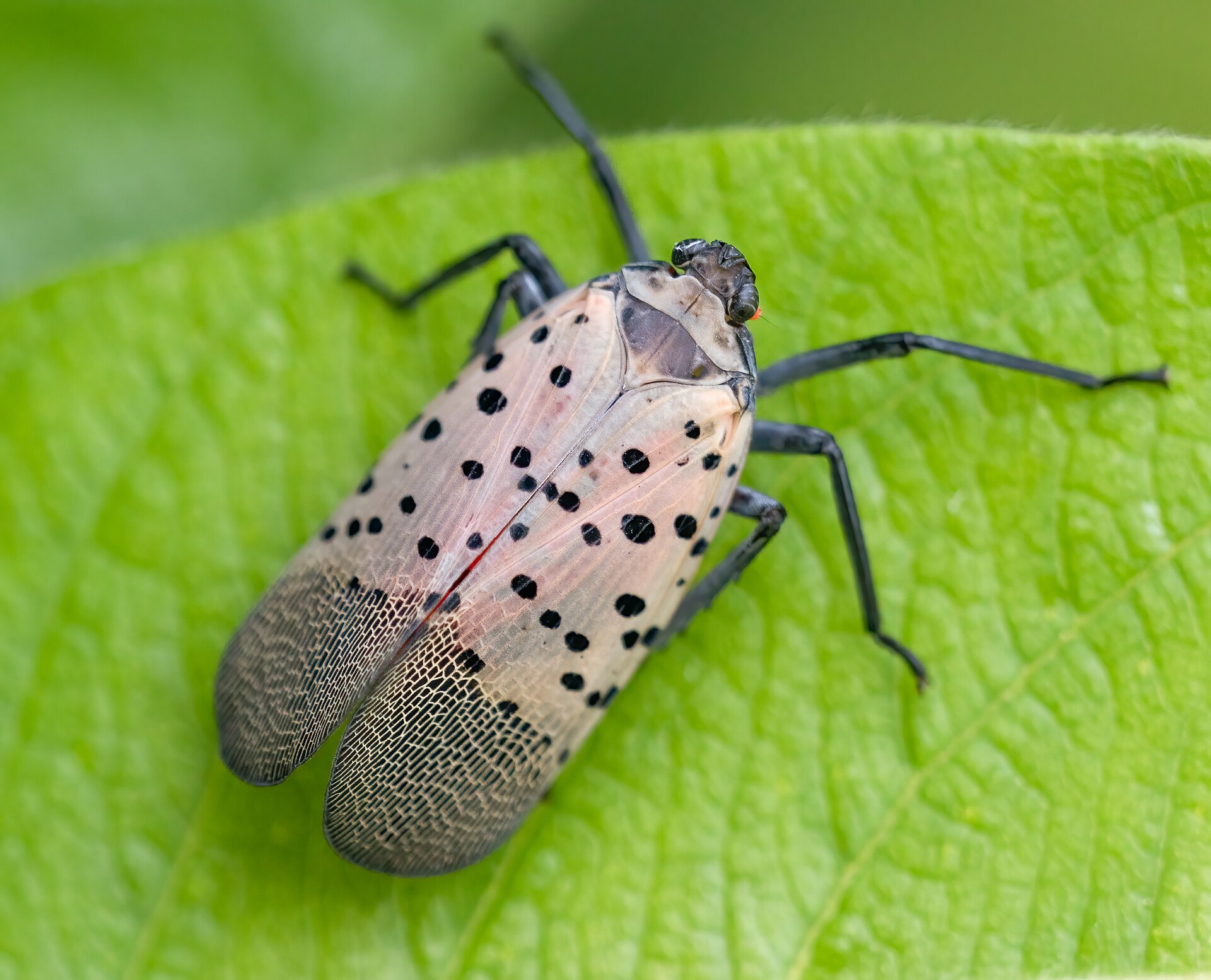
Range: Mid-Atlantic and Northeastern United States, spreading west and southSee it on the alert map
Symptoms & signs
- Sap weeping from trunk wounds
- sticky honeydew coating bark and understory followed by black sooty mold
- swarms of gray-and-red planthoppers and black/red nymphs on trunks
- gray, mud-like egg masses on bark and smooth surfaces
- wasps and ants drawn to the honeydew
Treatment & management
- Scrape and destroy egg masses fall–spring
- Systemic (dinotefuran) or contact insecticides on infested high-value trees
- Remove the preferred host tree-of-heaven (Ailanthus) or use it as a trap tree
- Banding trunks catches climbing nymphs
- Report sightings to state agriculture officials in quarantine areas
Host species
Common questions
Does spotted lanternfly kill trees?
It rarely kills established hardwoods outright but stresses them through heavy sap feeding and honeydew/sooty mold. It is most lethal to grapevines and young or already-stressed trees.
What should I do if I find an egg mass?
Scrape it off into a bag or container with alcohol or hand sanitizer and destroy it. Each gray, mud-like mass can hold 30–50 eggs, so removal over winter cuts the spring population.
Related pests
Tree Nerd Academy
Ready to sit the ISA Certified Arborist exam?
Video curriculum, flashcards, and exam-sim built by working arborists.