
Bagworms
Thyridopteryx ephemeraeformis
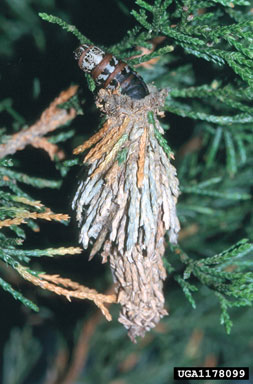
Range: Eastern and central United States, particularly the Midwest and SoutheastSee it on the alert map
Symptoms & signs
- Spindle-shaped, 1.5–2 inch 'bags' covered in bits of host foliage and twigs hanging from branches
- chewed, stripped, browning foliage on evergreens (which often cannot refoliate)
- heavy infestations defoliate and can kill conifers
- bags are easily mistaken for cones or natural debris
Treatment & management
- Hand-pick and destroy overwintering bags from fall to spring to remove the eggs inside
- Apply Btk or a registered insecticide to the small, newly hatched larvae in late spring/early summer, when control is most effective
- Larger larvae in tough bags resist sprays
- Monitor susceptible evergreens annually
Host species
Colorado Blue SprucePicea pungensNorway SprucePicea abiesBald CypressTaxodium distichumEastern RedcedarJuniperus virginianaNorthern White-cedarThuja occidentalisHoneylocustGleditsia triacanthosOhio BuckeyeAesculus glabraWhite SprucePicea glaucaFraser FirAbies fraseriWestern RedcedarThuja plicataLeyland CypressCupressus × leylandiiWhite FirAbies concolorIncense CedarCalocedrus decurrensAtlantic White CedarChamaecyparis thyoides
Common questions
Are those little cone-like things on my evergreen actually cones?
Often they are bagworm cases, not cones — each spindle-shaped bag is camouflaged with host foliage and holds a caterpillar or, over winter, hundreds of eggs. Pick and destroy them before spring.
Why are bagworms so deadly to evergreens?
Conifers like spruce and cedar cannot readily regrow stripped needles, so heavy bagworm feeding can permanently brown and kill whole branches or the entire tree, unlike most defoliated hardwoods.
Related pests
Tree Nerd Academy
Ready to sit the ISA Certified Arborist exam?
Video curriculum, flashcards, and exam-sim built by working arborists.