
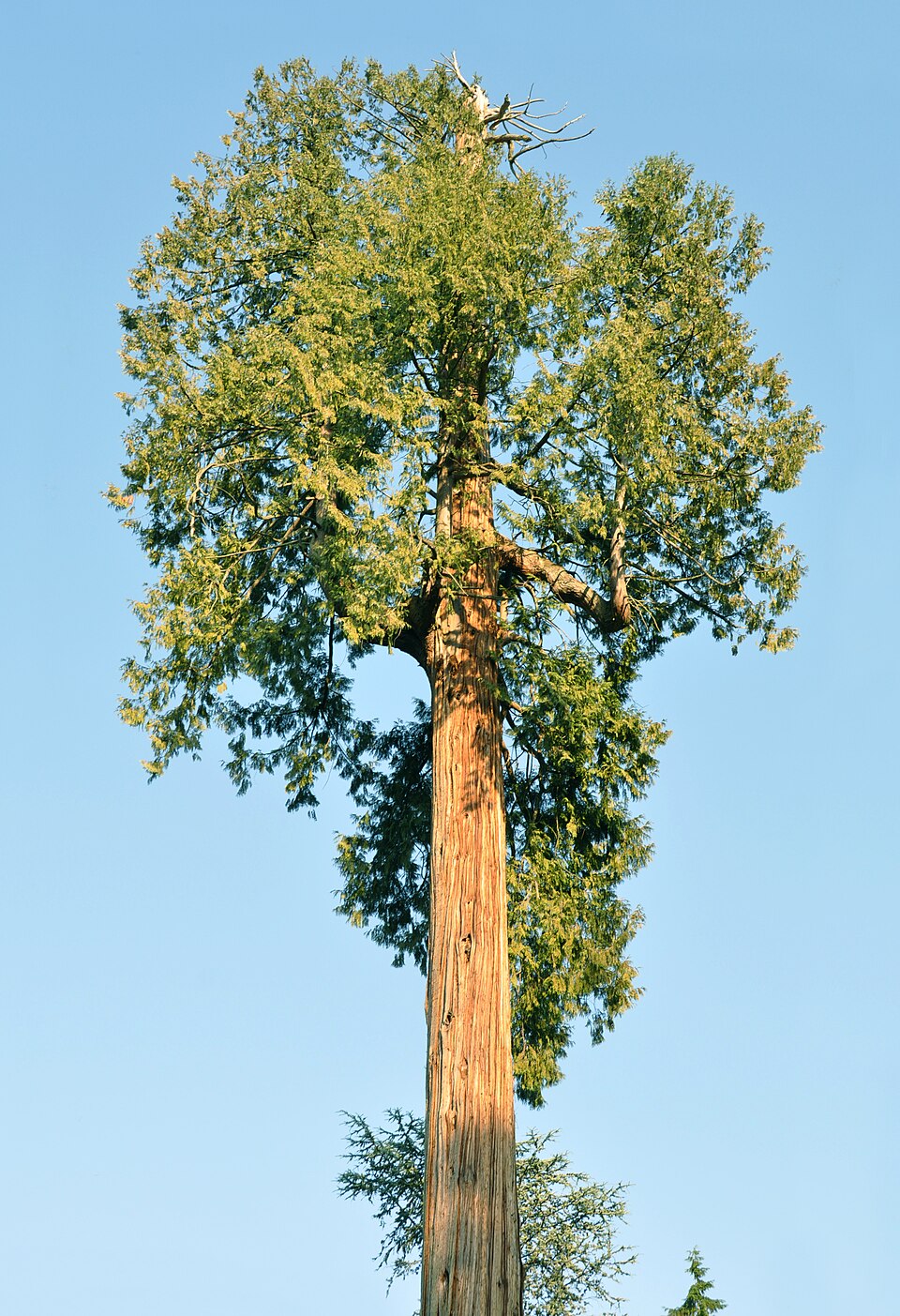
Western Redcedar
Thuja plicata
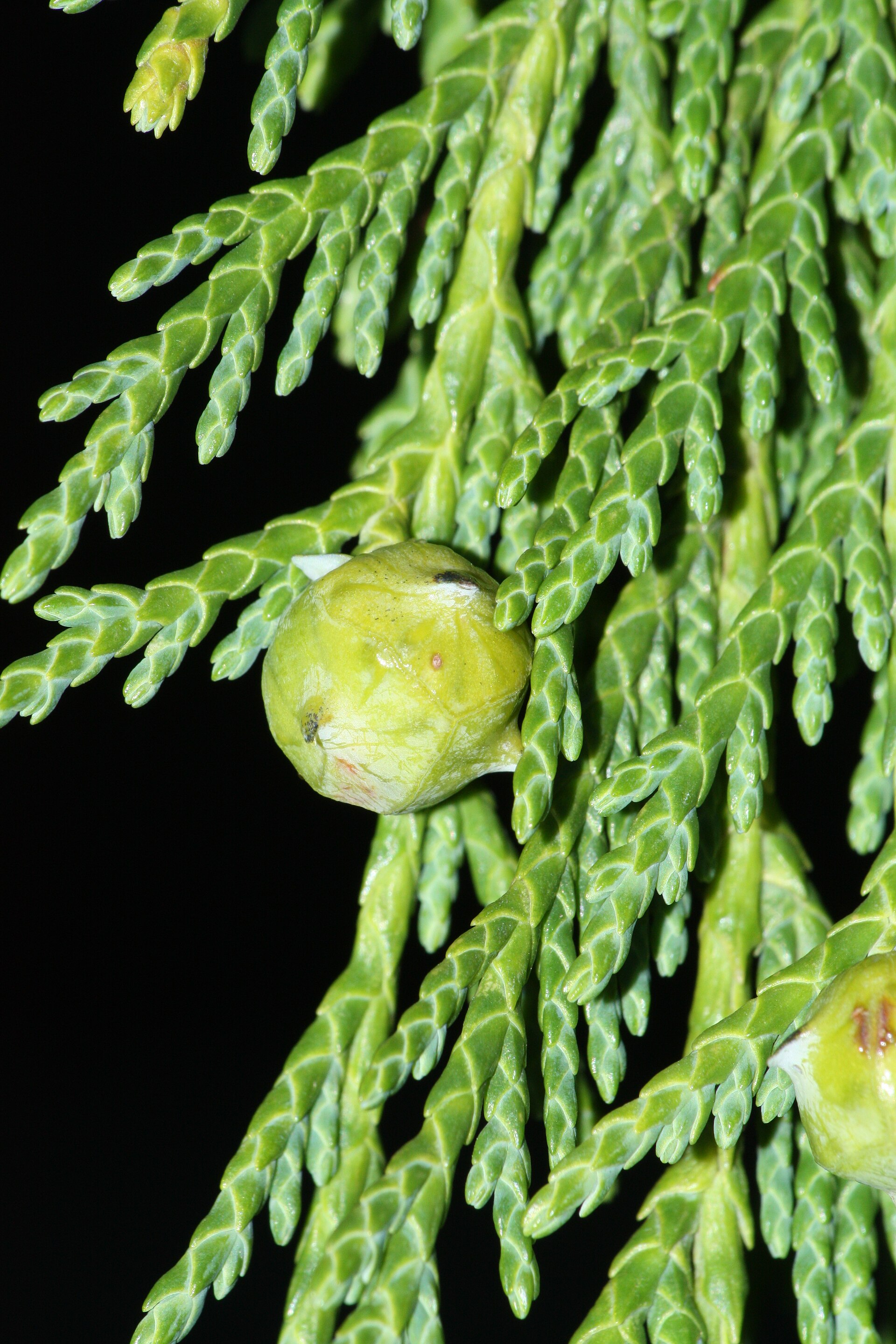
A massive, long-lived Pacific Northwest conifer of cultural and timber importance, with fibrous reddish bark and sweeping fern-like sprays. Drought-stress dieback has risen with hotter summers; widely used in landscapes as a tall screen or hedge.
Field reference
Family
Cupressaceae
Growth rate
Moderate
Mature size
50–70 ft tall (to 200 ft wild), 15–25 ft spread
Hardiness zone
5–8
Soil preference
Moist to wet, rich soils; shade-tolerant, intolerant of prolonged drought
Sun
Full sun to part shade
Pruning window
Late dormant season; tolerates shearing for hedges
Wood properties
Very light, soft, aromatic, exceptionally rot-resistant wood (~0.32 SG) — the classic shingle, siding, and shake cedar. Light limbs but huge wild stems; buttressed bases complicate felling.
Native range
Pacific Northwest of North America, southern Alaska to Northern California and the inland Northwest
Green weight
27 lb/ft³
Pests & diseases to watch
Common questions
Why is my western redcedar browning from the top down?
Top dieback and flagging on western redcedar is increasingly tied to hot, dry summers and shallow soils. Deep mulch and supplemental water during drought are the main defenses, since the species is genuinely drought-sensitive.
Is some inner-needle browning normal?
Yes. Like other cedars, western redcedar sheds older interior foliage in fall, turning it bronze before it drops. Browning confined to inner, older sprays is natural seasonal flagging, not disease.
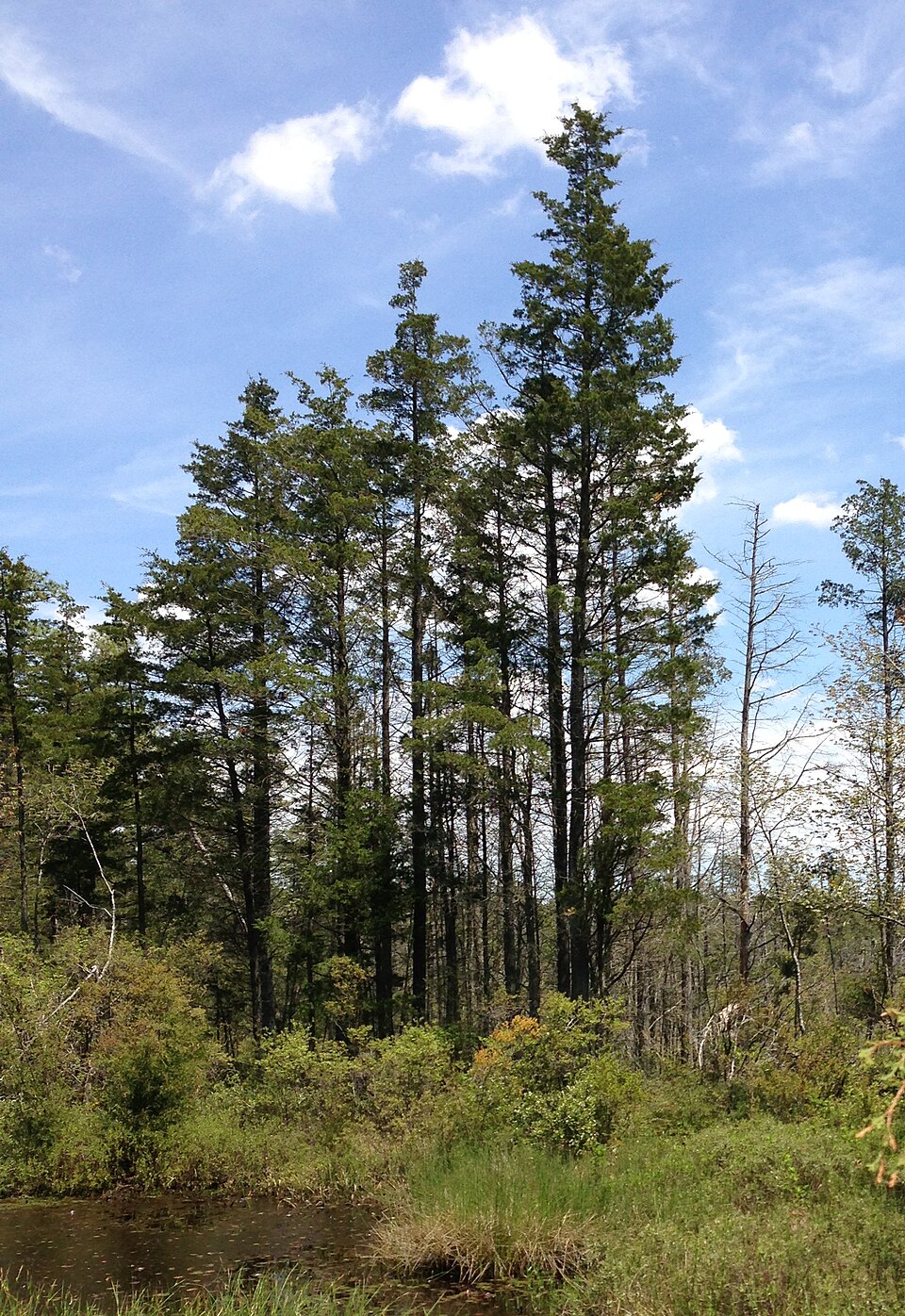
Related species in Cupressaceae
Tree Nerd Academy
Ready to sit the ISA Certified Arborist exam?
Video curriculum, flashcards, and exam-sim built by working arborists.