
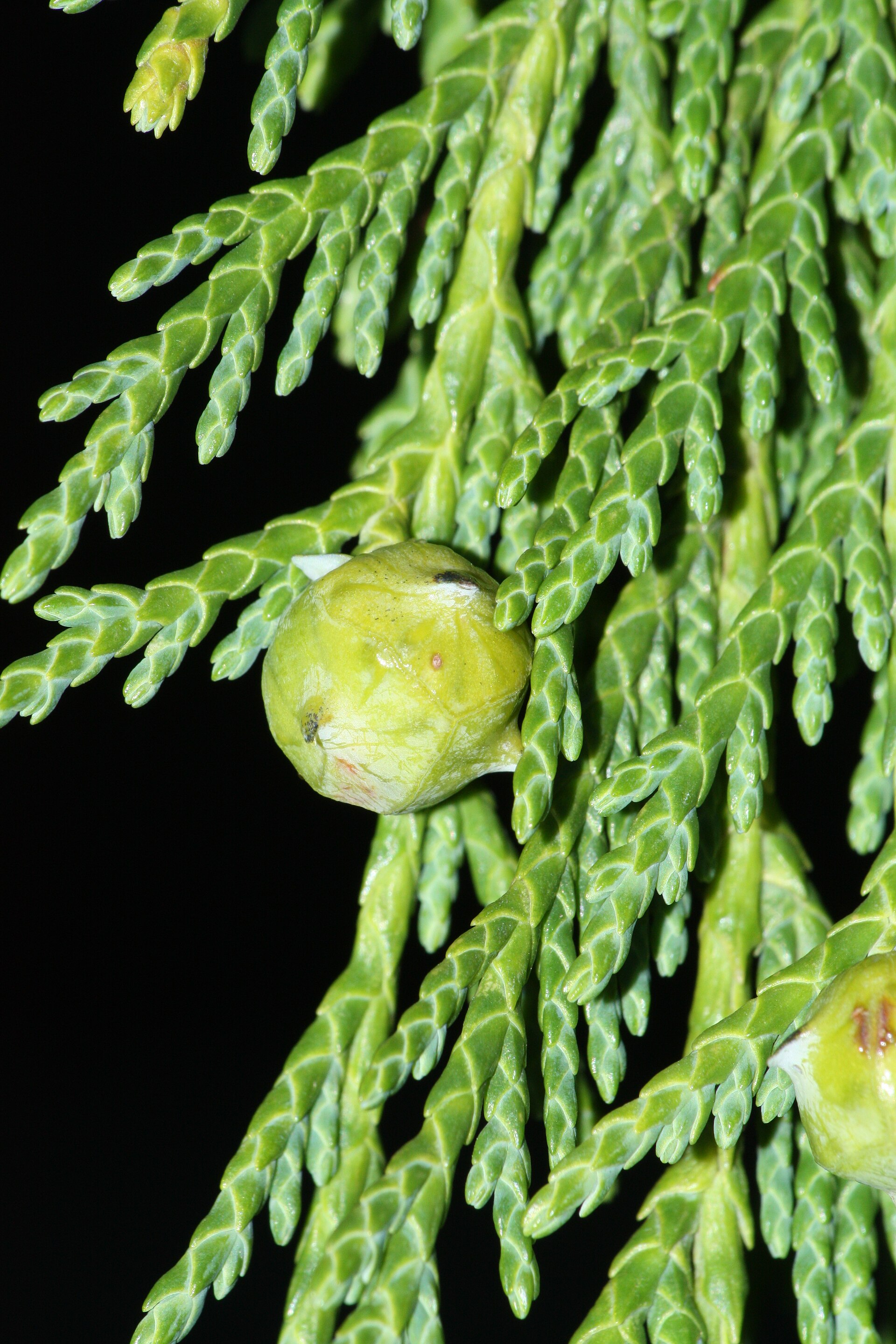
Alaska Cedar
Cupressus nootkatensis (syn. Callitropsis nootkatensis)
Highly shade tolerant when young; slow-growing but very long-lived.
Field reference
Family
Cupressaceae
Growth rate
Slow
Mature size
60–120 ft tall, 15–30 ft spread
Hardiness zone
4-7
Soil preference
Moist, well-drained acidic soils; prefers cool climates
Sun
Full Sun to Partial Shade
Pruning window
Late winter; light structural pruning only
Wood properties
Durable, rot-resistant, aromatic wood historically used for shakes, boatbuilding, and carving
Native range
Pacific Northwest (Alaska through British Columbia to Oregon)
Green weight
40 lb/ft³
Common questions
Is Alaska cedar actually a cedar?
No. It is a false cypress in the Cupressaceae family, not a true cedar.
How fast does Alaska cedar grow?
It is slow to moderate growing, especially in cooler coastal climates.
Is Alaska cedar good for timber?
Yes. Its wood is highly durable, rot-resistant, and historically valuable for exterior uses.
Where does Alaska cedar grow naturally?
It grows in coastal forests from Alaska through British Columbia into the Pacific Northwest.
Why is Alaska cedar important ecologically?
It provides critical habitat in coastal rainforest ecosystems and supports long-lived forest structure.
Related species in Cupressaceae
Tree Nerd Academy
Ready to sit the ISA Certified Arborist exam?
Video curriculum, flashcards, and exam-sim built by working arborists.