
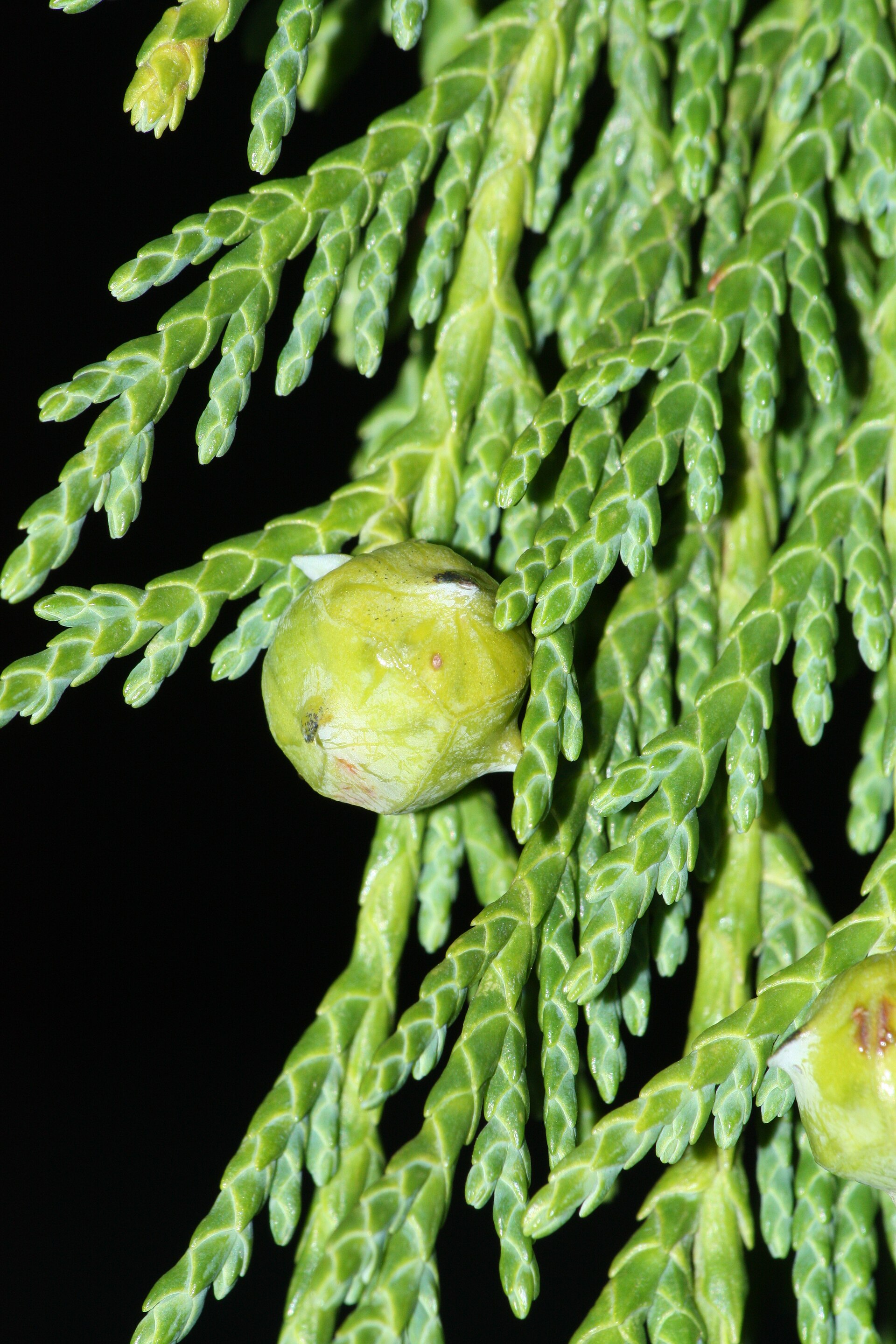
Alaska Yellow-cedar
Callitropsis nootkatensis (syn. Cupressus nootkatensis)
One of the most decay-resistant softwoods in North America; highly shade tolerant when young.
Field reference
Family
Cupressaceae
Growth rate
Slow
Mature size
60–120 ft tall, 15–30 ft spread
Hardiness zone
4-7
Soil preference
Moist, acidic, well-drained soils; high rainfall climates
Sun
Full Sun to Partial Shade
Pruning window
Late winter (minimal pruning only)
Wood properties
Extremely durable, rot-resistant, high natural oil content, used for exterior construction and marine applications
Native range
Coastal Alaska, British Columbia, Washington, Oregon
Green weight
40 lb/ft³
Common questions
Is Alaska yellow-cedar a true cedar?
No. It is a false cypress in the Cupressaceae family.
Why is Alaska yellow-cedar declining in some areas?
Climate change-driven snowpack loss exposes shallow roots to freezing injury.
How strong is Alaska yellow-cedar wood?
It is very strong, durable, and highly resistant to decay, especially in wet environments.
Where does Alaska yellow-cedar grow best?
It thrives in cool, wet coastal rainforest climates with high humidity.
Is Alaska yellow-cedar good for landscaping?
Yes, but it requires cool climates and well-drained acidic soils.
Related species in Cupressaceae
Tree Nerd Academy
Ready to sit the ISA Certified Arborist exam?
Video curriculum, flashcards, and exam-sim built by working arborists.