
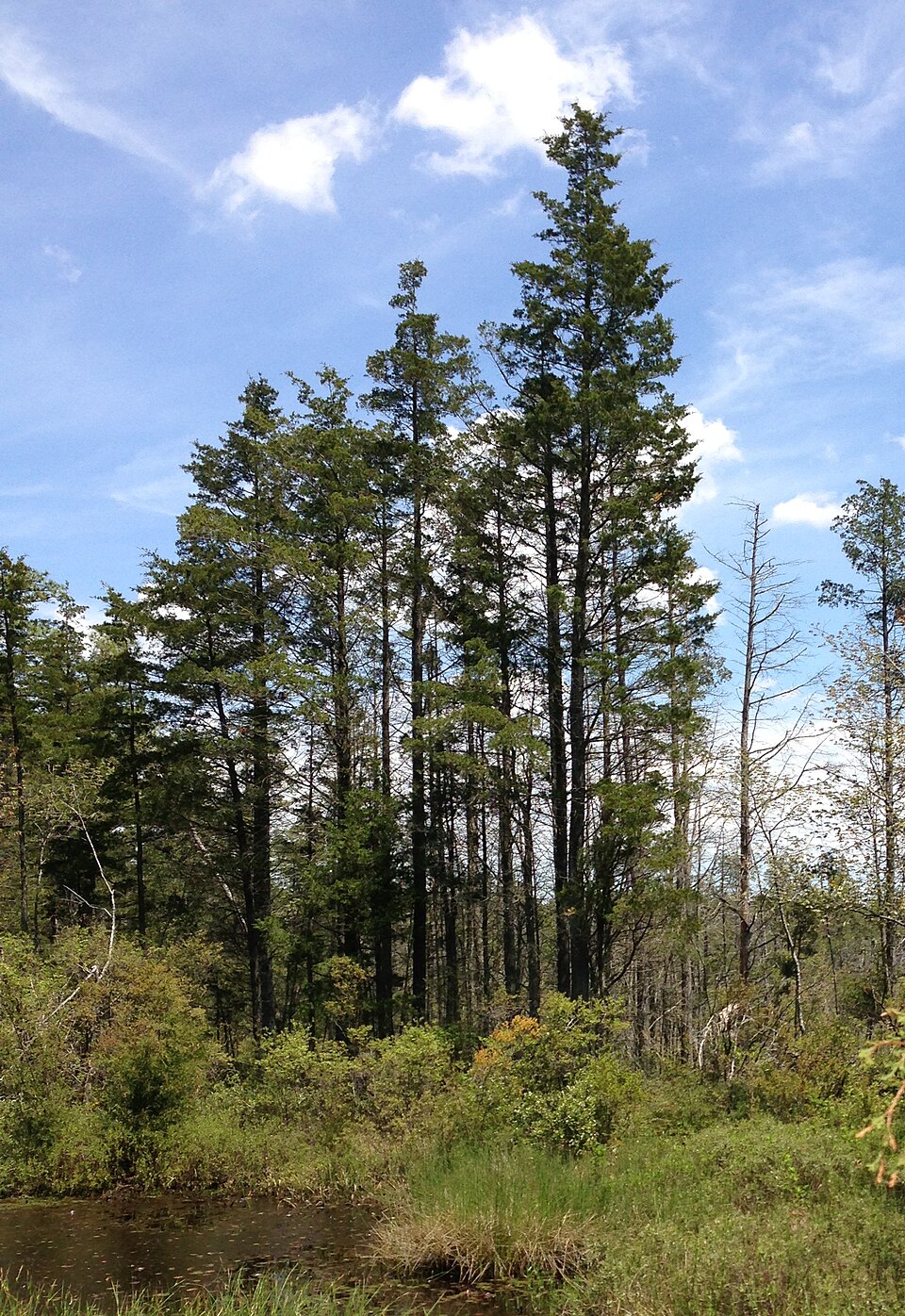
Atlantic White Cedar
Chamaecyparis thyoides
A narrow, blue-green wetland conifer of acidic Atlantic and Gulf coastal swamps, forming dense single-species stands. Its light, aromatic, exceptionally decay-resistant wood was historically prized for boats, shingles, and organ pipes; over-harvest and altered hydrology have shrunk its specialized swamp habitat.
Field reference
Family
Cupressaceae
Growth rate
Moderate
Mature size
40–60 ft tall, 10–20 ft spread
Hardiness zone
4–8
Soil preference
Wet, acidic, peaty swamps and bogs; a true wetland specialist
Sun
Full sun
Pruning window
Late dormant season; tolerates light shearing
Wood properties
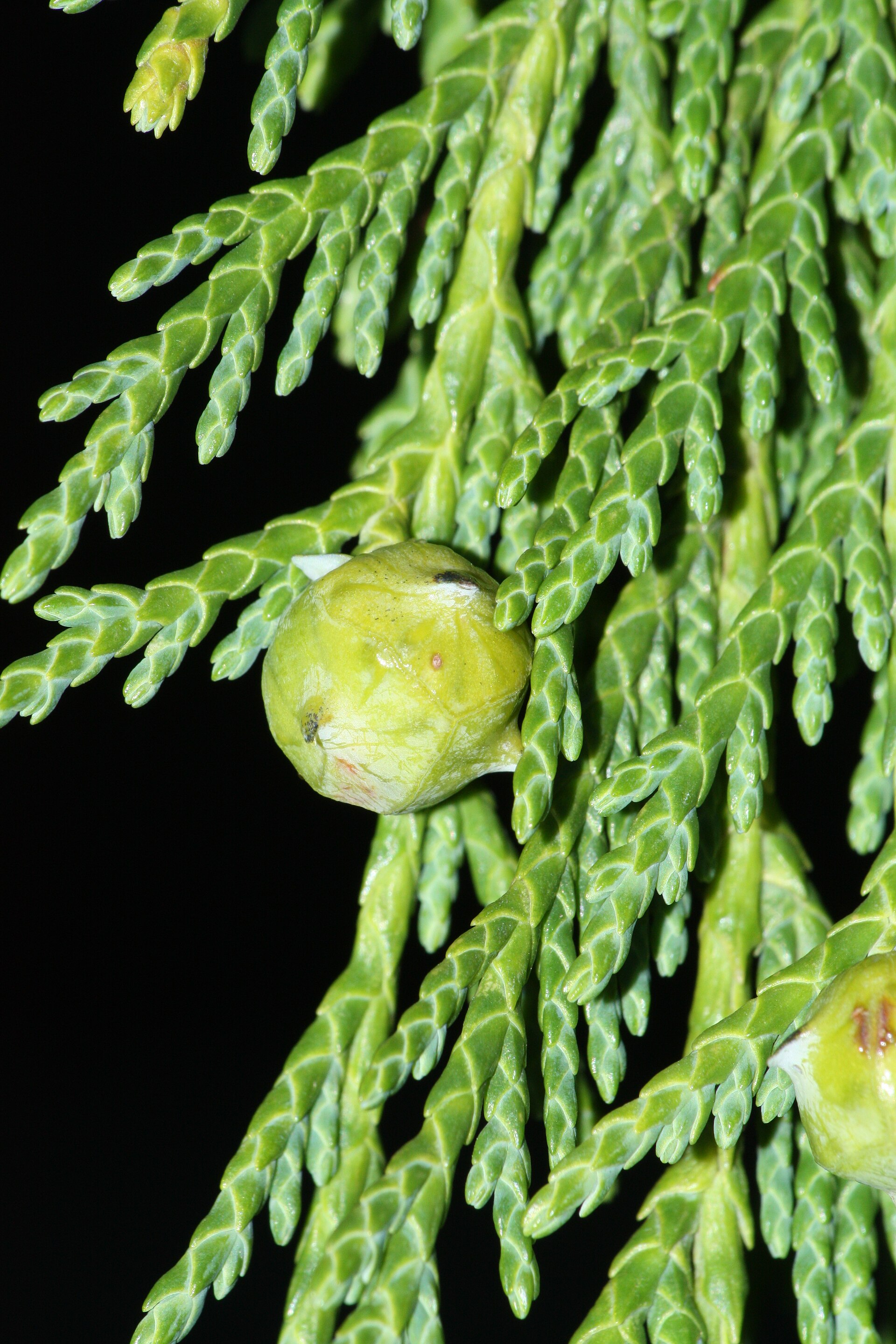
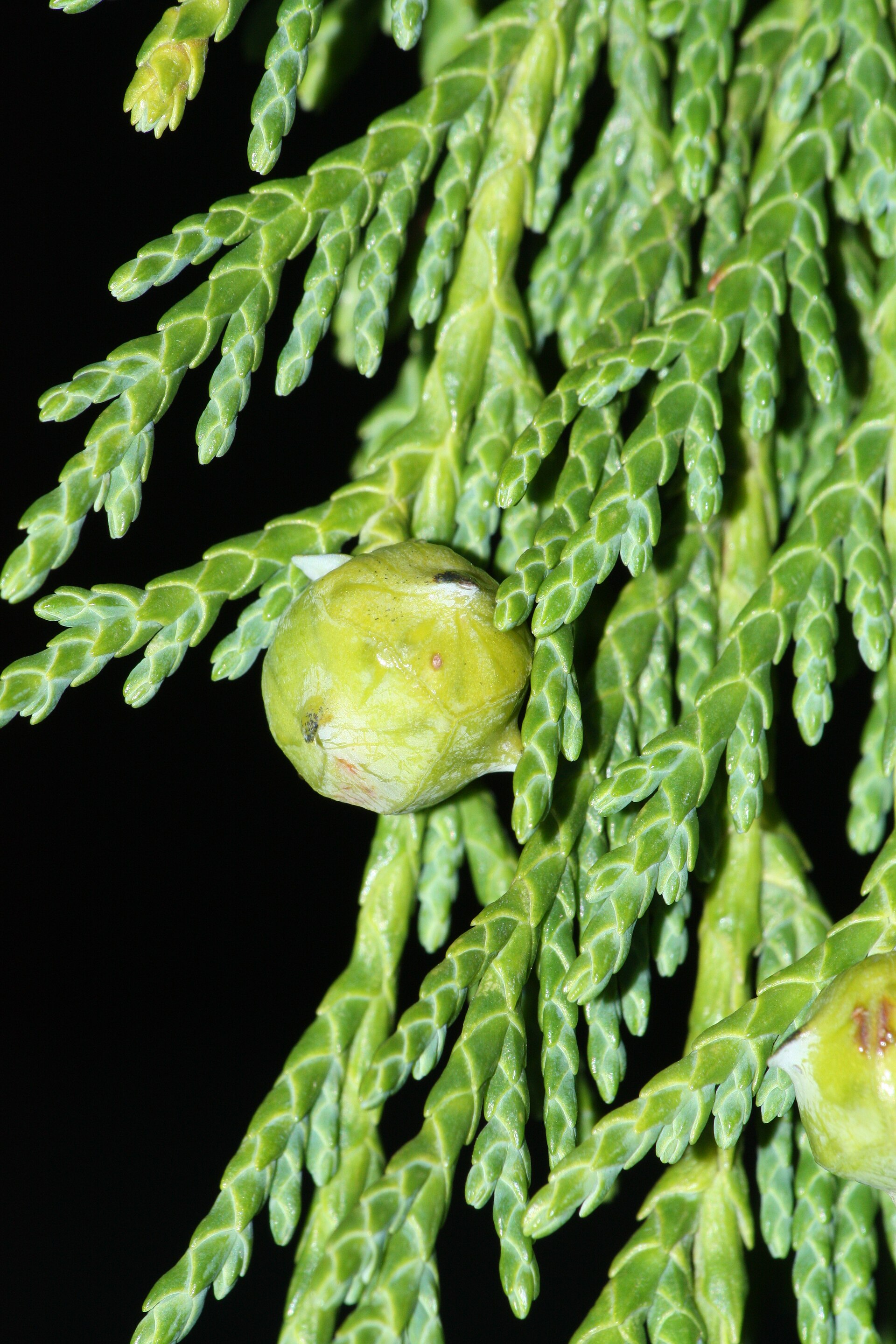
Light, soft, fragrant, very rot-resistant wood — historic boatbuilding, shingle, and organ-pipe timber. Light limbs; narrow conical crown of blue-green scale foliage.
Native range
Atlantic and Gulf coastal plain of the eastern United States, Maine to Mississippi
Green weight
26 lb/ft³
Pests & diseases to watch
Common questions
Will Atlantic white cedar grow outside a swamp?
It is a wetland specialist adapted to wet, acidic, peaty ground and grows best there, though it tolerates ordinary moist garden soil. It will not thrive on dry or alkaline sites.
Is Atlantic white cedar the same as northern white cedar?
No — they are different genera. Atlantic white cedar (Chamaecyparis thyoides) is a swamp species of the coastal plain; northern white cedar (Thuja occidentalis, arborvitae) is an upland and cliff species. Both have aromatic, rot-resistant wood.
Related species in Cupressaceae
Tree Nerd Academy
Ready to sit the ISA Certified Arborist exam?
Video curriculum, flashcards, and exam-sim built by working arborists.