
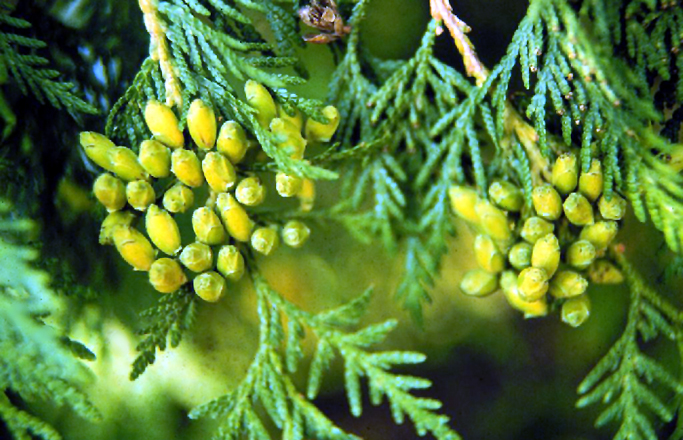
Northern White-cedar
Thuja occidentalis
Better known in cultivation as arborvitae, this slow-growing native cedar forms dense, flat sprays of scale-like foliage and tolerates wet, alkaline ground. Widely planted and sheared into hedges and screens. Deer browse it heavily, and snow and ice can splay multi-stemmed plants apart.
Field reference
Family
Cupressaceae
Growth rate
Slow
Mature size
20–40 ft tall, 10–15 ft spread
Hardiness zone
2–7
Soil preference
Moist to wet, neutral to alkaline soils; tolerates limestone
Sun
Full sun to part shade
Pruning window
Late winter to early spring; tolerates regular hedge shearing
Wood properties
Soft, light, very decay-resistant softwood (~0.31 SG) used for shingles, posts, and canoes. Flexible flat sprays; valued as hedging more than timber.
Native range
Northeastern North America, the Great Lakes and St. Lawrence region to the Appalachians
Green weight
34 lb/ft³
Pests & diseases to watch
Common questions
Is arborvitae the same as northern white-cedar?
Yes — Thuja occidentalis is sold as arborvitae in the nursery trade and as northern white-cedar in forestry. They are the same species in different contexts.
Why is my arborvitae hedge splaying open after winter?
Heavy snow and ice spread the multiple upright stems apart. Tie or cable the leaders together before winter, and gently reshape in spring; severe browning inside is normal old-needle drop.
Related species in Cupressaceae
Tree Nerd Academy
Ready to sit the ISA Certified Arborist exam?
Video curriculum, flashcards, and exam-sim built by working arborists.