
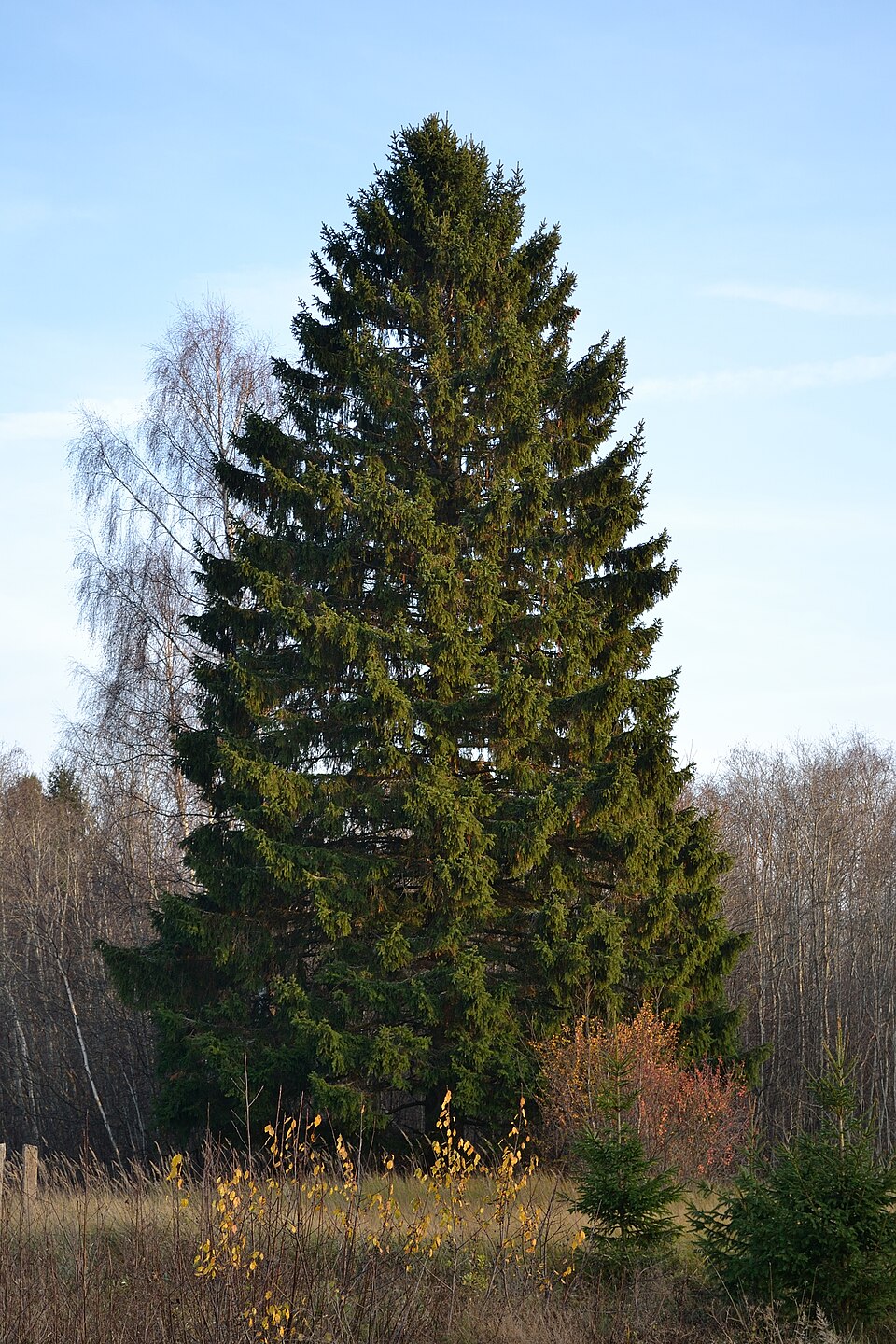
Norway Spruce
Picea abies
A fast-growing European spruce widely planted for windbreaks, screens, and Christmas trees, recognizable by its drooping branchlets and large pendulous cones. Tougher and more heat-tolerant than blue spruce, though still subject to spider mites and cytospora in stress. A reliable, vigorous evergreen for large landscapes.
Field reference
Family
Pinaceae
Growth rate
Fast
Mature size
40–60 ft tall, 25–30 ft spread
Hardiness zone
2–7
Soil preference
Moist, well-drained, acidic to neutral soils; adaptable
Sun
Full sun
Pruning window
Late winter to early spring (dormant)
Wood properties
Light, straight-grained, resonant softwood (~0.40 SG) used for paper and soundboards. Strong central leader; pendulous branchlets shed snow well.
Native range
Native to northern and central Europe; widely planted across North America
Green weight
36 lb/ft³
Pests & diseases to watch
Common questions
Is Norway spruce a good windbreak tree?
Yes — it grows fast, holds dense lower branches, and sheds snow well via its drooping branchlets, making it a classic farm windbreak and privacy screen for cold climates.
How do I tell Norway spruce from blue spruce?
Norway spruce has soft dark-green needles, distinctly weeping side branchlets, and large 4–6 inch cones, whereas blue spruce is stiff, sharp, and silvery-blue with shorter cones.
Related species in Pinaceae
Tree Nerd Academy
Ready to sit the ISA Certified Arborist exam?
Video curriculum, flashcards, and exam-sim built by working arborists.