
American Sycamore
Platanus occidentalis
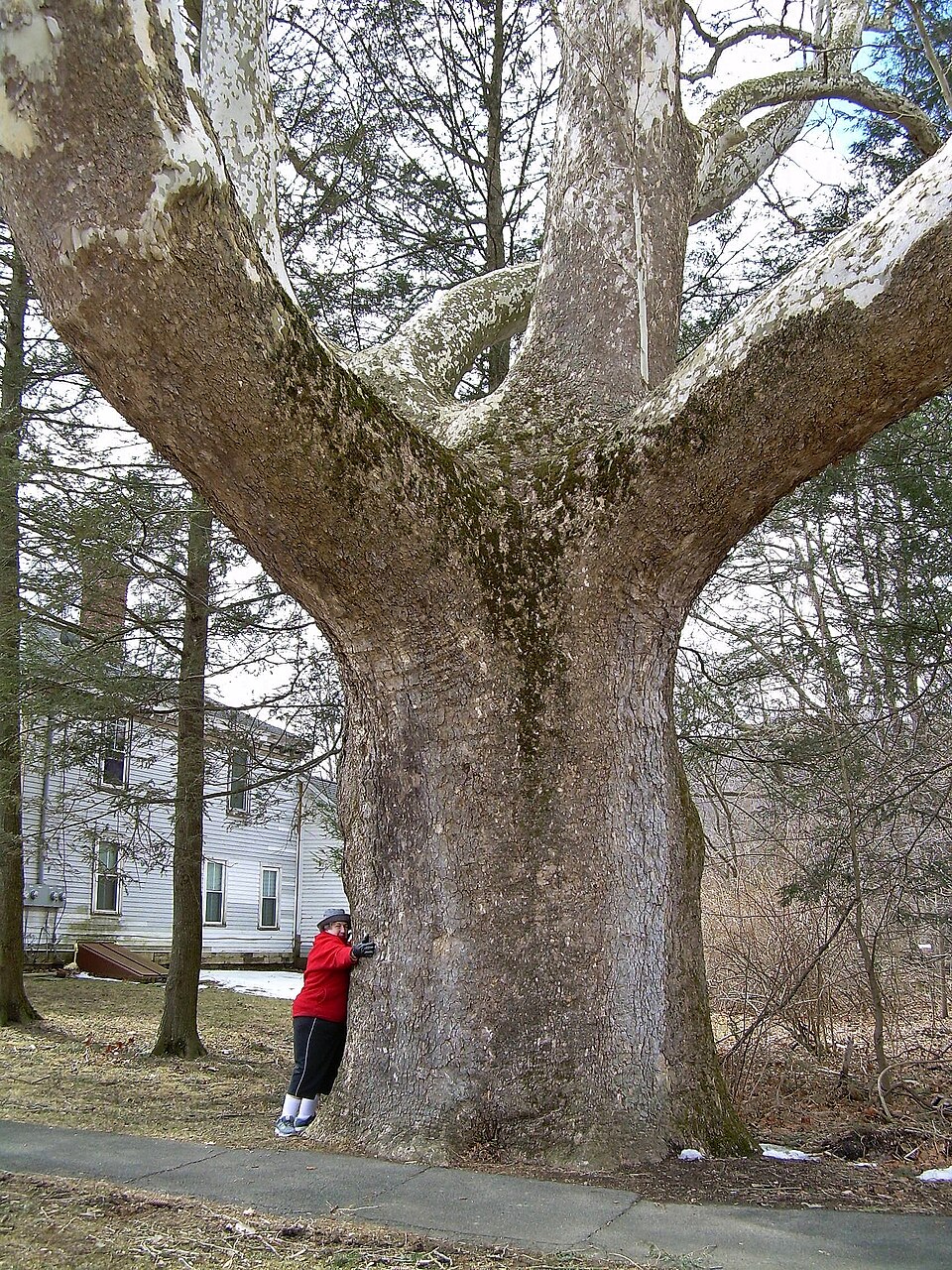
A massive, fast-growing bottomland tree with unmistakable mottled, exfoliating cream-and-tan bark and the largest trunk diameter of any eastern hardwood. Drops abundant leaf, twig, and fruit-ball litter. Routinely defoliated by sycamore anthracnose in cool wet springs but recovers.
Field reference
Family
Platanaceae
Growth rate
Fast
Mature size
75–100 ft tall, 60–75 ft spread
Hardiness zone
4–9
Soil preference
Moist to wet bottomland soils; very tolerant of flooding
Sun
Full sun
Pruning window
Mid-winter (dormant)
Wood properties
Tough, interlocked-grain wood (~0.49 SG) that is hard to split. Massive trunk and limbs; one of the largest-diameter eastern hardwoods — plan crane picks for big mass.
Native range
Eastern and central United States, from Ontario south to Texas and Florida
Green weight
52 lb/ft³
Pests & diseases to watch
Spotted Lanternflypest · High severity · peak Nymphs spring–summer; conspicuous winged adults July–November; eggs overwinterAsian Longhorned Beetlepest · Severe severity · peak Adults active and emerging July through OctoberAnthracnosefungus · Moderate severity · peak Spring, during cool, wet, rainy weather at and just after leaf-outBacterial Leaf Scorchdisease · High severity · peak Symptoms most visible mid-summer to fall (July–October)
Common questions
Why did my sycamore drop most of its leaves in late spring?
Cool, wet spring weather drives sycamore anthracnose, which browns and drops new leaves and kills shoot tips. Healthy trees re-leaf by summer; persistent defoliation may warrant treatment.
Is the peeling bark a problem?
No — the patchy, exfoliating bark is a normal and ornamental feature of sycamores and London planetrees, not a disease.
Related species in Platanaceae
Tree Nerd Academy
Ready to sit the ISA Certified Arborist exam?
Video curriculum, flashcards, and exam-sim built by working arborists.