
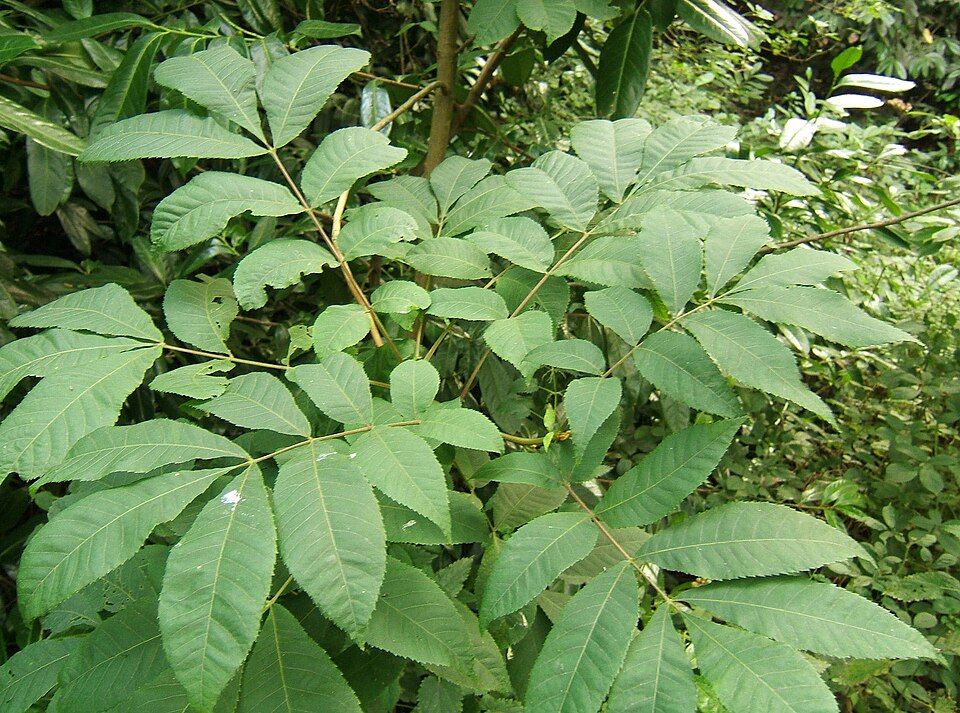
Bitternut Hickory
Carya cordiformis
A fast-establishing hickory of moist sites, instantly identified in winter by its vivid sulfur-yellow buds. The thin-shelled nuts are intensely bitter and largely shunned by wildlife, but the wood is top-grade hickory for handles, firewood, and barbecue smoke.
Field reference
Family
Juglandaceae
Growth rate
Moderate
Mature size
50–80 ft tall, 30–50 ft spread
Hardiness zone
4–9
Soil preference
Moist bottomlands and rich slopes; more moisture-loving than upland hickories
Sun
Full sun
Pruning window
Dormant season (late winter)
Wood properties
Heavy, hard, strong, tough hickory (~0.66 SG); excellent for tool handles and prized for smoking meats. Strong limbs; bright sulfur-yellow buds are the unmistakable winter ID.
Native range
Eastern and central United States, Quebec and Maine to Florida and Texas
Green weight
62 lb/ft³
Pests & diseases to watch
Common questions
How do I identify bitternut hickory in winter?
Its buds are a bright, sulfur-yellow — unique among North American trees — making winter identification easy even without leaves or nuts.
Are bitternut hickory nuts edible?
Not really — as the name says, the kernels are very bitter and are generally avoided even by wildlife. The tree's value is its excellent wood and smoke, not its nuts.
Related species in Juglandaceae
Tree Nerd Academy
Ready to sit the ISA Certified Arborist exam?
Video curriculum, flashcards, and exam-sim built by working arborists.