
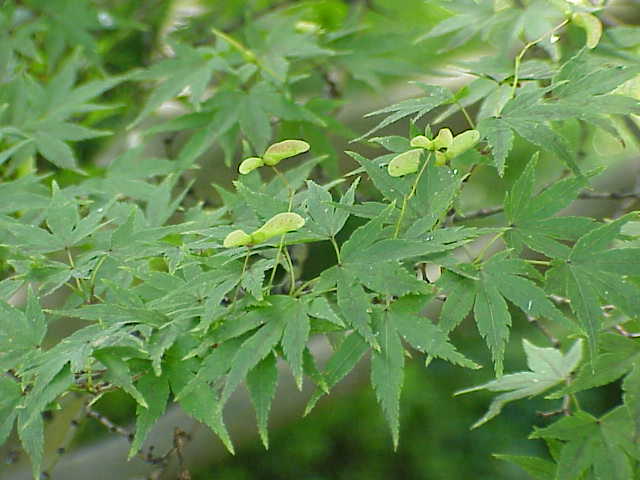
Japanese Maple
Acer palmatum
A premier ornamental with countless cultivars in lacy or palmate leaves and red, green, or variegated tones. Slow and high-value, it rewards careful crown thinning and resents sun scorch, drought, and wet feet.
Field reference
Family
Sapindaceae
Growth rate
Slow
Mature size
10–25 ft tall, 10–25 ft spread
Hardiness zone
5–9
Soil preference
Moist, rich, well-drained, slightly acidic soil; needs shelter from harsh sun and wind
Sun
Part shade (afternoon shade in hot climates)
Pruning window
Mid-summer or fully dormant winter; avoid spring bleeding
Wood properties
Fine, dense small-diameter wood on a low, spreading frame. Rarely rigged; pruning is detailed, structural artistry rather than load work.
Native range
Native to Japan, Korea, and China; widely planted ornamental
Green weight
50 lb/ft³
Pests & diseases to watch
Anthracnosefungus · Moderate severity · peak Spring, during cool, wet, rainy weather at and just after leaf-outVerticillium Wiltfungus · High severity · peak Symptoms appear in summer, often after heat or drought stress (June–September)Aphidspest · Low severity · peak Populations build in spring and early summer, with flushes through the seasonScale Insectspest · Moderate severity · peak Vulnerable mobile 'crawlers' emerge late spring–summer (species dependent)
Common questions
Why are the leaf edges crispy and brown by July?
Leaf scorch from too much sun, wind, or dry soil is the most common Japanese maple complaint. Site them with afternoon shade and steady moisture, or move potted specimens out of reflected heat.
When should a Japanese maple be pruned?
Prune for structure in midsummer or in full winter dormancy. Avoid late-winter and early-spring cuts, when the tree bleeds sap heavily, and favor light thinning over heavy heading.
Related species in Sapindaceae
Tree Nerd Academy
Ready to sit the ISA Certified Arborist exam?
Video curriculum, flashcards, and exam-sim built by working arborists.