
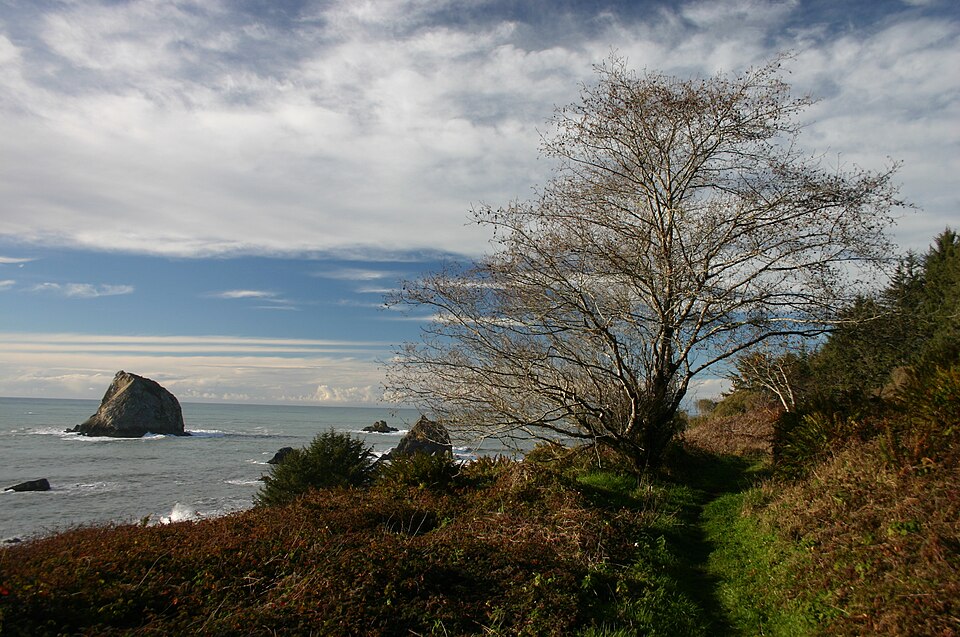
Red Alder
Alnus rubra
The Pacific Northwest's most common hardwood, a fast nitrogen-fixing pioneer that colonizes disturbed, logged, and riparian ground, enriching the soil for conifers that follow. Short-lived and weak-wooded, prone to decay and windthrow with age, but its wood is the region's main furniture and instrument hardwood.
Field reference
Family
Betulaceae
Growth rate
Fast
Mature size
40–80 ft tall, 20–40 ft spread
Hardiness zone
6–8
Soil preference
Moist to wet soils; a nitrogen-fixing pioneer that improves poor ground
Sun
Full sun
Pruning window
Dormant season; short-lived, so manage for safety near targets
Wood properties
Light, moderately soft, even-grained wood — the Pacific Northwest's premier hardwood for furniture, cabinets, and the original Fender guitar bodies. Fast but weak-wooded and decay-prone with age.
Native range
Pacific coast of North America, southeast Alaska to central California
Green weight
38 lb/ft³
Pests & diseases to watch
Common questions
How does red alder improve the soil?
Like other alders, it hosts nitrogen-fixing bacteria (Frankia) in its root nodules, adding nitrogen to poor soils. This makes it a valuable pioneer that prepares cleared or burned ground for the conifers that succeed it.
Is red alder wood valuable?
Yes — despite the tree's short life, red alder is the Pacific Northwest's leading commercial hardwood, widely used for furniture, cabinets, and turnings, and famously the wood of the earliest Fender electric guitar bodies.
Related species in Betulaceae
Tree Nerd Academy
Ready to sit the ISA Certified Arborist exam?
Video curriculum, flashcards, and exam-sim built by working arborists.