
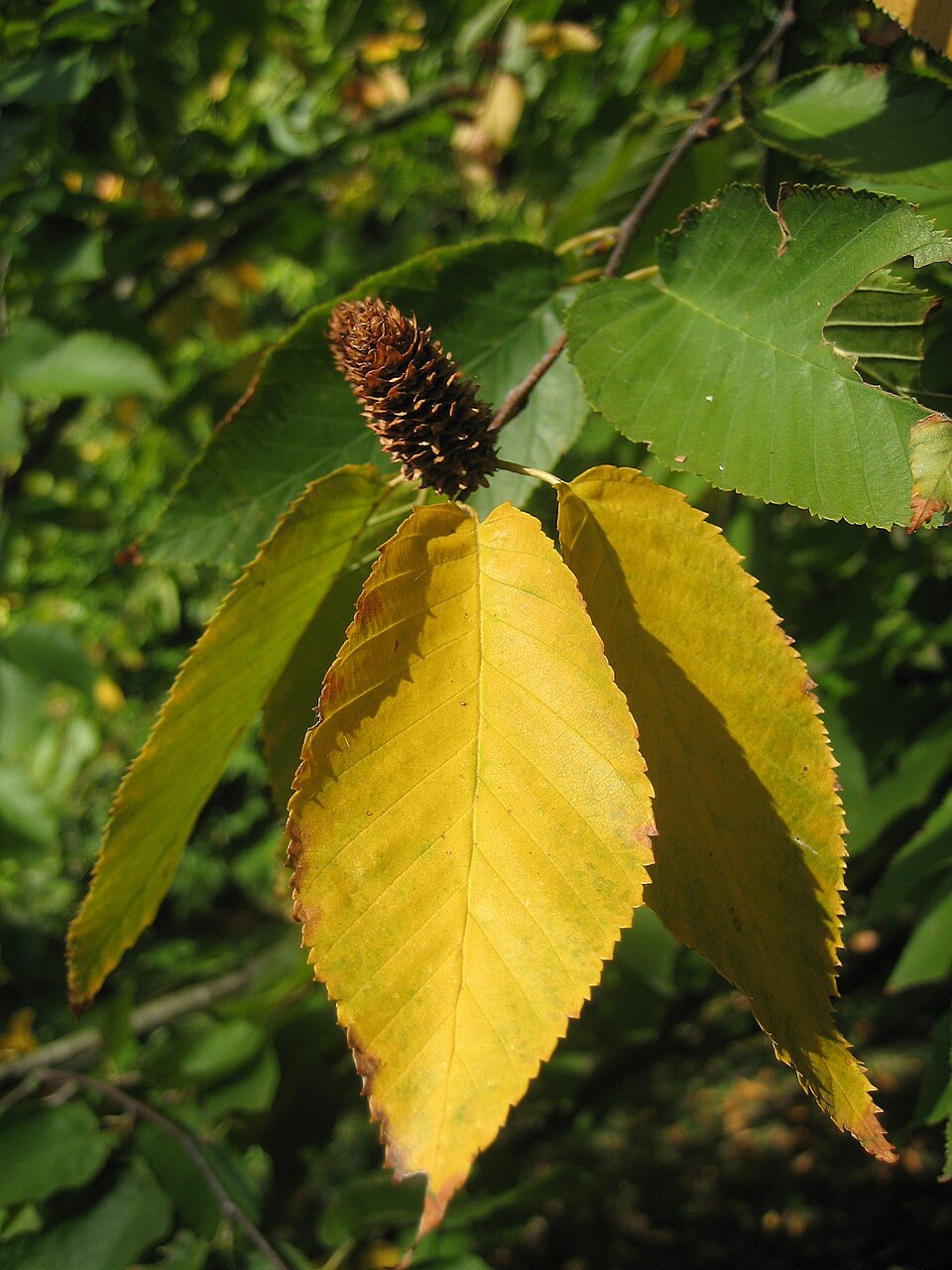
Sweet Birch (Black Birch)
Betula lenta
A handsome native birch with dark, cherry-like bark on young trunks and twigs that smell intensely of wintergreen — historically distilled for oil of wintergreen and birch beer. Needs cool, moist, acidic sites; like other birches it is prone to bronze birch borer when heat- or drought-stressed.
Field reference
Family
Betulaceae
Growth rate
Moderate
Mature size
40–60 ft tall, 35–45 ft spread
Hardiness zone
3–7
Soil preference
Moist, rich, acidic, well-drained soils; intolerant of heat and drought
Sun
Full sun to part shade
Pruning window
Summer or late dormant; avoid spring sap-bleed and beetle-attracting wounds
Wood properties
Heavy, hard, strong, close-grained birch (~0.60 SG) that darkens to a mahogany-like tone — a fine furniture wood. Sound limbs; twigs smell strongly of wintergreen when scratched.
Native range
Eastern North America, Maine and Quebec south through the Appalachians to Georgia
Green weight
57 lb/ft³
Pests & diseases to watch
Common questions
Why do sweet birch twigs smell like wintergreen?
The bark and twigs are rich in methyl salicylate (oil of wintergreen). Scratching a twig releases the strong wintergreen scent — a reliable way to distinguish sweet birch and yellow birch from other birches.
Why is my sweet birch struggling in a hot yard?
It is a cool-climate, moisture-loving species. Heat and drought stress invite bronze birch borer and decline; keep the roots cool, mulched, and watered, and avoid hot, exposed urban sites.
Related species in Betulaceae
Tree Nerd Academy
Ready to sit the ISA Certified Arborist exam?
Video curriculum, flashcards, and exam-sim built by working arborists.