
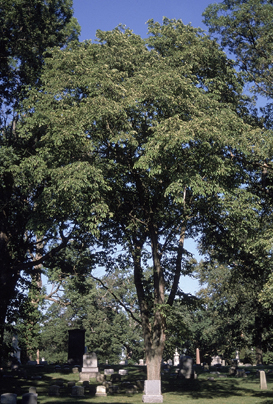
Slippery Elm
Ulmus rubra
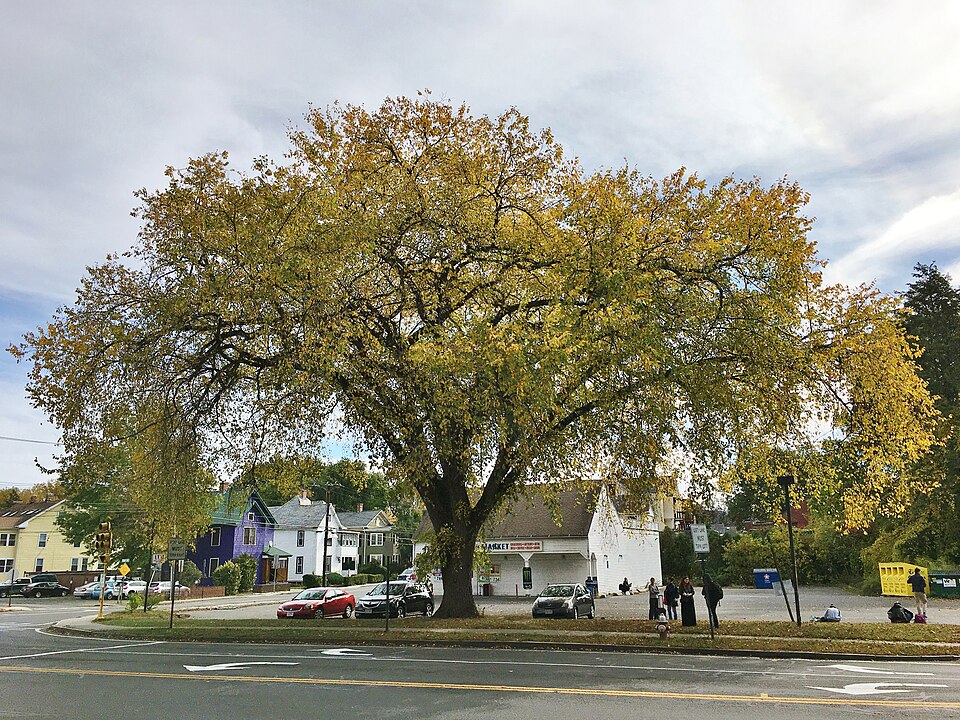
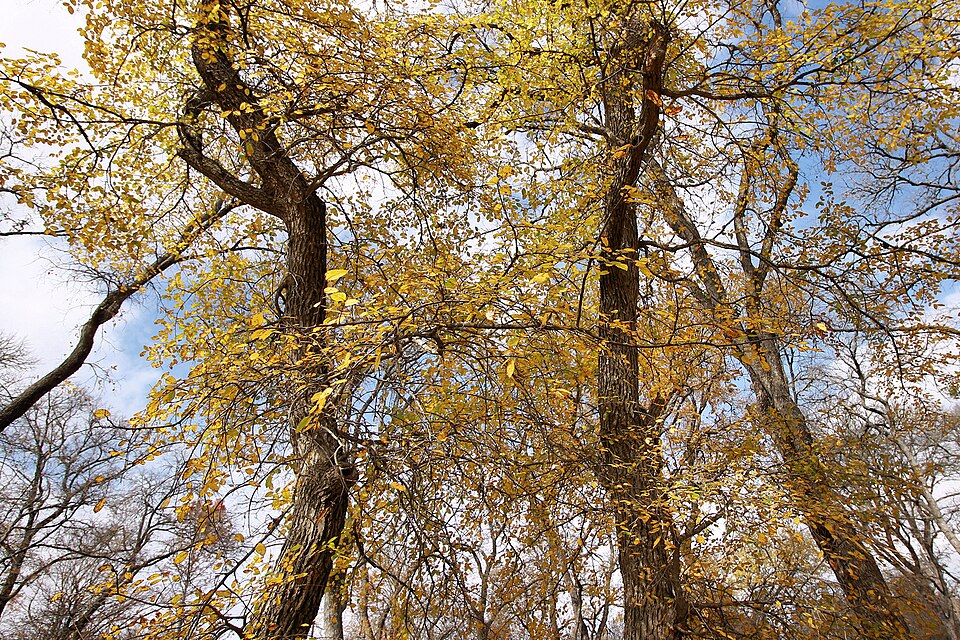
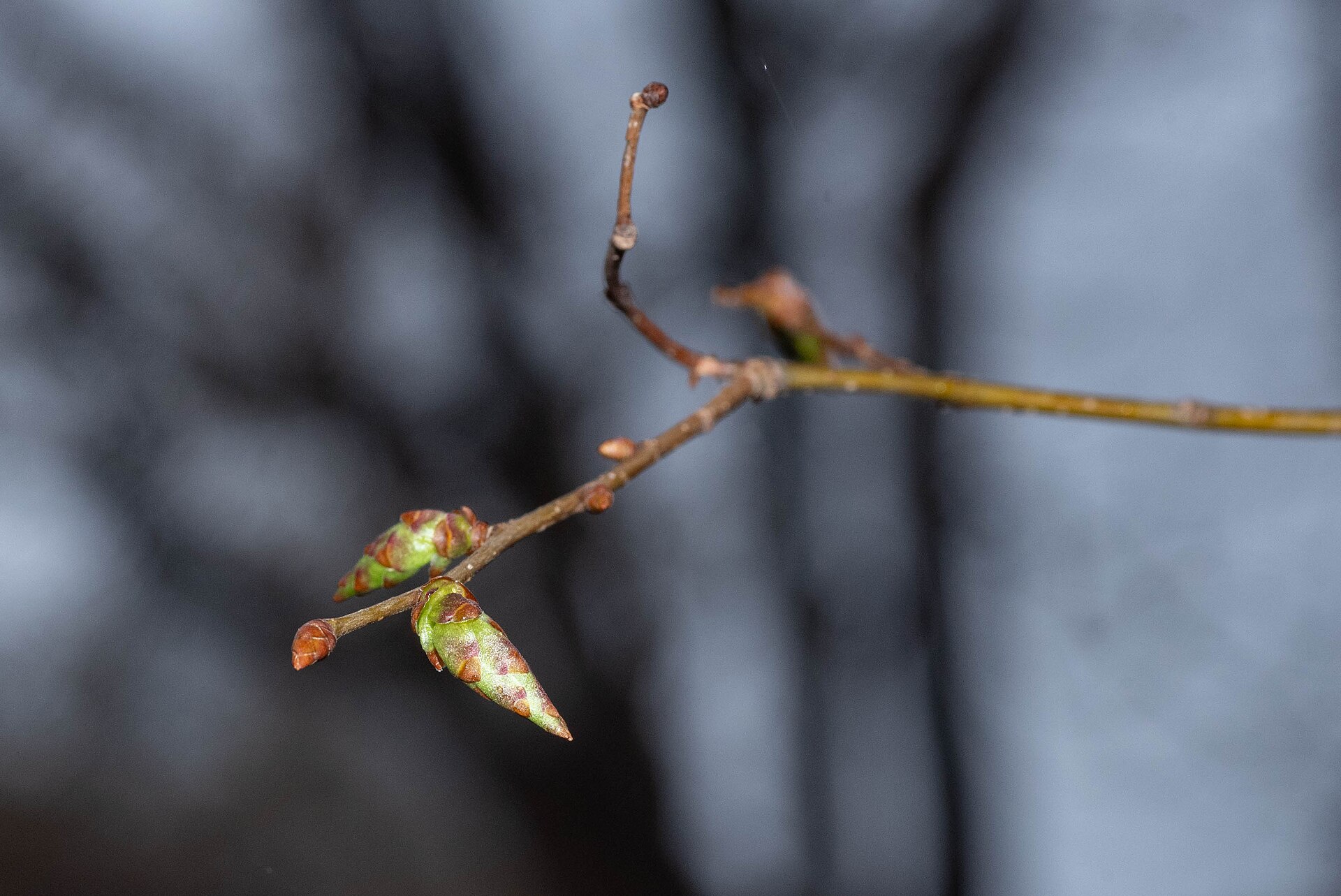
A native elm named for the fragrant, mucilaginous inner bark long used medicinally, with larger, rougher leaves than American elm. It is susceptible to Dutch elm disease, so dormant-season pruning and sanitation matter; it tends toward a single trunk with a more upright, less vase-shaped crown than American elm.
Field reference
Family
Ulmaceae
Growth rate
Moderate
Mature size
40–60 ft tall, 40–50 ft spread
Hardiness zone
3–9
Soil preference
Moist, rich bottomland soils; tolerant of drier upland sites
Sun
Full sun
Pruning window
Dormant season (winter) to avoid attracting elm bark beetles
Wood properties
Hard, tough, interlocked red-brown elm wood that resists splitting. Strong limbs; like American elm it can form weak codominant unions worth early correction.
Native range
Eastern and central North America, Quebec to Florida and west to the Dakotas and Texas
Green weight
50 lb/ft³
Pests & diseases to watch
Dutch Elm Diseasefungus · Severe severity · peak Symptoms appear late spring through summer; bark beetle vectors active spring–fallAsian Longhorned Beetlepest · Severe severity · peak Adults active and emerging July through OctoberCankerworm (Inchworm)pest · Moderate severity · peak Larvae feed and defoliate in spring (April–May) as leaves expand
Common questions
Is slippery elm affected by Dutch elm disease?
Yes — like American elm it is susceptible to Dutch elm disease. Prune only in the dormant season, remove and destroy beetle-breeding deadwood, and consider preventive injection for high-value trees.
What is slippery elm bark used for?
The mucilaginous inner bark has a long history of traditional medicinal use for sore throats and digestion. Harvesting bark girdles and can kill branches or the tree, so it is not a routine arboricultural practice.
Related species in Ulmaceae
Tree Nerd Academy
Ready to sit the ISA Certified Arborist exam?
Video curriculum, flashcards, and exam-sim built by working arborists.