
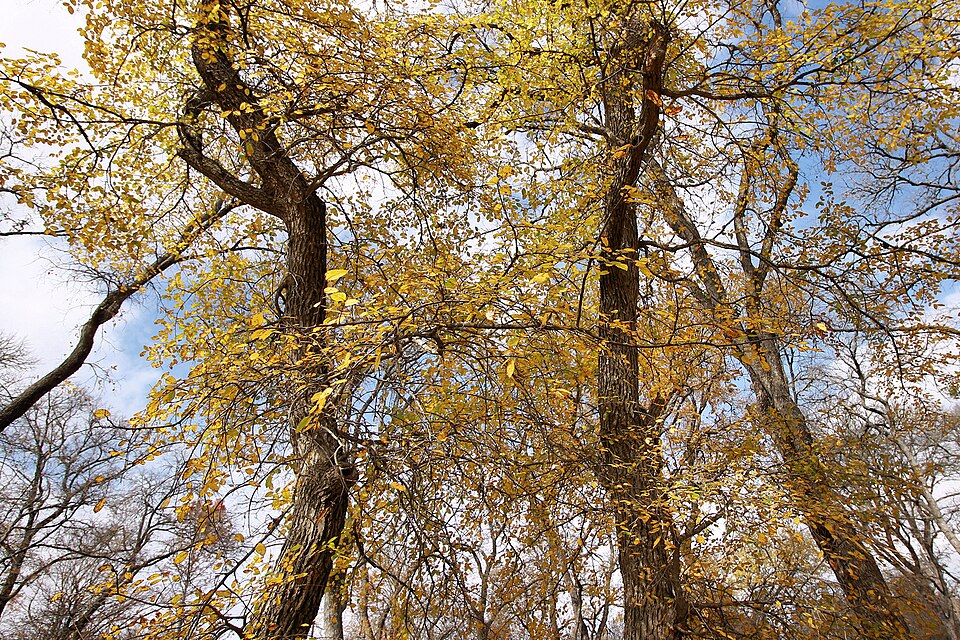
Cedar Elm
Ulmus crassifolia
The most common elm of Texas and the south-central U.S., a tough shade tree with small, stiff leaves, corky-winged twigs, and unusual fall (not spring) flowering. Highly tolerant of heat, drought, and alkaline clay; it has some Dutch elm disease resistance but can still be affected and is prone to mistletoe in the South.
Field reference
Family
Ulmaceae
Growth rate
Moderate
Mature size
50–70 ft tall, 40–60 ft spread
Hardiness zone
6–9
Soil preference
Tolerates dry, alkaline, poorly drained clay soils; very drought- and heat-tolerant
Sun
Full sun
Pruning window
Dormant season (winter) to limit Dutch elm disease beetle activity
Wood properties
Hard, tough, interlocked elm wood that resists splitting. Strong limbs; small, stiff, sandpapery leaves and corky-winged twigs aid ID.
Native range
South-central United States, especially Texas, Oklahoma, and the lower Mississippi Valley
Green weight
50 lb/ft³
Pests & diseases to watch
Common questions
Why does my cedar elm flower in the fall?
Unlike most elms, cedar elm blooms in late summer to fall and sets seed then — a useful identification trait. It is normal and not a sign of stress.
Is cedar elm resistant to Dutch elm disease?
It has moderate resistance and is less devastated than American elm, but it is not immune. Dormant-season pruning and prompt removal of beetle-breeding deadwood remain good practice in affected areas.
Related species in Ulmaceae
Tree Nerd Academy
Ready to sit the ISA Certified Arborist exam?
Video curriculum, flashcards, and exam-sim built by working arborists.