
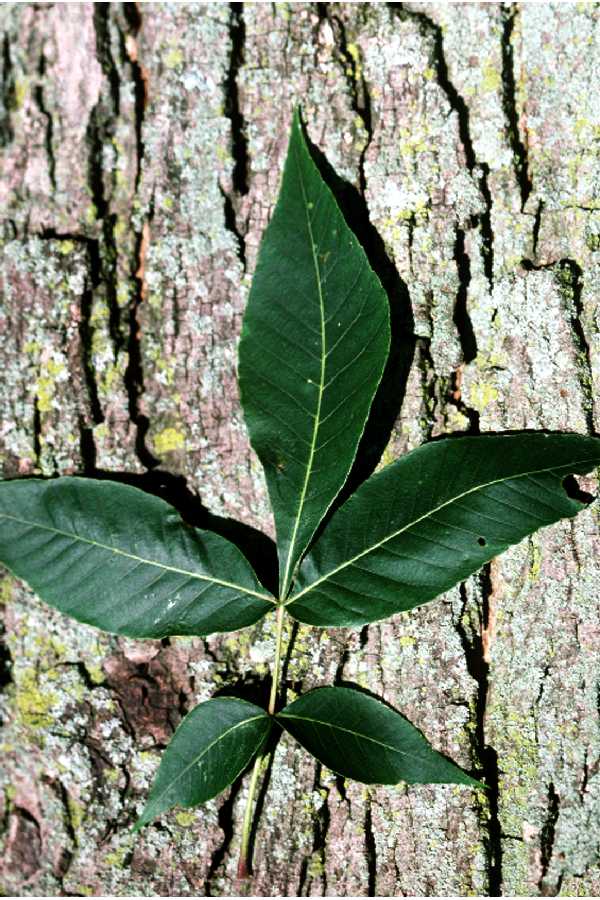
Pignut Hickory
Carya glabra
A common upland hickory with smoother bark than mockernut and pear-shaped ('pig') nuts once fed to hogs. Slow, deep-rooted, and clean, with golden fall color; like all hickories it is tap-rooted and best left in place rather than transplanted.
Field reference
Family
Juglandaceae
Growth rate
Slow
Mature size
50–80 ft tall, 30–40 ft spread
Hardiness zone
4–9
Soil preference
Dry upland ridges and slopes; very drought-tolerant on lean soils
Sun
Full sun
Pruning window
Dormant season (late winter)
Wood properties
Heavy, hard, tough, elastic hickory (~0.66 SG) used for handles and rated excellent firewood. Strong limbs; deep taproot anchors well but resists transplanting.
Native range
Eastern United States, Maine to Florida and west to the Mississippi Valley
Green weight
62 lb/ft³
Pests & diseases to watch
Common questions
How do I tell pignut from mockernut hickory?
Pignut has smoother, tighter bark, hairless (glabrous) twigs and leaves, and smaller pear-shaped nuts; mockernut has fuzzy leaves and thick-husked round nuts. Both share golden fall color and very hard wood.
Are hickory nuts edible?
Pignut kernels are usually bitter and mainly eaten by wildlife, unlike the sweet nuts of shagbark and shellbark hickory. The tree's main value is wood, wildlife, and shade rather than a nut crop.
Related species in Juglandaceae
Tree Nerd Academy
Ready to sit the ISA Certified Arborist exam?
Video curriculum, flashcards, and exam-sim built by working arborists.