
Emerald Ash Borer
Agrilus planipennis
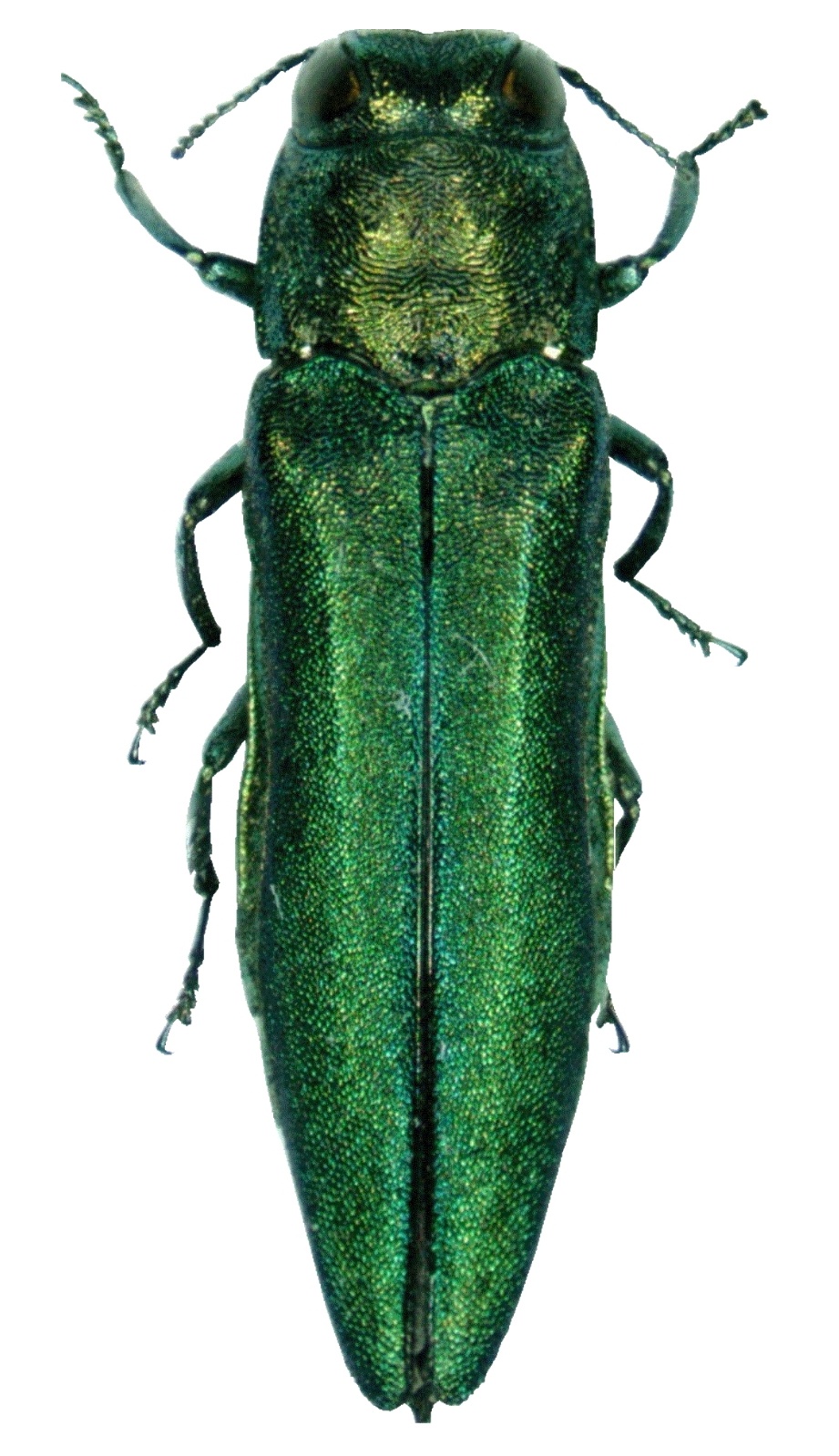
Range: Eastern, central, and expanding western United States and southern CanadaSee it on the alert map
Symptoms & signs
- Thinning, dying-back upper canopy
- vertical bark splits exposing serpentine S-shaped larval galleries
- distinctive D-shaped exit holes about 1/8 inch wide
- epicormic sprouting along the trunk
- heavy woodpecker flecking ('blonding') of the bark
Treatment & management
- Systemic trunk-injected emamectin benzoate every two years protects high-value ash before 30% canopy loss
- soil-applied imidacloprid for smaller trees
- Remove and properly dispose of declining ash promptly
- Biological control via parasitoid wasps is established in some regions
- Do not move ash firewood
Host species
Common questions
Can an ash tree be saved from emerald ash borer?
Yes, if treated early. Systemic injections of emamectin benzoate are highly effective when started before the canopy loses about a third of its leaves. Heavily declined trees should be removed.
How fast does EAB kill an ash tree?
Once infested, most untreated ash die within two to four years. The wood then dries and becomes dangerously brittle, making removal increasingly hazardous.
Related pests
Tree Nerd Academy
Ready to sit the ISA Certified Arborist exam?
Video curriculum, flashcards, and exam-sim built by working arborists.