
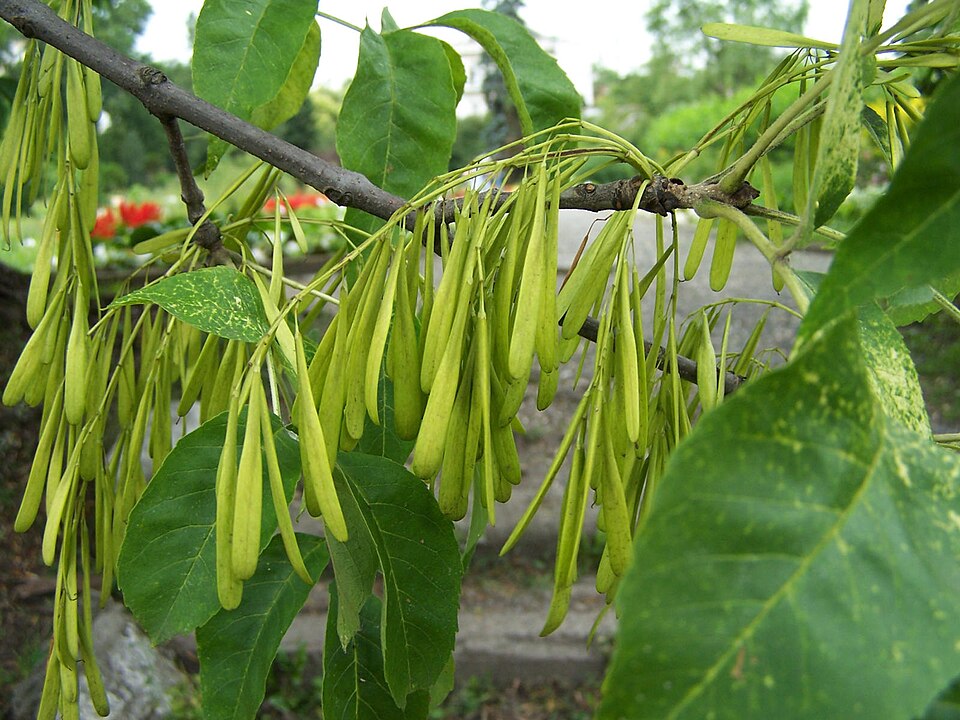
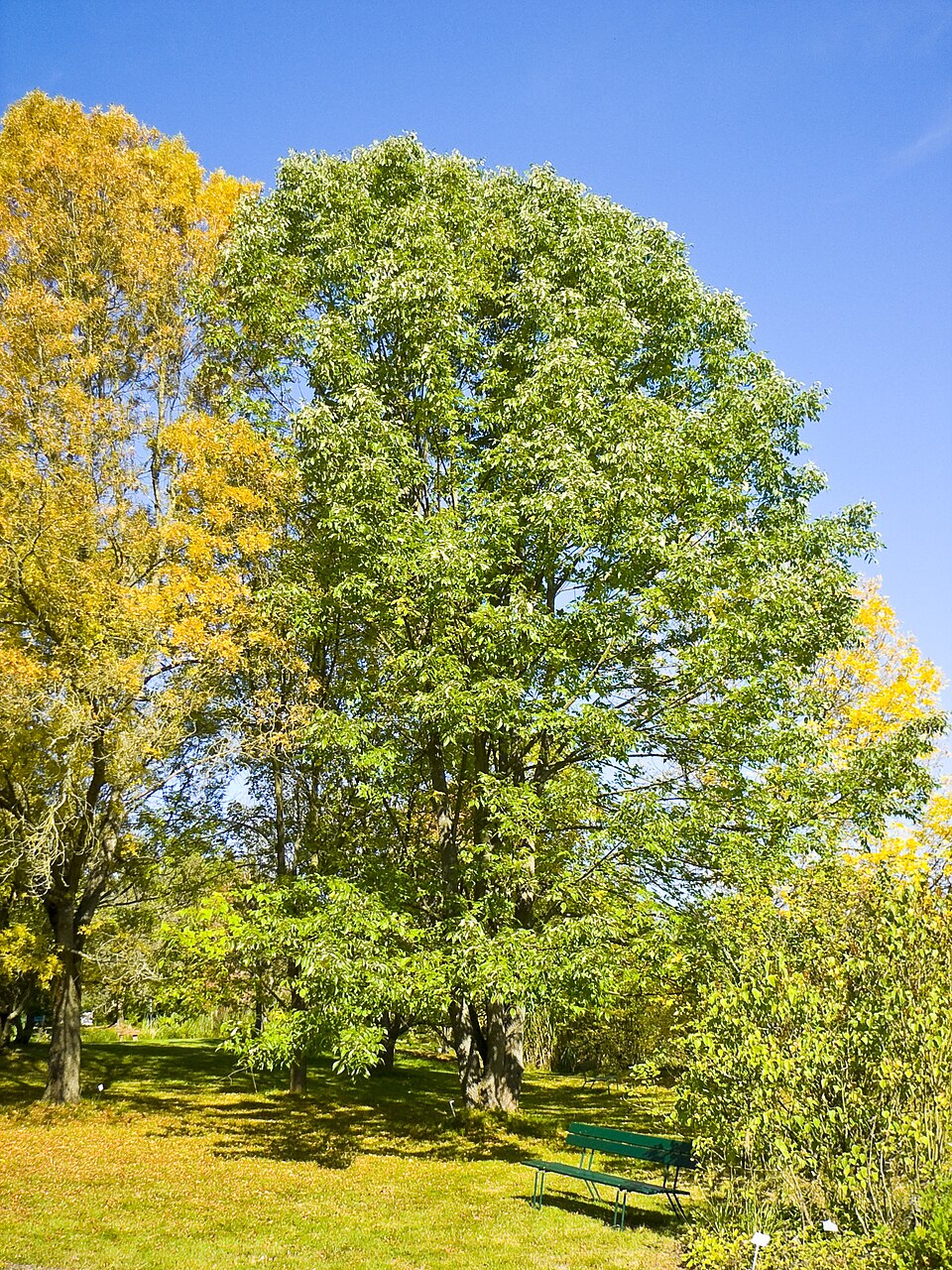
Green Ash
Fraxinus pennsylvanica
Once the default tough, fast urban shade tree, green ash has been decimated by emerald ash borer across North America. Standing dead ash dries and becomes dangerously brittle within a year or two, so removals are time-sensitive and high-risk. Treat high-value specimens preventively or remove early.
Field reference
Family
Oleaceae
Growth rate
Fast
Mature size
50–70 ft tall, 35–50 ft spread
Hardiness zone
3–9
Soil preference
Very adaptable — wet bottomland to dry, alkaline, compacted soils
Sun
Full sun
Pruning window
Mid-winter (dormant) or late summer
Wood properties
Strong, tough, elastic ring-porous wood (~0.56 SG) used for tool handles and bats. Good limb strength, but EAB-killed ash becomes brittle and hazardous fast.
Native range
Eastern and central North America, the most widely distributed native ash
Green weight
53 lb/ft³
Pests & diseases to watch
Common questions
Should I treat or remove my ash tree?
If the canopy is still over half intact and the tree is high-value, systemic emamectin benzoate injections every two years are effective. Heavily declined ash should be removed promptly before the wood turns brittle.
Why are EAB-killed ash trees so dangerous to remove?
Dead ash dries quickly and loses wood strength, so limbs and tops snap unpredictably and the trunk can fail. Many crews crane or bucket them rather than climb.
Related species in Oleaceae
Tree Nerd Academy
Ready to sit the ISA Certified Arborist exam?
Video curriculum, flashcards, and exam-sim built by working arborists.