
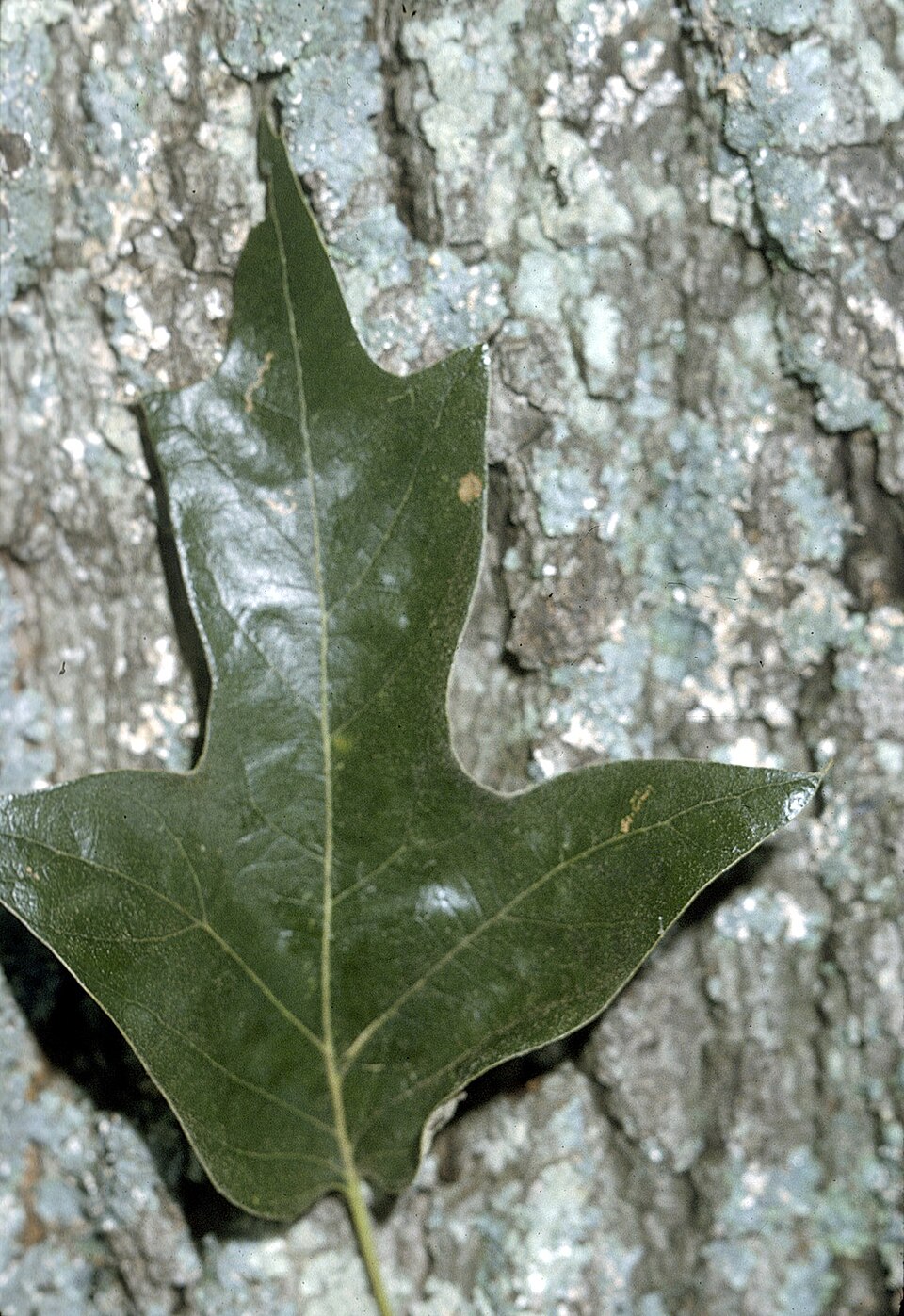
Southern Red Oak
Quercus falcata
A drought-tough Southern upland red oak, also called Spanish oak, with distinctive bell-shaped leaf bases and deep, sickle-shaped lobes. Common on poor sandy soils where few large shade trees thrive, it is fast enough for landscape use but, like other red oaks, kept on dormant pruning where oak wilt occurs.
Field reference
Family
Fagaceae
Growth rate
Moderate
Mature size
60–80 ft tall, 50–70 ft spread
Hardiness zone
6–9
Soil preference
Dry, sandy, infertile upland soils; very drought-tolerant once established
Sun
Full sun
Pruning window
Mid-winter (dormant); avoid April–July in oak-wilt regions
Wood properties
Heavy, hard red-group oak (~0.59 SG) sold as red oak. Sound limb wood; deeply falcate (sickle-shaped) lobes and a rusty leaf underside aid ID before rigging.
Native range
Southeastern United States, New Jersey to Florida and west to Texas
Green weight
60 lb/ft³
Pests & diseases to watch
Oak Wiltfungus · Severe severity · peak Spring and early summer (high infection risk from fresh wounds April–July)Spongy Moth (formerly Gypsy Moth)pest · High severity · peak Caterpillars feed and defoliate May–June; egg masses laid mid-summer overwinterBacterial Leaf Scorchdisease · High severity · peak Symptoms most visible mid-summer to fall (July–October)
Common questions
How do I identify southern red oak?
Look for leaves with a rounded, bell-shaped base and long, narrow, sickle-shaped (falcate) end lobes, often rusty-hairy underneath. It favors dry, sandy upland sites across the South.
Is southern red oak drought-tolerant?
Very — it is naturally a tree of dry, poor, sandy uplands and handles heat and drought well, which makes it a useful large shade oak on tough Southern sites.
Related species in Fagaceae
Tree Nerd Academy
Ready to sit the ISA Certified Arborist exam?
Video curriculum, flashcards, and exam-sim built by working arborists.