
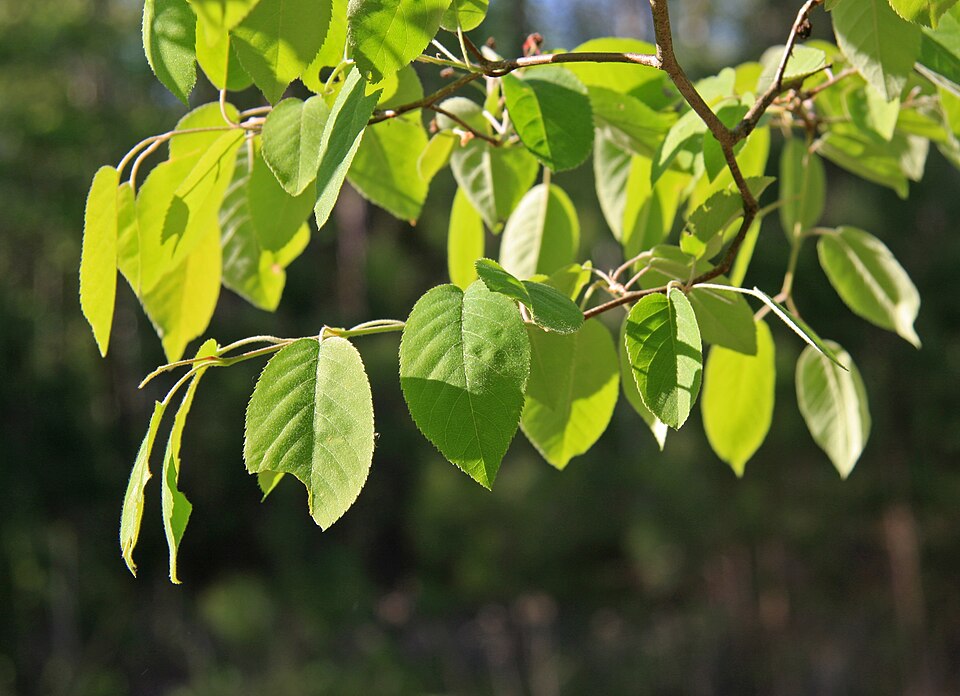
Downy Serviceberry
Amelanchier arborea
A four-season native small tree — early white spring flowers, sweet edible June fruit (juneberry) loved by birds and people, good fall color, and smooth gray bark. Also called shadbush (it blooms as shad run) and Juneberry; trouble-free except for rust and the fire blight common to the rose family.
Field reference
Family
Rosaceae
Growth rate
Moderate
Mature size
15–25 ft tall, 15–25 ft spread
Hardiness zone
4–9
Soil preference
Moist, well-drained, acidic soils; adaptable but dislikes drought
Sun
Full sun to part shade
Pruning window
After flowering (late spring); often grown multi-stem
Wood properties
Very hard, heavy, close-grained wood on a small frame; rarely rigged. Often multi-stemmed with smooth gray bark, grown as a small specimen or understory tree.
Native range
Eastern North America, Maine to Florida and west to the Great Plains
Green weight
49 lb/ft³
Pests & diseases to watch
Common questions
Are serviceberries edible?
Yes — the sweet, blueberry-like June fruits (juneberries or saskatoons in related species) are excellent fresh or in pies, if you beat the birds to them. The tree earns its place for fruit, flowers, and fall color alike.
Why is my serviceberry called shadbush or Juneberry?
'Shadbush' refers to its early bloom coinciding with spring shad runs; 'Juneberry' refers to its early-summer fruit. All are common names for Amelanchier, a versatile native small tree.
Related species in Rosaceae
Tree Nerd Academy
Ready to sit the ISA Certified Arborist exam?
Video curriculum, flashcards, and exam-sim built by working arborists.