
Fire Blight
Erwinia amylovora
Range: Throughout the United States wherever rosaceous trees grow; worst in warm, humid spring weatherSee it on the alert map
Symptoms & signs
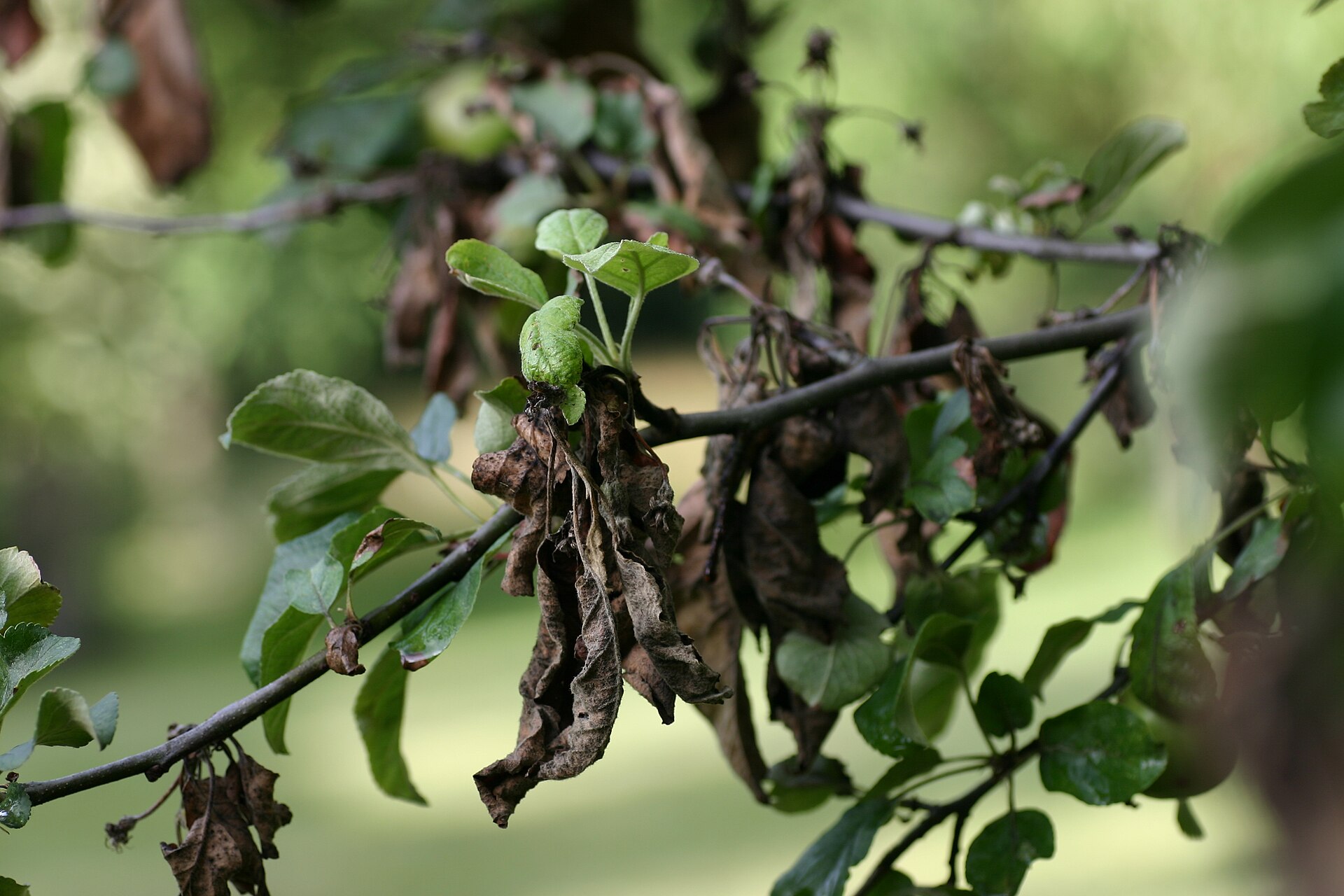
- Blossoms and shoot tips suddenly wilt, blacken, and die as if scorched by fire
- shoots curl into a characteristic 'shepherd's crook'
- dead leaves cling to the branch
- sunken, cracked, oozing cankers on branches and trunk
- amber-to-milky bacterial ooze in warm, wet weather
Treatment & management
- Prune out blighted wood 8–12 inches below visible cankers in dry weather, disinfecting tools between every cut
- Avoid heavy nitrogen and hard pruning that force succulent, susceptible growth
- Copper or registered bactericides (and biologicals) at bloom on high-value trees
- Plant resistant cultivars
- remove badly cankered trees
Host species
Common questions
Why do my pear branch tips look burned and bent over?
That scorched look with a curled 'shepherd's crook' tip is classic fire blight, a bacterial disease. Prune well below the dead tissue in dry weather and sterilize your tools between cuts.
Can I cure fire blight with a spray?
There is no cure once wood is infected. Sprays (copper or bactericides at bloom) are preventive only; management relies on careful pruning, avoiding lush growth, and resistant varieties.
Related diseases
Tree Nerd Academy
Ready to sit the ISA Certified Arborist exam?
Video curriculum, flashcards, and exam-sim built by working arborists.