
Sawtooth Oak
Quercus acutissima
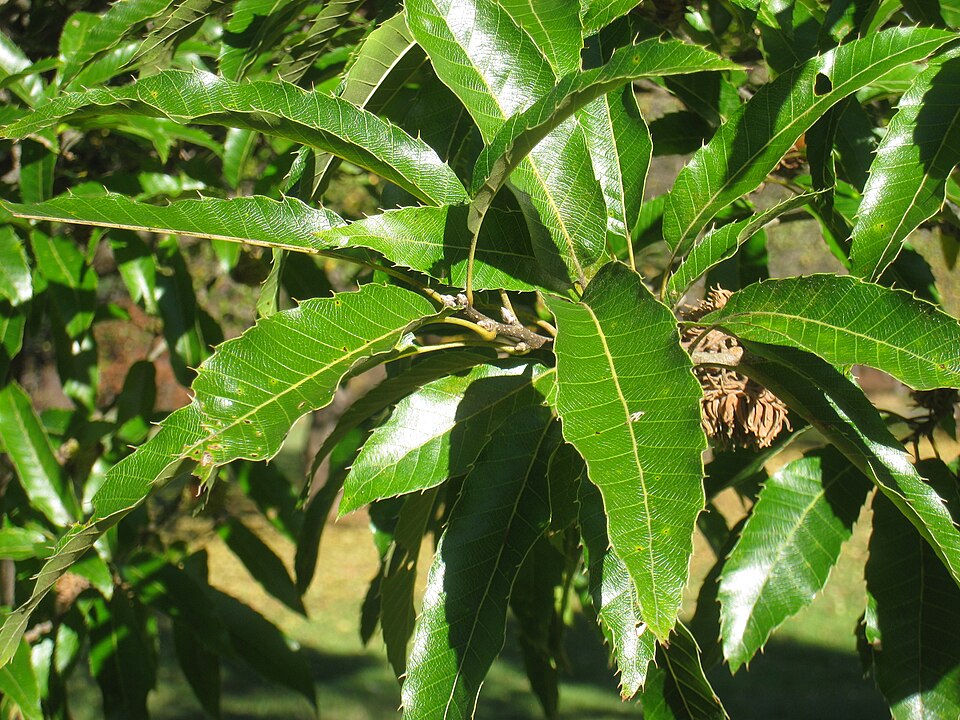
An Asian oak planted fast for shade and prolific early acorn crops favored by wildlife and game managers, with bristle-toothed, chestnut-like leaves and distinctive mossy-cupped acorns. Vigorous and adaptable, but it self-seeds and is considered invasive in parts of the Southeast, so siting deserves thought.
Field reference
Family
Fagaceae
Growth rate
Fast
Mature size
40–60 ft tall, 40–60 ft spread
Hardiness zone
5–9
Soil preference
Adaptable, well-drained soils; tolerates acid, clay, and urban conditions
Sun
Full sun
Pruning window
Mid-winter (dormant); avoid spring wounds in oak-wilt areas
Wood properties
Hard, heavy oak wood with a fast growth ring. Sound limbs; rapid early growth can leave tight forks worth correcting young.
Native range
Native to eastern Asia; widely planted and locally naturalized in the eastern United States
Green weight
58 lb/ft³
Pests & diseases to watch
Common questions
Why do people plant sawtooth oak for wildlife?
It begins bearing heavy acorn crops at a young age — far sooner than most native oaks — making it popular with hunters and wildlife managers for quick deer and turkey forage. That same prolific seeding, however, drives its weedy spread.
Is sawtooth oak invasive?
It can be — sawtooth oak naturalizes aggressively in parts of the southeastern U.S. and appears on some invasive-watch lists. Consider native oaks where spread into natural areas is a concern.
Related species in Fagaceae
Tree Nerd Academy
Ready to sit the ISA Certified Arborist exam?
Video curriculum, flashcards, and exam-sim built by working arborists.