
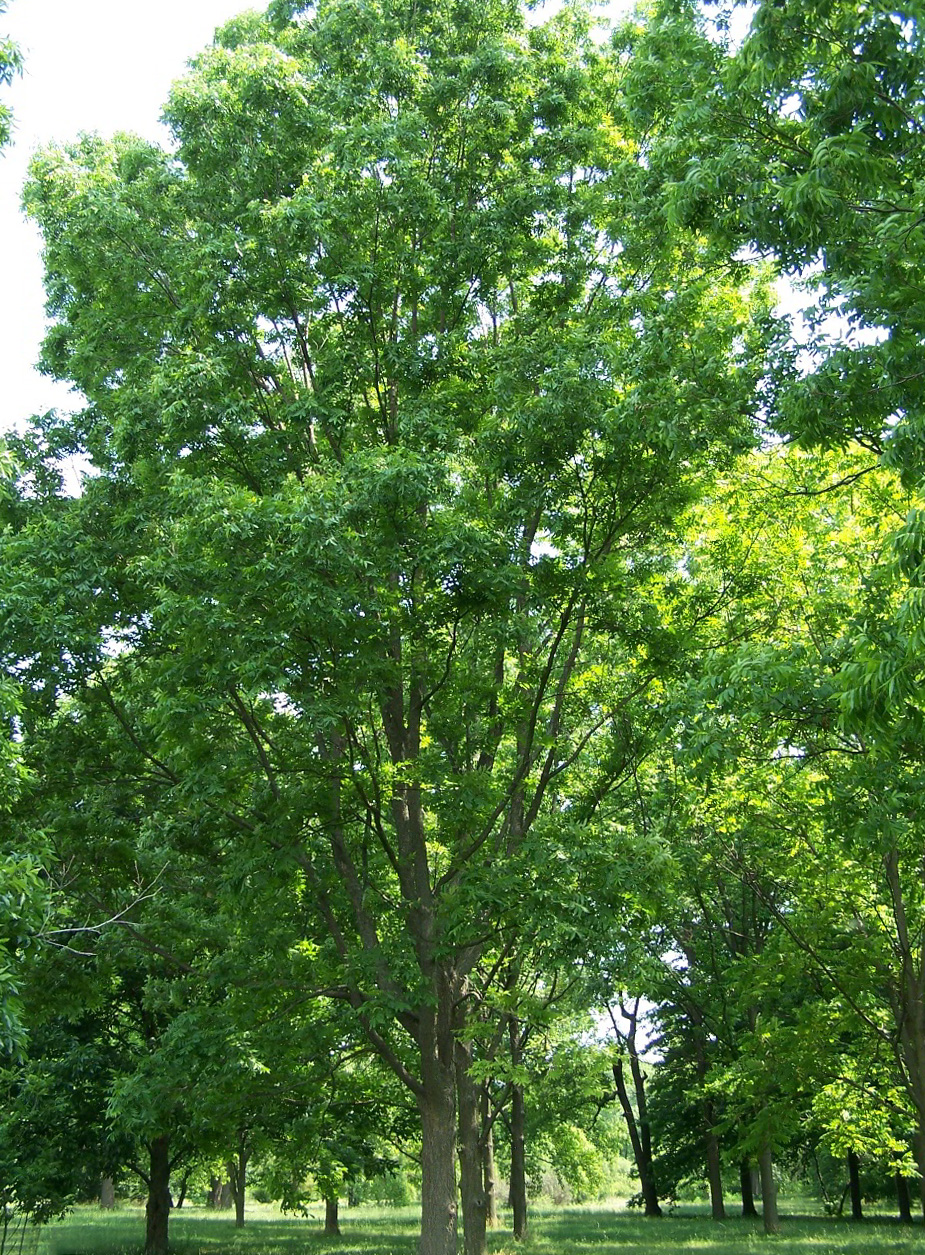
Pecan
Carya illinoinensis
The largest hickory and a major commercial nut crop, especially across the South. It grows into a huge spreading tree that needs deep, moist, fertile soil and lots of room. Heavy nut loads and wide, somewhat brittle limbs make it prone to limb breakage in ice and wind, so structural pruning when young is valuable.
Field reference
Family
Juglandaceae
Growth rate
Moderate
Mature size
70–100 ft tall, 40–75 ft spread
Hardiness zone
6–9
Soil preference
Deep, fertile, well-drained bottomland loam; needs ample moisture
Sun
Full sun
Pruning window
Late winter (dormant) before bud break
Wood properties
Hard, heavy, strong, shock-resistant wood (~0.66 SG) used for flooring and smoking. Brittle when overextended; wide-spreading limbs shed in wind and ice storms.
Native range
South-central United States and northern Mexico, Mississippi Valley to Texas
Green weight
62 lb/ft³
Common questions
Why does my pecan bear heavily only every other year?
Pecans naturally alternate-bear, producing a big crop one year and little the next as the tree recovers its reserves. Good water, fertility, and thinning can moderate the swings.
Why do pecans lose so many limbs in storms?
Their wide-spreading limbs and heavy nut loads stress the wood, which is strong but brittle when overextended. Early structural pruning and removal of weak unions reduce storm breakage.
Related species in Juglandaceae
Tree Nerd Academy
Ready to sit the ISA Certified Arborist exam?
Video curriculum, flashcards, and exam-sim built by working arborists.