
Horsechestnut
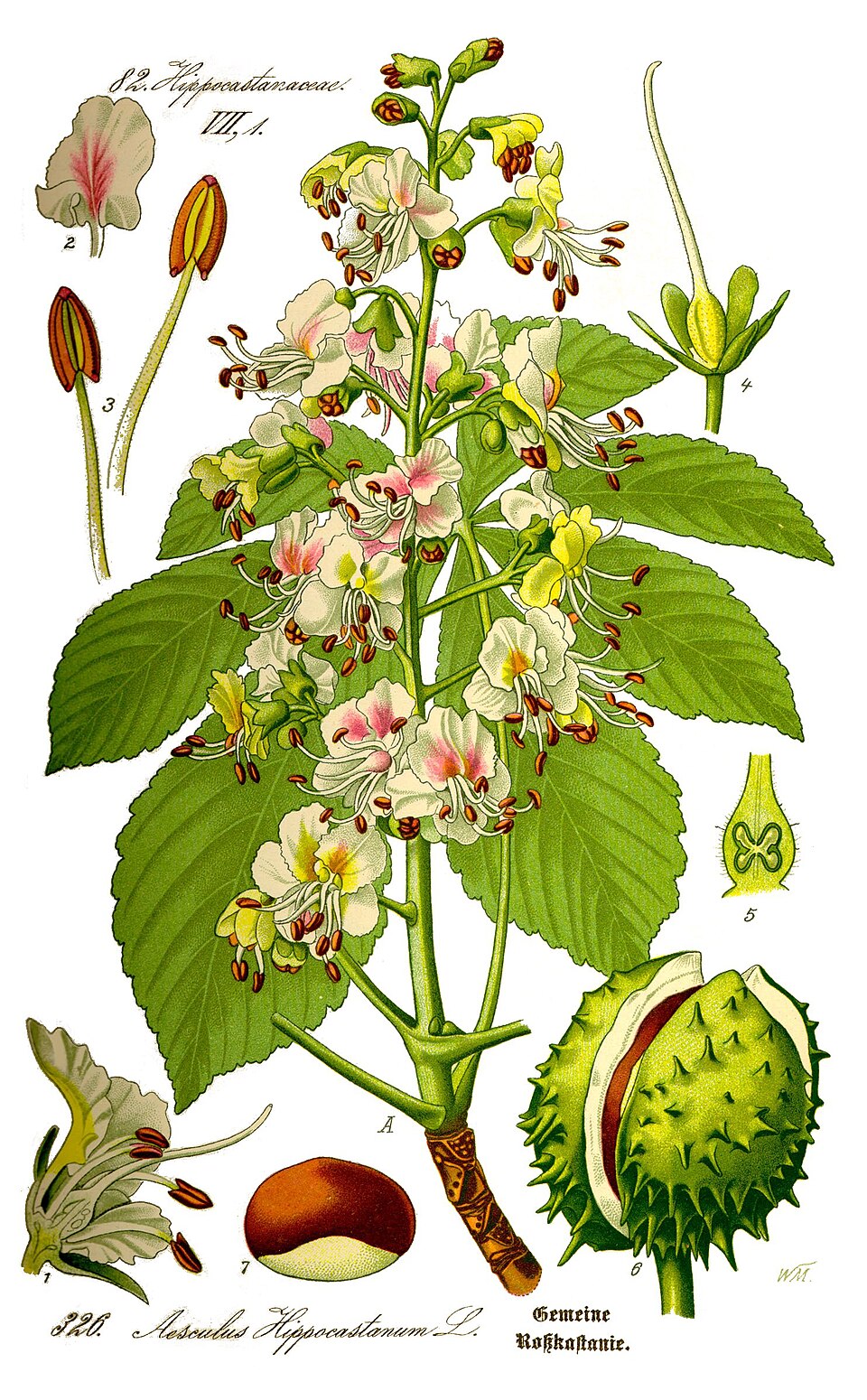
Aesculus hippocastanum
A grand European shade tree famous for showy upright white-and-pink flower 'candles' in spring and spiny capsules holding glossy brown 'conkers.' Beautiful but messy and brittle, and widely disfigured by leaf blotch and the horsechestnut leaf miner; the conkers are toxic if eaten.
Field reference
Family
Sapindaceae
Growth rate
Moderate
Mature size
50–75 ft tall, 40–65 ft spread
Hardiness zone
4–7
Soil preference
Deep, moist, fertile, well-drained soils; intolerant of drought and heat
Sun
Full sun to part shade
Pruning window
Dormant season (late winter)
Wood properties
Light, soft, weak buckeye-family wood of little structural value. Brittle limbs; spiny seed capsules and toxic 'conkers' make for messy, hazardous litter under big trees.
Native range
Native to the Balkans; very widely planted across temperate North America and Europe
Green weight
48 lb/ft³
Pests & diseases to watch
Common questions
Why do horsechestnut leaves brown and curl by midsummer?
Leaf blotch and, in many regions, the horsechestnut leaf miner cause widespread browning and early leaf drop. It is mostly cosmetic; raking and destroying fallen leaves reduces the overwintering inoculum and pest.
Can you eat horsechestnut conkers?
No — unlike sweet (true) chestnuts, horsechestnut 'conkers' contain toxic aescin and are poisonous if eaten. They are a traditional game piece, not a food.
Related species in Sapindaceae
Tree Nerd Academy
Ready to sit the ISA Certified Arborist exam?
Video curriculum, flashcards, and exam-sim built by working arborists.