
Chainsaw Maintenance for Production Climbers
A sharp, well-tuned saw is a safety device, not just a productivity tool. The daily and weekly maintenance that keeps your top-handle cutting clean and predictable.
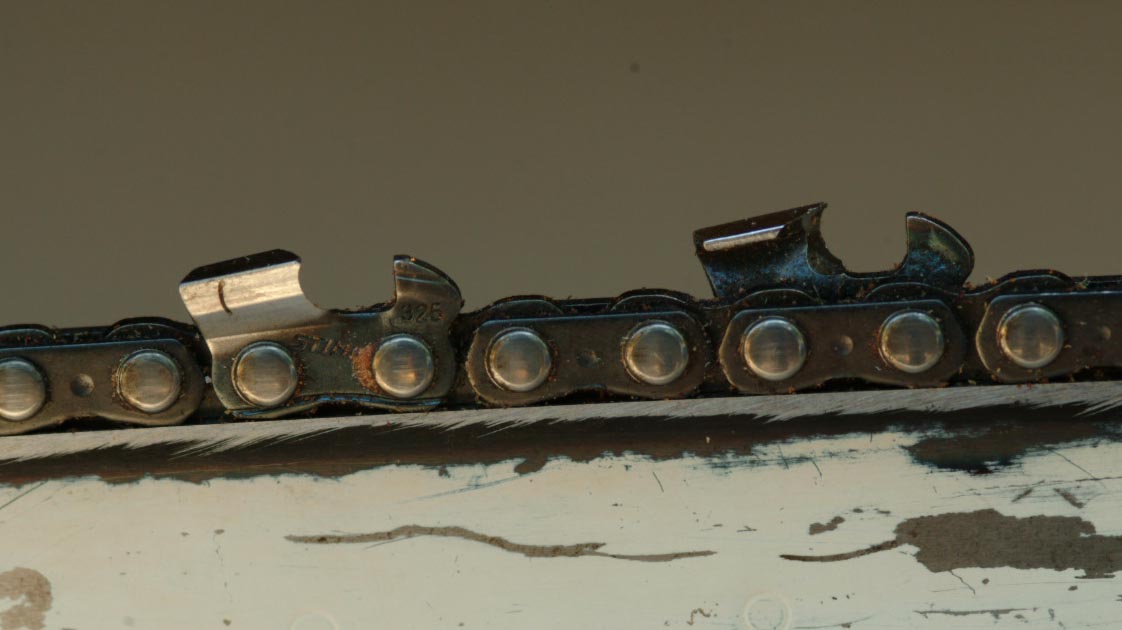
A dull chainsaw is dangerous before it's slow. It forces you to push, push leads to kickback and grabbing, and a saw that grabs while you're hanging off a rope is a bad day waiting to happen. For a production climber, saw maintenance isn't shop housekeeping — it's part of your safety system, and the difference between a tool you trust and one that surprises you.
Sharp is a safety feature
A correctly sharpened chain pulls itself into the wood and throws coarse, square chips. A dull chain produces fine sawdust, requires force to feed, heats up, and is far more prone to kickback and grabbing. The moment you notice sawdust instead of chips, or you're leaning on the saw to make it cut, stop and sharpen. Up a tree, that's not a productivity issue — it's the saw telling you it's about to behave unpredictably.
Chain, the right way
- File to the manufacturer's spec — the correct file diameter for your chain pitch and the correct top-plate and down angles. Guessing the angle ruins the chain's geometry.
- Keep every cutter the same length. Uneven cutters make the saw pull to one side and cut crooked — dangerous in a precise top-handle cut.
- Mind the depth gauges (rakers). They control bite per tooth. Too high and the saw won't cut; filed too low and the chain grabs and kicks aggressively. Check them with a gauge as the cutters shorten.
- Sharpen little and often. Touch up the chain frequently rather than running it dull and grinding away a lot of metal once a day.
The daily checks (before you go up)
Run these every morning — they take minutes and they're the ones that bite:
- Chain tension. A correctly tensioned chain sits snug against the bar and pulls freely by hand, with the drive links staying in the groove. A loose chain can derail or throw; a chain run bone-dry and over-tight wears bar and sprocket fast.
- Bar. Clean the bar groove and the oiler hole — packed sawdust and gum starve the chain of oil. Check the rails for burrs and uneven wear; flip the bar periodically to even it out.
- Chain lubrication. Confirm oil is actually reaching the chain — hold the running saw near a light surface and watch for a thrown line of oil. No oil means a ruined bar and chain and a saw that binds.
- Chain brake. On a top-handle this is critical. Test that it engages and stops the chain. A working brake is your front line against kickback injury.
- Throttle and trigger interlock. The throttle should snap back to idle and the chain must not turn at idle. A chain that creeps at idle is a serious hazard, especially one-handed at height.
- Air filter. A clogged filter chokes the engine and richens the mix; a quick clean keeps it tuned and cool.
- Fasteners and handles. Bar nuts tight, handles and anti-vibe mounts intact, no cracks in the housing.
Fuel and the engine
- Run fresh, correctly mixed fuel at the manufacturer's two-stroke ratio with quality oil. Stale fuel and wrong mix ratios cause hard starting, poor running, and seized engines. Use a stabilizer if fuel sits.
- Don't lean it out. Modern saws are tuned to run a touch rich for cooling. Chasing a few RPM by leaning the mixture cooks pistons. Leave carb adjustment within spec.
- Empty or stabilize for storage. Fuel left sitting gums carburetors. At the end of a stretch, run it dry or stabilize.
Weekly / periodic
- Spark plug — inspect, clean or replace, and check the gap.
- Clutch drum and sprocket — a worn sprocket destroys chains; replace it on schedule, not after it eats a chain.
- Sprocket-nose bar bearing — grease it.
- Cooling fins and starter housing — blow out packed debris so the engine sheds heat.
- Anti-vibration mounts — worn mounts transmit more vibration to your hands; replace them before they fail.
Set up your saw kit to make this easy
Carry the round file and guide for your chain, a flat file and depth-gauge tool, a scrench, a spare sharp chain, bar oil, and pre-mixed fuel. The climber who can swap to a fresh chain at the base of the tree and touch up the dull one over lunch never gets stuck fighting a saw at height.
The habit to leave with: treat a dulling saw as a stop signal, not a push signal. A saw maintained to spec cuts predictably, and predictable is exactly what you want from the tool in your hand a hundred feet up.
FAQ
How do I know my chain needs sharpening?
Why shouldn't I lean out my saw's carburetor for more power?
Video curriculum, flashcards, and exam-sim built by working arborists.