
After the Storm: Is Your Tree Salvageable?
A storm-battered tree can be a heartbreak or an easy fix. How to tell which trees can be saved, which can't, and how to stay safe in the cleanup.
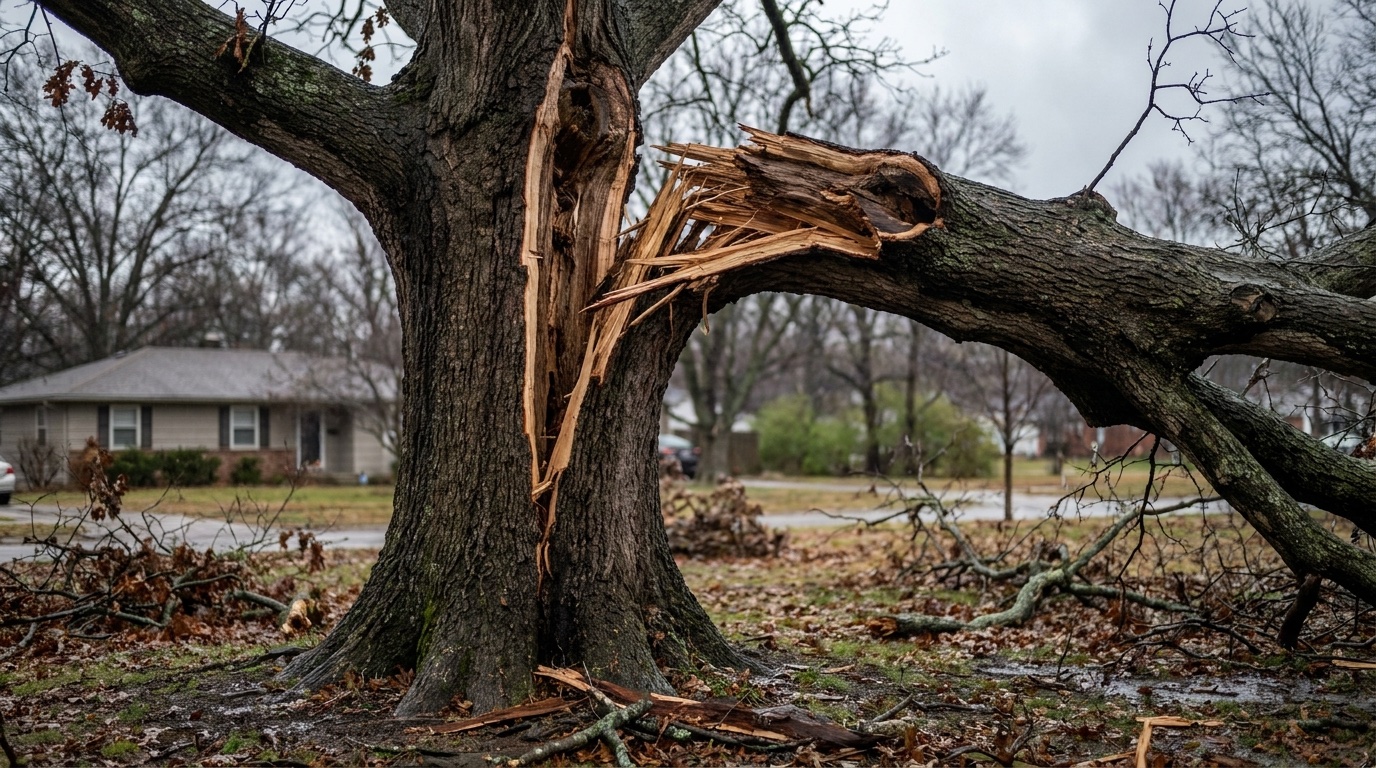
After a big storm, the yard can look like a disaster — snapped branches, a leaning tree, debris everywhere. Before you write off a damaged tree (or, worse, climb up to deal with it yourself), take a breath. Many storm-damaged trees recover beautifully with proper care. Some can't be saved. The trick is knowing which is which — and staying safe while you figure it out.
Safety first — this is the part that hurts people
Storm cleanup sends a lot of homeowners to the emergency room. Before you assess anything:
- Stay away from any tree or branch touching a power line, or near a downed line. Assume every downed wire is live and dangerous. Keep everyone back and call the utility — this is not a DIY situation, ever.
- Look up for "hanging" branches. Storms leave partly broken limbs lodged in the canopy ("widowmakers") that can drop without warning. Don't stand or work under them.
- Leave the chainsaw-and-ladder work alone. Cutting broken, tensioned limbs or working at height after a storm is exactly the kind of job that injures people. Big damage is a job for professionals with the right gear.
With safety handled, you can assess from the ground.
Signs a tree can probably be saved
A tree has a good chance of recovering if most of it is still intact and sound. Look for:
- Most of the main branches and a healthy share of the canopy remain. A tree that kept the bulk of its structure can usually recover.
- The damage is limited to smaller branches that can be cleanly pruned off. Losing some limbs is survivable.
- The trunk is solid — no major split running down it.
- The tree is still well-anchored and standing upright, with no roots lifted out of the ground.
If a few branches broke but the trunk and most of the crown are fine, the usual fix is straightforward: have the broken limbs properly pruned, clean up the wounds, and give the tree time and good care. Trees are resilient.
Signs a tree probably can't be saved
Some damage is the kind a tree doesn't come back from. Lean toward removal when you see:
- The trunk is split or cracked down its length — a tree with a major trunk split is structurally compromised and usually can't be saved safely.
- A large share of the crown is gone. When a storm strips away most of the branches and leaves, the tree has lost too much of its food-making canopy to reliably recover.
- The tree is leaning hard now when it wasn't before, with roots heaved or lifted out of the soil on one side. That points to root failure — the tree is no longer safely anchored.
- A huge limb tore out and pulled a big strip of trunk with it, leaving a massive wound.
- The tree was already in poor health before the storm.
A tree with these kinds of damage is both unlikely to recover and potentially dangerous, and removal is usually the right call.
The "it depends" middle ground
Plenty of storm-damaged trees fall between obviously-fine and obviously-finished, and that's where a professional opinion earns its keep. Whether a tree is worth saving depends on how much it's hurt, how valuable and well-placed it is, and whether what's left is safe. A certified arborist can weigh all of that — including hidden damage you can't see from the ground — and tell you honestly whether to save it or remove it.
What to do, in order
- Keep everyone away from downed lines and hanging branches, and don't attempt risky cuts or climbing yourself.
- Do a ground-level look at the trunk, the crown, and the base using the signs above.
- Take photos before cleanup — useful if you'll file an insurance claim.
- Call a certified arborist for anything beyond small, easily reached branches, and for any tree you're unsure about. They can safely remove hazards, properly prune what's salvageable, and assess whether a leaning or split tree needs to come out.
Don't make the keep-or-remove decision in a panic the morning after, and don't make the cleanup a do-it-yourself project if it involves height, big limbs, or any chance of a power line. Get a certified arborist out to assess the damage — they'll save what can be saved, safely remove what can't, and take the guesswork out of it.
FAQ
Can a storm-damaged tree recover, or does it have to come down?
Is it safe to clean up a storm-damaged tree myself?
Video curriculum, flashcards, and exam-sim built by working arborists.