
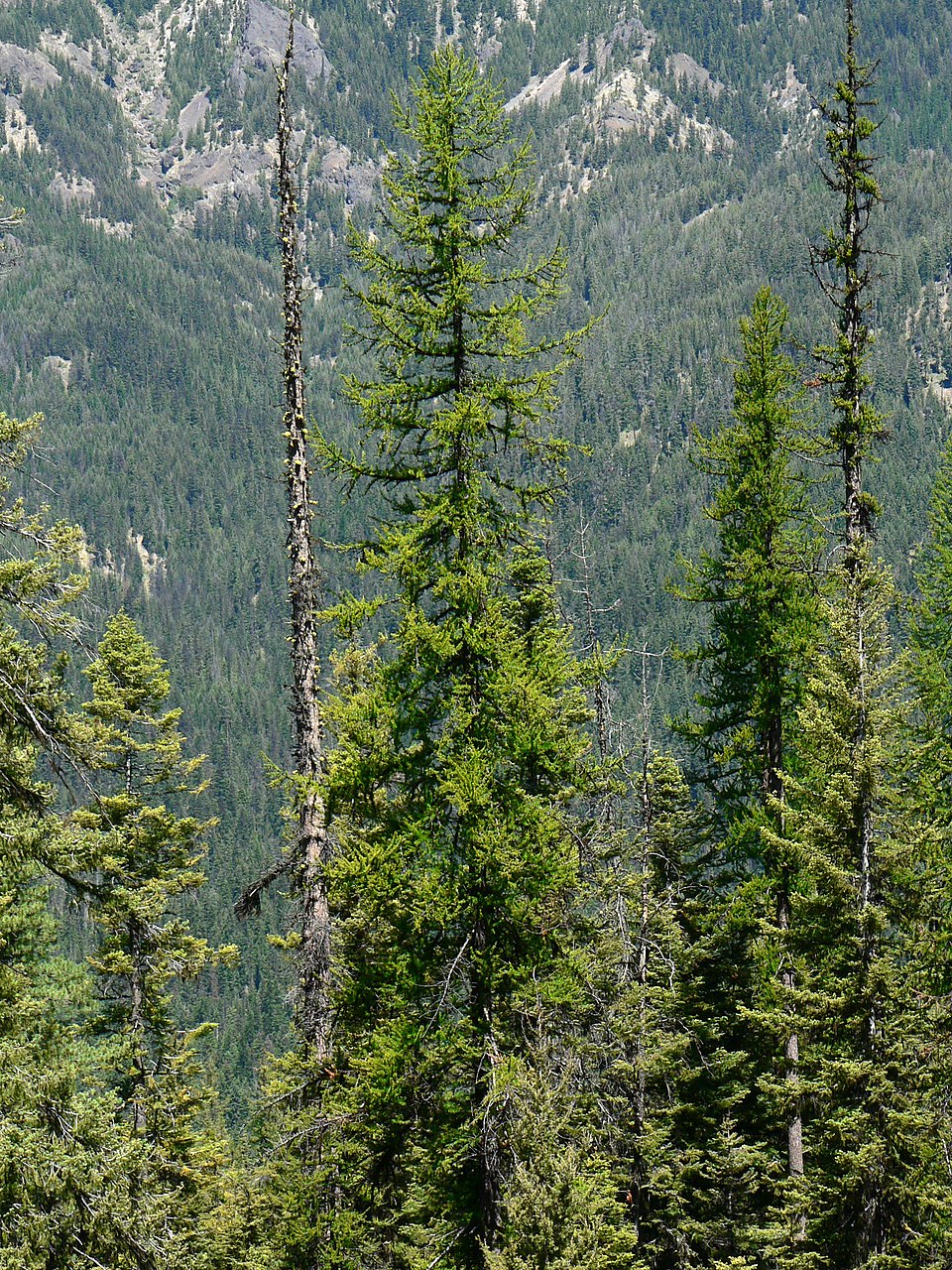
Western Larch
Larix occidentalis
A large, fast, fire-resistant deciduous conifer of the northern Rockies and inland Northwest, turning brilliant gold before shedding its soft needles each fall. Thick bark lets old trees survive ground fire; its dense, durable wood is among the most valued Western softwoods, and the sweet sap was traditionally used as a chewing gum.
Field reference
Family
Pinaceae
Growth rate
Fast
Mature size
100–180 ft tall, 20–30 ft spread
Hardiness zone
4–7
Soil preference
Moist, well-drained mountain soils; needs full sun, very shade-intolerant
Sun
Full sun
Pruning window
Late dormant season; self-prunes to a high, clean bole
Wood properties
Heavy, hard, strong, durable larch wood — among the best of the Western softwoods for structural lumber, poles, and flooring. Tall, straight stems; a deciduous conifer that drops its needles.
Native range
Inland Pacific Northwest and northern Rocky Mountains (Montana, Idaho, Washington, Oregon, BC)
Green weight
48 lb/ft³
Common questions
My western larch turned yellow and dropped its needles — is it dead?
No — like tamarack and dawn redwood, western larch is a deciduous conifer. Brilliant gold color and full needle drop each fall are normal; fresh soft needles return in spring.
Why does western larch survive forest fires?
Mature trees develop very thick, corky bark and self-prune their lower limbs, lifting the crown above ground flames. This makes western larch one of the most fire-resistant trees of the inland Northwest.
Related species in Pinaceae
Tree Nerd Academy
Ready to sit the ISA Certified Arborist exam?
Video curriculum, flashcards, and exam-sim built by working arborists.