
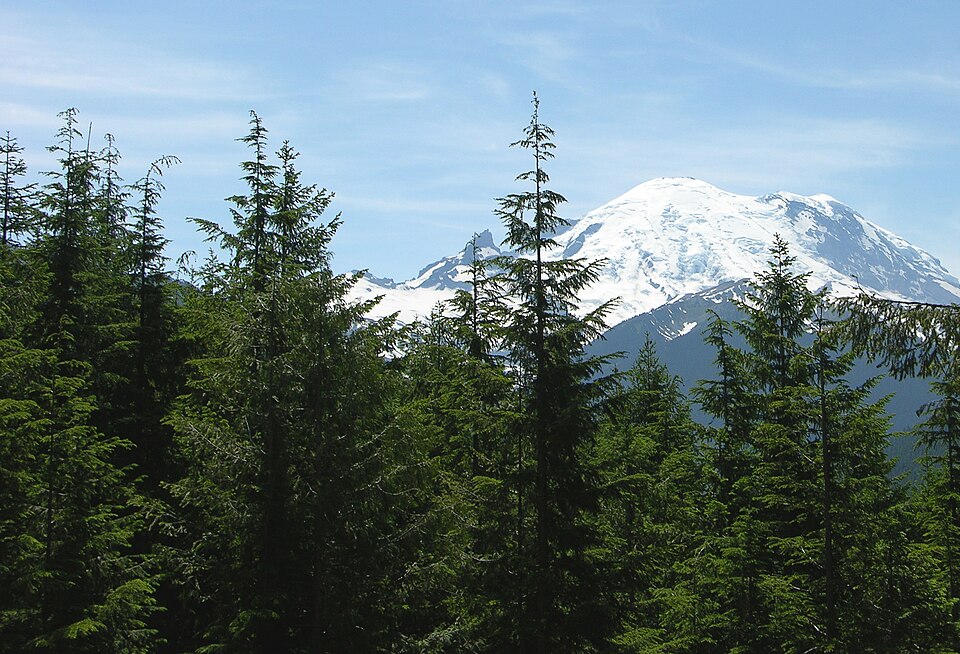
Western Hemlock
Tsuga heterophylla
The state tree of Washington and a towering, graceful conifer of the Pacific Northwest rainforest, with a distinctive drooping leader and fine, feathery foliage. Extremely shade-tolerant — it regenerates beneath other conifers — and a dominant timber species; the hemlock woolly adelgid is a lesser threat here than to eastern hemlock but still present.
Field reference
Family
Pinaceae
Growth rate
Moderate
Mature size
100–170 ft tall, 20–30 ft spread
Hardiness zone
6–8
Soil preference
Cool, moist, acidic soils of the maritime Northwest; very shade-tolerant
Sun
Part shade to full sun (tolerates deep shade)
Pruning window
Late dormant season; drooping leader is natural, not a defect
Wood properties
Light, moderately strong, even-grained hemlock (~0.42 SG) — a major Pacific Northwest pulp and framing timber. Tall, slender stems; the nodding leader is a field ID trait, not damage.
Native range
Pacific Northwest, coastal Alaska to Northern California and the inland wet belt
Green weight
41 lb/ft³
Pests & diseases to watch
Common questions
Why does my western hemlock have a drooping top?
The nodding, flexible leader is a natural identification feature of hemlocks, not a sign of stress or breakage. It distinguishes them from the stiff, upright leaders of firs and spruces.
Is western hemlock threatened by the woolly adelgid like eastern hemlock?
Western hemlock is a host but is far more tolerant than eastern and Carolina hemlock, which the adelgid devastates. In the West it is generally a minor pest, though worth monitoring on stressed landscape trees.
Related species in Pinaceae
Tree Nerd Academy
Ready to sit the ISA Certified Arborist exam?
Video curriculum, flashcards, and exam-sim built by working arborists.