
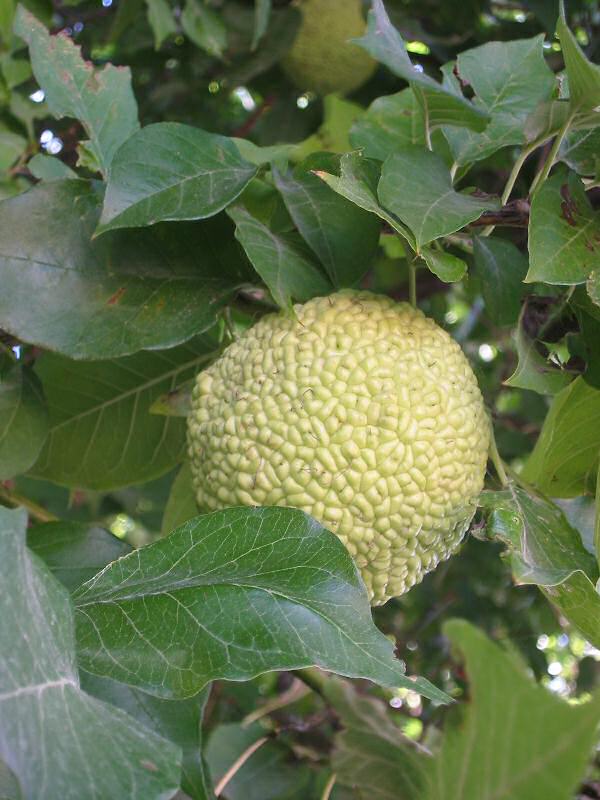
Osage Orange
Maclura pomifera
A tough, thorny tree famous for grapefruit-sized, brain-textured green fruits ('hedge apples') and brilliant orange, nearly rot-proof wood that burns hotter than almost any other. Widely planted as living fence rows before barbed wire; nearly pest-free and disease-free, but messy fruit and thorns limit its landscape use to large, rough sites.
Field reference
Family
Moraceae
Growth rate
Moderate
Mature size
30–50 ft tall, 30–40 ft spread
Hardiness zone
4–9
Soil preference
Tolerates virtually anything — drought, poor soil, salt, and wind
Sun
Full sun
Pruning window
Dormant season; mind the stout thorns
Wood properties
One of the hardest, densest, most decay-resistant North American woods (~0.85 SG), bright orange and once the premier bow wood and fence material. Extremely heavy green; thorns and density make it a tough removal.
Native range
Native to the south-central United States (Red River region); naturalized nationwide
Green weight
65 lb/ft³
Common questions
Do the hedge apples repel spiders or insects?
That is a persistent folk claim, but research has not shown the fruit to be an effective insect or spider repellent in normal household use. The fruits are mainly a messy curiosity and are not eaten by people.
Why is Osage orange wood so prized?
It is exceptionally hard, dense, and rot-resistant, with a bright orange color — historically the best Native American bow wood and unbeatable for fence posts that last decades. It also makes the highest-BTU firewood of any North American species.
Tree Nerd Academy
Ready to sit the ISA Certified Arborist exam?
Video curriculum, flashcards, and exam-sim built by working arborists.