
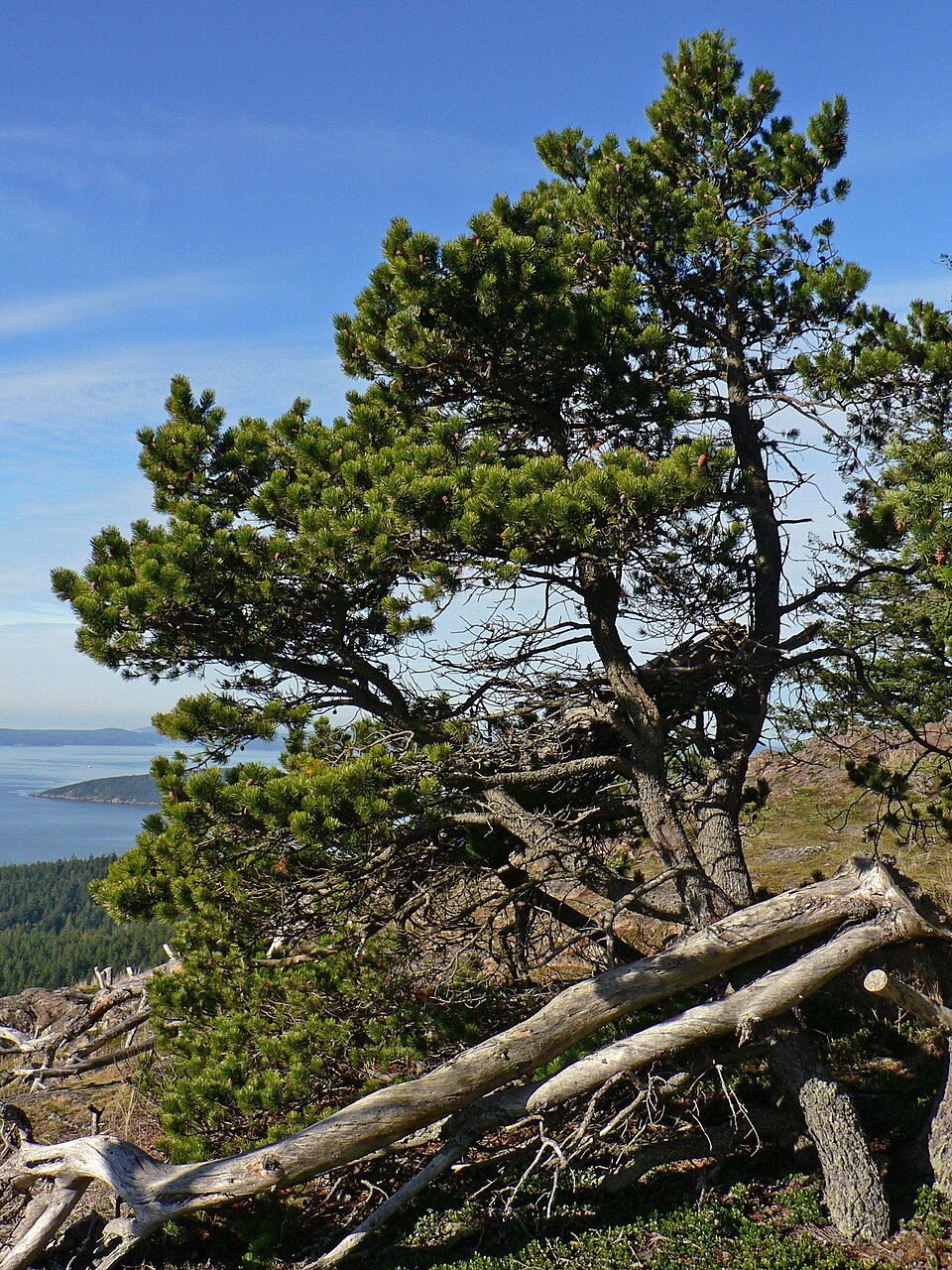
Lodgepole Pine
Pinus contorta
A slender, straight Western pine of vast mountain forests, named for its use as tipi and cabin poles, with many cones serotinous and opened by fire. Fire-driven regeneration creates the dense, even-aged 'doghair' stands that have been devastated by the mountain pine beetle across the Rockies.
Field reference
Family
Pinaceae
Growth rate
Moderate
Mature size
40–80 ft tall, 15–25 ft spread
Hardiness zone
4–8
Soil preference
Wide range — dry mountain slopes to boggy flats; tolerates poor soils
Sun
Full sun
Pruning window
Late dormant season; self-prunes in dense stands
Wood properties
Light, straight-grained pine used for poles, posts, and structural lumber — the classic lodgepole/tipi pole. Slender, very straight stems; paired short needles and small prickly cones.
Native range
Western North America, from the Yukon and Rockies to the Pacific coast and Sierra
Green weight
39 lb/ft³
Common questions
Why are lodgepole pine forests so dense and even-aged?
Many lodgepole cones are serotinous, releasing seed after fire, so a single burn reseeds vast areas at once. The result is the famously dense, even-aged 'doghair' thickets typical of the species.
What killed so many lodgepole pines in the Rockies?
Massive mountain pine beetle outbreaks, amplified by warmer winters and dense even-aged stands, have killed lodgepole over enormous areas. Stand thinning and prompt removal of infested trees are the main management tools.
Related species in Pinaceae
Tree Nerd Academy
Ready to sit the ISA Certified Arborist exam?
Video curriculum, flashcards, and exam-sim built by working arborists.