
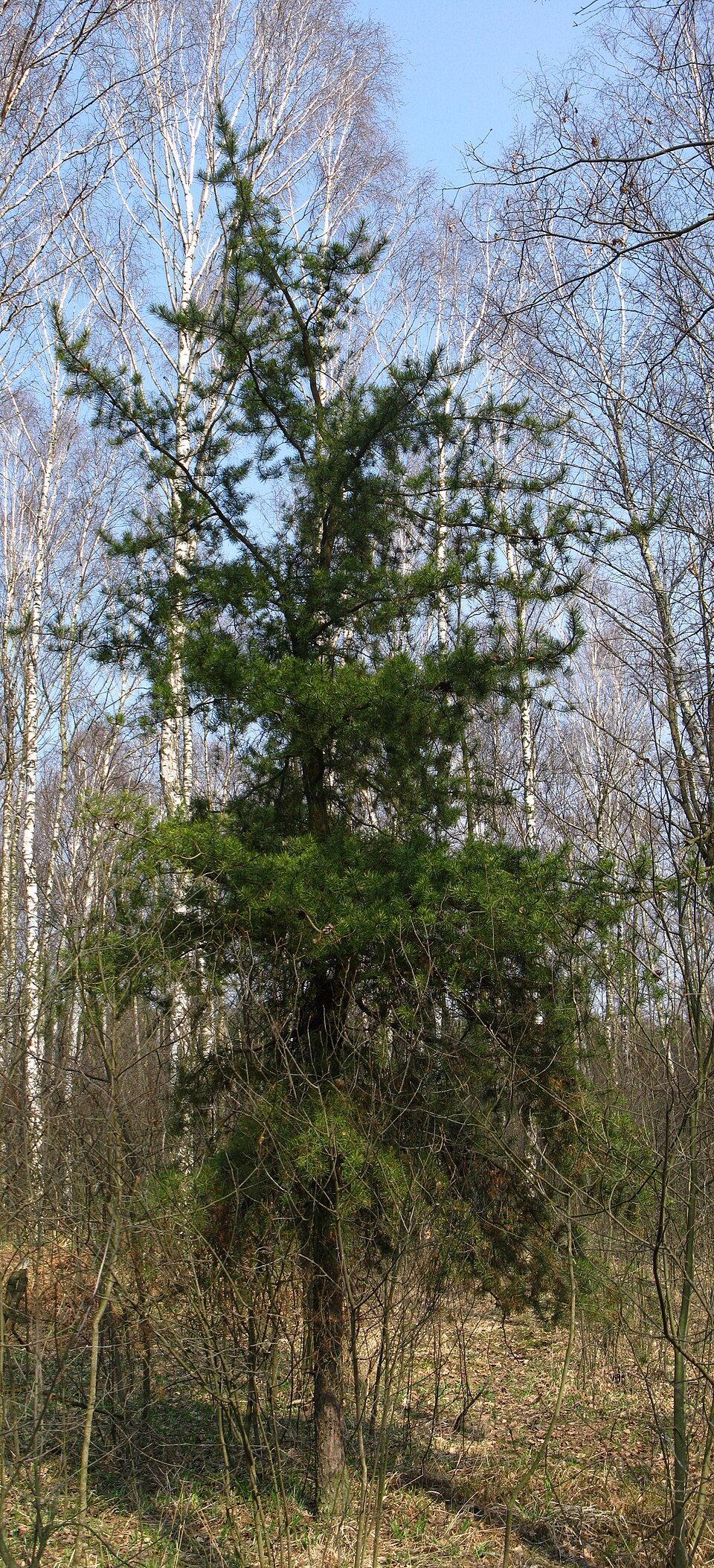
Jack Pine
Pinus banksiana
A scrappy, fire-adapted boreal pine that colonizes burned, sandy, sterile ground, with short twisted needles and tightly closed (serotinous) cones that open mainly after fire's heat. Often gnarled and short-lived, it is ecologically vital — the endangered Kirtland's warbler nests only in young jack pine stands.
Field reference
Family
Pinaceae
Growth rate
Moderate
Mature size
35–50 ft tall, 20–30 ft spread
Hardiness zone
2–6
Soil preference
Dry, sandy, sterile, acidic soils; thrives where little else will grow
Sun
Full sun
Pruning window
Late dormant season; often irregular and self-pruning
Wood properties
Light, moderately soft pine (~0.40 SG) used for pulp, poles, and rough lumber. Often crooked stems; short, twisted needle pairs and curved serotinous cones aid ID.
Native range
Boreal North America, across Canada and into the Great Lakes and Northeast
Green weight
41 lb/ft³
Common questions
Why don't jack pine cones open on their own?
Many jack pine cones are serotinous — sealed with resin and opened mainly by the heat of fire. This adaptation lets the species reseed quickly onto freshly burned, competition-free ground.
Why is jack pine important for wildlife?
Young jack pine barrens are the sole nesting habitat of the once-endangered Kirtland's warbler, so jack pine management — including prescribed fire — is central to that bird's recovery.
Related species in Pinaceae
Tree Nerd Academy
Ready to sit the ISA Certified Arborist exam?
Video curriculum, flashcards, and exam-sim built by working arborists.