
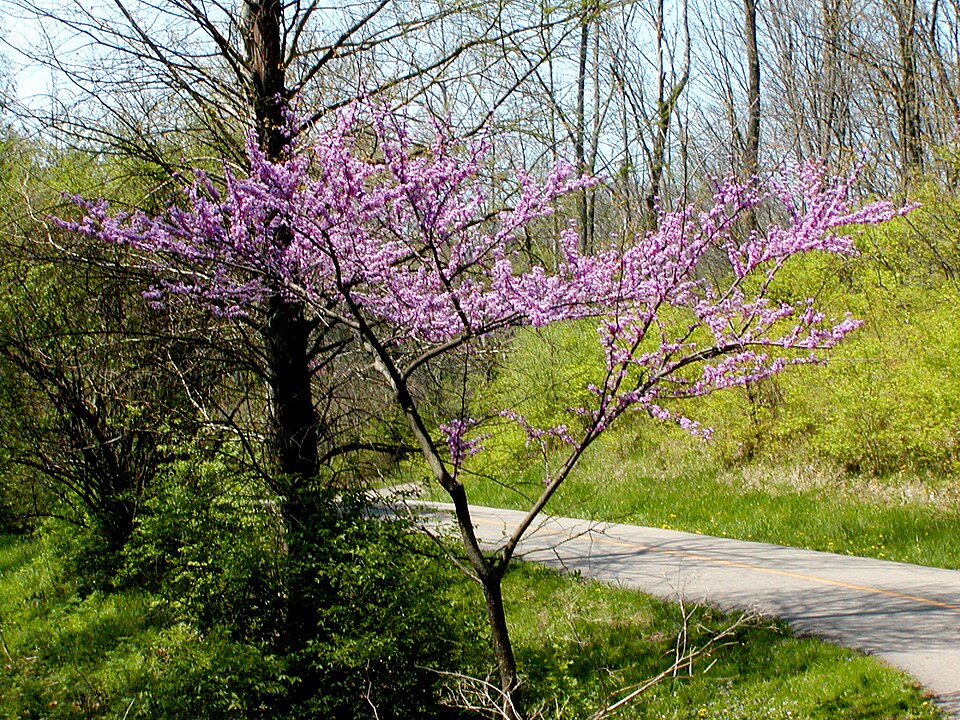
Eastern Redbud
Cercis canadensis
A small native understory tree celebrated for the magenta-pink flowers that swarm its bare branches and even the trunk in early spring, followed by heart-shaped leaves. It is short-lived and prone to trunk cankers, decay, and weak multi-stem unions. Plant in well-drained soil with light shade; it transplants best when young.
Field reference
Family
Fabaceae
Growth rate
Moderate
Mature size
20–30 ft tall, 25–35 ft spread
Hardiness zone
4–9
Soil preference
Moist, well-drained loam; adaptable but intolerant of wet feet
Sun
Full sun to part shade
Pruning window
Late spring, just after bloom
Wood properties
Moderately hard, heavy, weak wood (~0.58 SG) of no commercial value. Small tree, but prone to included bark at low forks and trunk decay — assess unions on older specimens.
Native range
Eastern and central United States, from southern Ontario to Florida and Texas
Green weight
53 lb/ft³
Pests & diseases to watch
Common questions
Why are flowers blooming straight out of my redbud's trunk?
That is cauliflory, a normal redbud trait where blossoms emerge directly from old wood and the trunk. It is one of the species' charming features, not a problem.
Why is my redbud short-lived?
Redbuds are naturally short-lived understory trees prone to trunk cankers, verticillium wilt, and weak forks. Good drainage, light shade, and structural pruning when young extend their useful life.
Related species in Fabaceae
Tree Nerd Academy
Ready to sit the ISA Certified Arborist exam?
Video curriculum, flashcards, and exam-sim built by working arborists.