
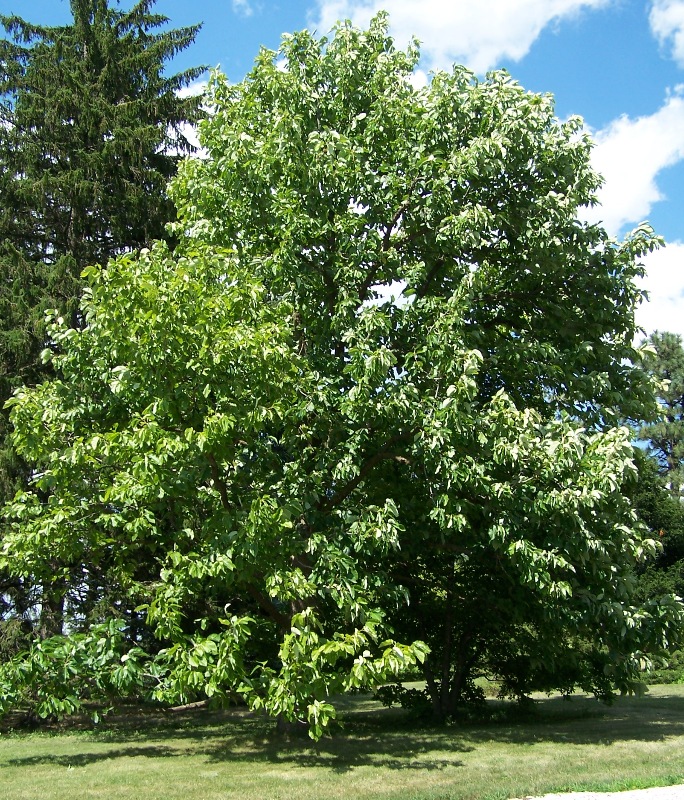
Cucumbertree Magnolia
Magnolia acuminata
The largest and most cold-hardy native magnolia, a true large shade tree with a strong pyramidal form, named for its bumpy green unripe fruit that resembles a small cucumber. Its greenish-yellow spring flowers are subtle and high in the canopy; valued as a stately lawn and park tree and as breeding stock for yellow-flowered magnolias.
Field reference
Family
Magnoliaceae
Growth rate
Fast
Mature size
50–80 ft tall, 35–50 ft spread
Hardiness zone
4–8
Soil preference
Deep, moist, rich, well-drained soils; intolerant of drought and compaction
Sun
Full sun to part shade
Pruning window
After flowering (late spring to summer)
Wood properties
Light, soft, straight-grained wood sold and worked as 'yellow poplar' with tulip-tree. Strong central leader; the largest and hardiest native magnolia, of shade-tree scale.
Native range
Eastern United States and southern Ontario, especially the Appalachians
Green weight
50 lb/ft³
Pests & diseases to watch
Common questions
Why are the flowers on my cucumbertree so hard to see?
Unlike showy ornamental magnolias, cucumbertree's greenish-yellow flowers blend with the emerging leaves and sit high in the canopy. The tree is grown more for its stately form and size than for flower display.
Why is it called cucumbertree?
The unripe, knobby green seed pods look like small cucumbers before they ripen to a fleshy red and release orange-coated seeds. It is the only magnolia widely grown as a large, cold-hardy shade tree.
Related species in Magnoliaceae
Tree Nerd Academy
Ready to sit the ISA Certified Arborist exam?
Video curriculum, flashcards, and exam-sim built by working arborists.