
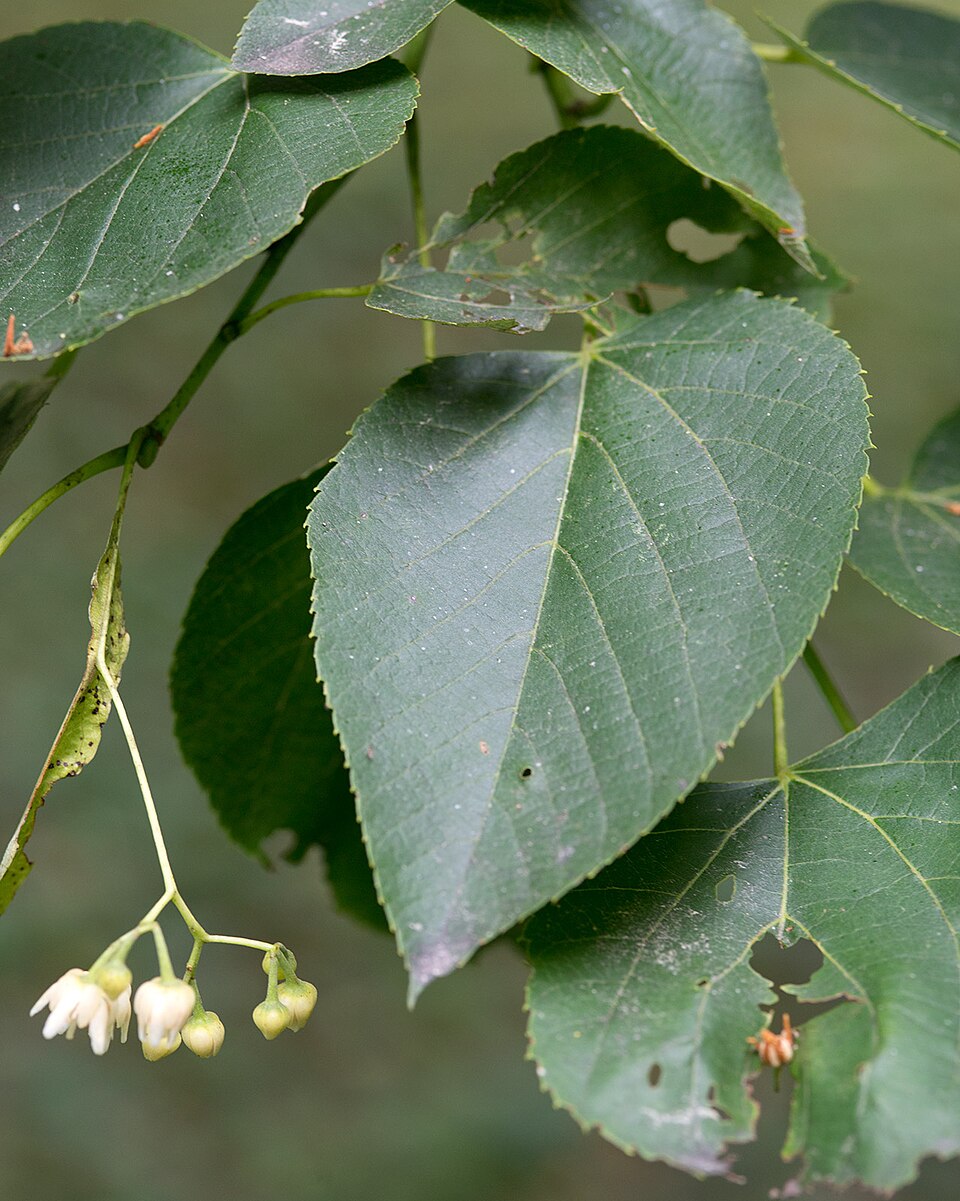
American Linden (Basswood)
Tilia americana
A large native shade tree with big heart-shaped leaves and intensely fragrant early-summer flowers that draw bees, also called basswood for its soft, prized carving wood. It tends to sprout abundantly from the base and lower trunk. Sensitive to drought and road salt, performing best in deep, moist, fertile soils.
Field reference
Family
Malvaceae
Growth rate
Moderate
Mature size
60–80 ft tall, 30–50 ft spread
Hardiness zone
2–8
Soil preference
Deep, moist, fertile, well-drained loam; intolerant of drought and salt
Sun
Full sun to part shade
Pruning window
Late winter (dormant); remove basal sprouts as needed
Wood properties
Soft, light, fine, even-grained wood (~0.42 SG) — the premier hand-carving and pattern wood. Strong central leader and sound unions; light wood is easy to handle.
Native range
Eastern and central North America, from Manitoba and Quebec south to the Carolinas
Green weight
42 lb/ft³
Pests & diseases to watch
Spongy Moth (formerly Gypsy Moth)pest · High severity · peak Caterpillars feed and defoliate May–June; egg masses laid mid-summer overwinterBacterial Leaf Scorchdisease · High severity · peak Symptoms most visible mid-summer to fall (July–October)Cankerworm (Inchworm)pest · Moderate severity · peak Larvae feed and defoliate in spring (April–May) as leaves expand
Common questions
Why does my linden keep sprouting shoots around the base?
Basal and root sprouting is a natural habit of American linden. Simply prune the sprouts off flush each season; it does not indicate a health problem.
Why is my linden full of bees in early summer?
Its abundant, nectar-rich, fragrant flowers are a magnet for honeybees and pollinators. Site it away from patios if heavy bee activity is a concern, but it is a valuable pollinator tree.
Related species in Malvaceae
Tree Nerd Academy
Ready to sit the ISA Certified Arborist exam?
Video curriculum, flashcards, and exam-sim built by working arborists.